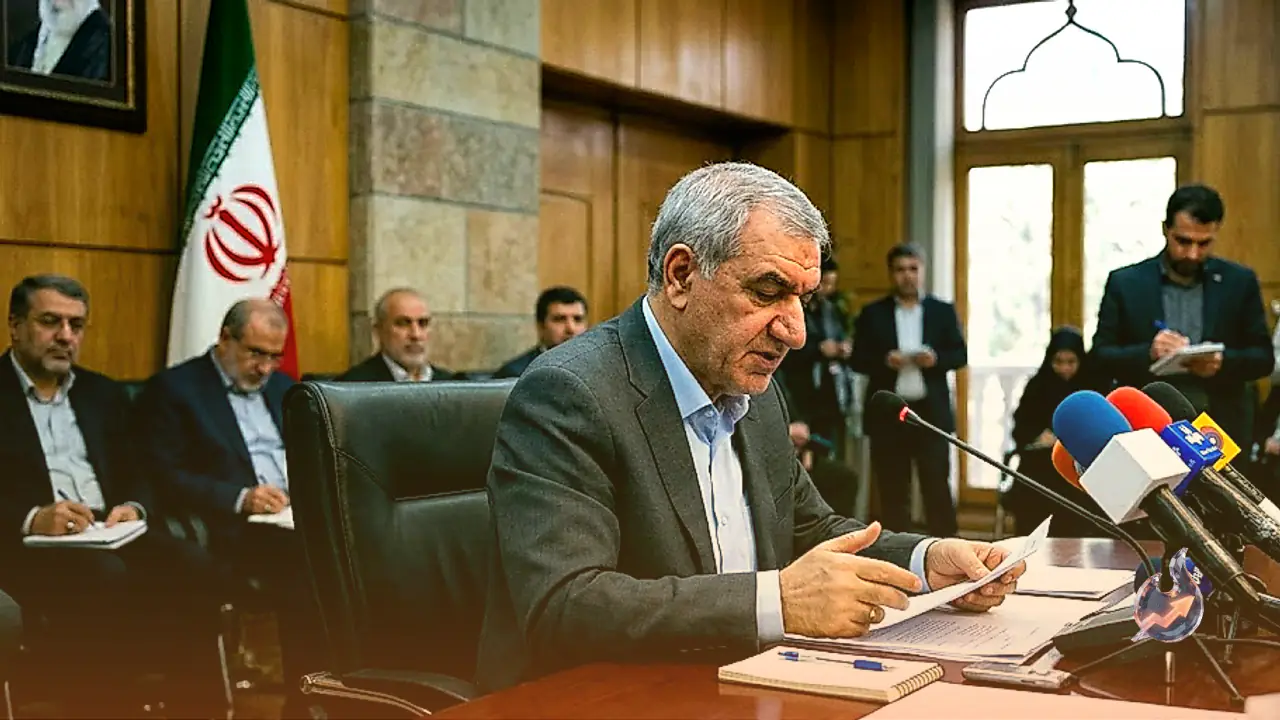

























Tension in the Strait of Hormuz has taken a dangerous turn once again. According to the United Arab Emirates Ministry of Defence, two UAE national tankers, the Mombasa and Al Bahiyah, were struck by two Iranian cruise missiles. The attack took place in the southern lane of the Strait of Hormuz, inside Omani territorial waters. One Indian crew member was killed in the strike, while eight others were wounded.
The incident comes at a moment when the wider Gulf region is already on edge. Hormuz is one of the world's most critical oil corridors, and any military action there sends immediate shockwaves through global energy markets. That is precisely why the news of this attack triggered a sharp jump in crude oil prices almost the instant it broke.
The UAE calls it a 'blatant attack'
The United Arab Emirates strongly condemned the incident, describing it as a "blatant attack." The country made clear that it retains "its full right to respond to this escalation." The Ministry of Defence added that the UAE remained fully prepared to deal with any threats and was taking all necessary measures to respond firmly to any attempt to undermine the country's security and stability.
The statement signals that tensions in the region are unlikely to cool quickly. On one side there has been loss of life and injury, and on the other the UAE's tough posture is raising the prospect of further confrontation.
Crude oil surges hard
The moment the news surfaced, buyers rushed into crude. At the time of writing, West Texas Intermediate, or WTI, was up 10.40% on the day at $78.85. The scale of the move underlines just how fast any headline tied to a chokepoint like Hormuz can rattle the market, given that a large share of the world's oil supply passes through this narrow passage.
What WTI crude actually is
WTI Oil is a type of crude oil sold on international markets. WTI stands for West Texas Intermediate, one of three major types alongside Brent and Dubai Crude. It is also referred to as "light" and "sweet" because of its relatively low gravity and low sulfur content. It is regarded as a high quality oil that is easily refined.
The oil is sourced in the United States and distributed via the Cushing hub, which is considered "The Pipeline Crossroads of the World." WTI serves as a benchmark for the oil market, and its price is frequently quoted in the media.
What actually moves the oil price
As with every asset, supply and demand are the key drivers of the WTI oil price. Strong global growth can lift demand and push prices higher, while weak global growth does the opposite. On top of that, political instability, wars and sanctions can disrupt supply and directly affect prices, and this attack is a live example of exactly that.
The decisions of OPEC, the group of major oil-producing countries, are another key driver of the price. The value of the US Dollar also matters a great deal. Since oil is predominantly traded in US Dollars, a weaker Dollar can make oil more affordable, while a stronger Dollar makes it more expensive.
Why the weekly inventory data matters
The weekly oil inventory reports published by the American Petroleum Institute (API) and the Energy Information Agency (EIA) also influence the price of WTI oil. Changes in inventories reflect the fluctuating balance between supply and demand. If the data shows a drop in inventories, it can indicate increased demand and push the oil price up. Higher inventories, on the other hand, can reflect increased supply and drag prices down.
API's report is published every Tuesday and EIA's the day after. Their results are usually similar, falling within 1% of each other about 75% of the time. The EIA figures are considered more reliable because it is a government agency.
The role of OPEC and OPEC+
OPEC, the Organization of the Petroleum Exporting Countries, is a group of 12 oil-producing nations that collectively decide production quotas for member countries at twice-yearly meetings. Their decisions often move WTI oil prices. When OPEC chooses to lower quotas, it can tighten supply and push prices up. When it increases production, the effect is reversed. OPEC+ refers to the expanded group that includes ten additional non-OPEC members, the most notable of which is Russia.
The wider market fallout
The rising tension in the Gulf has shaken far more than just oil. Financial markets got off to a shaky start to the week. Under pressure from a firmer US Dollar, the British Pound came under heavy selling, dragging GBP/USD down to fresh three-day troughs near 1.3350.
The Euro was no different. EUR/USD extended Friday's pullback and slid back to multi-day lows near the 1.1380 region. A marked bounce in the US Dollar, combined with the unabated tensions in the Middle East, kept the pair under pressure. Investors are now gearing up for the upcoming US CPI data and the semiannual testimony by Federal Reserve Chair Kevin Warsh.
Gold also stayed under selling pressure, trading near $3,995 during the early Asian session on Tuesday. The renewed US-Iran tensions have kept inflationary pressures elevated. Bitcoin, meanwhile, held near $62,000 on Monday as investors showed little conviction ahead of the week's key macroeconomic reports. QCP analysts flagged that Tuesday's US Consumer Price Index data could be the first major catalyst to decide the market's direction.
Taken together, it was an unsteady open for markets. The oil price rose by nearly 4% and Brent crude traded above $79 per barrel. The move followed fresh attacks between the US and Iran in the Gulf and statements from the Iranian regime that it has closed the Strait of Hormuz.
The picture on interest rates shifted just as quickly. Markets opened July with a December hike as the base case, then spent five trading sessions unlearning and relearning it. A 57K payrolls print bled the tightening bets out of the strip, while a re-shut Strait of Hormuz is now pushing them back in. The minutes from the June FOMC meeting landed in the middle of that round trip, describing a world that had already stopped existing.