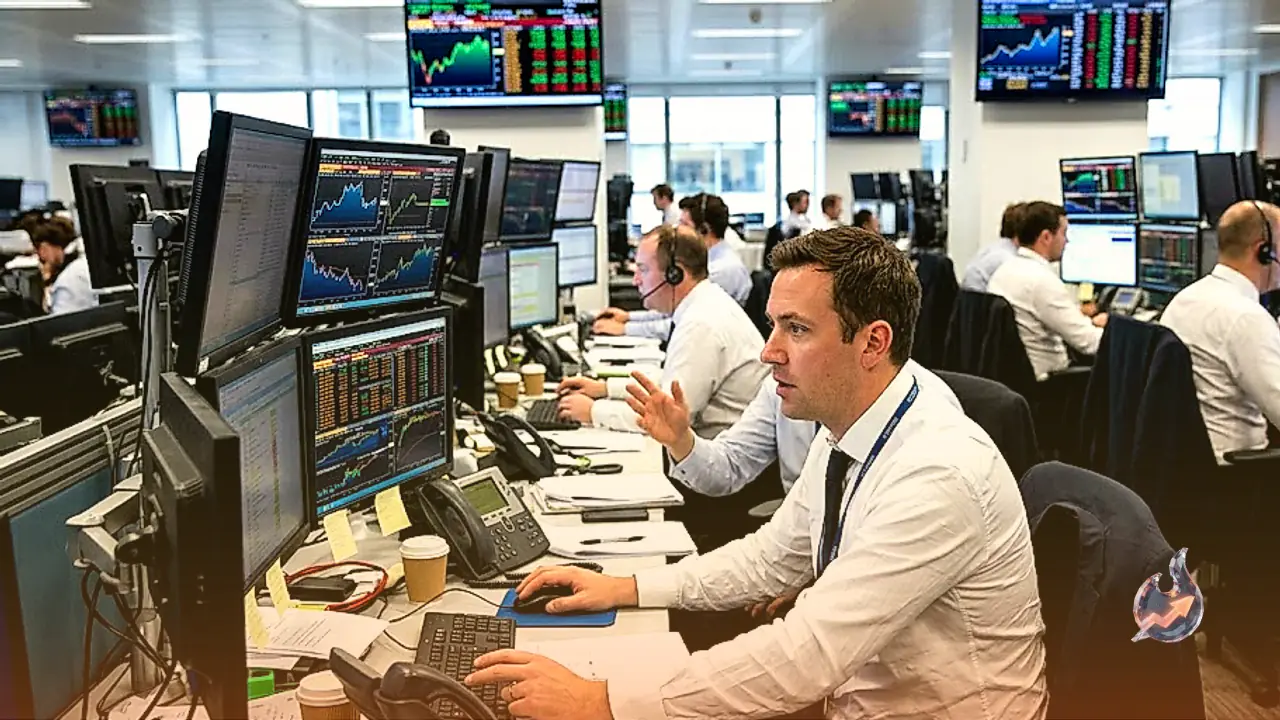






















Asian equity markets faced headwinds on Friday as an overnight slide across US technology giants rippled through regional exchanges, fueled by unexpected revenue figures from artificial intelligence bellwether OpenAI. Investor sentiment in the semiconductor and software sectors soured after data indicated that OpenAI's annualized revenue reached $50 billion at the close of September. This performance fell short of the $68 billion annualized figure that had circulated widely in market discussions just a month prior, triggering immediate reassessments of expansion rates and valuations across the AI ecosystem.
Chinese Bourses Stumble Over EU Trade Negotiations
In mainland China, broader apprehensions surrounding external trade policy added to the downward momentum. The benchmark Shanghai Composite declined 1.2% to settle at 3,765, while the Shenzhen Component dropped 2.1% to touch a multi-month low of 12,480. Market participants maintained a cautious stance as three months of contentious trade deliberations between China and the European Union drew to a close. European manufacturing and industrial organizations have been lobbying authorities for swift intervention against perceived unfair commercial practices by Chinese entities, citing existential threats to domestic industrial production and workforce stability. Central to the dispute are the European Union's expanding merchandise trade deficit with China alongside export restrictions imposed by authorities in Beijing on critical minerals and rare earth elements.
Hang Seng Diverges on Late Bargain Hunting
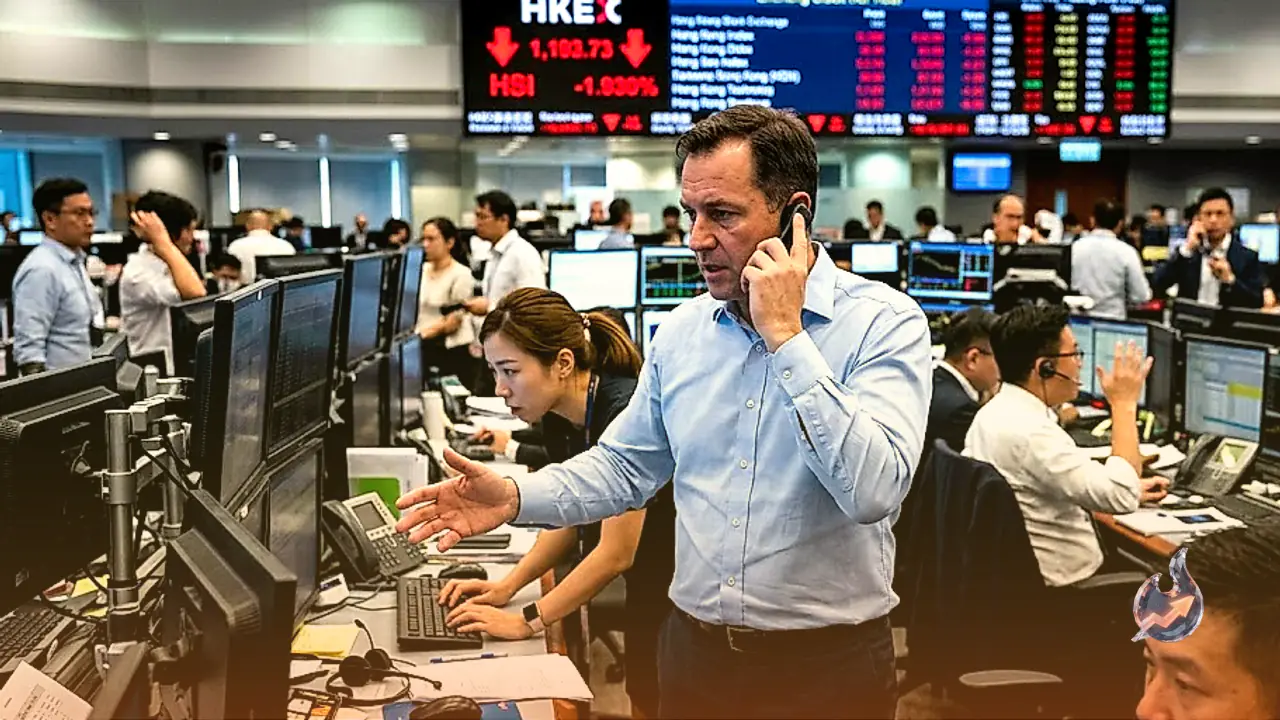
Defying the broader regional downturn, Hong Kong's Hang Seng Index managed to climb 1.1% to reach 24,050. The advance positioned the index to halt a two-week stretch of consecutive losses, propelled by value-seeking investors acquiring shares that had experienced steep declines in preceding sessions. Broad regional market indicators found additional footing late in the day as US equity futures moved into positive territory, allowing several Asian indices to bounce from intraday lows.
Narrow Market Breadth and Widening Credit Risk
Market strategists at Rabobank noted that relative equity valuations are exerting pressure on current price action. Analysts observed that major US indices have pulled back from historic peaks, even as index advances remain unusually concentrated among a small cluster of megacap technology firms. The bank underscored that market breadth across US equities is exceptionally narrow, with AI-aligned mega-cap companies propelling headline benchmarks higher while the broader spectrum of sectors fails to gain traction. Adding to cautionary indicators, five-year credit default swap (CDS) spreads for SpaceX widened by 16.5 basis points to 197 basis points, highlighting growing wariness regarding credit and execution risks among high-profile commercial enterprises tethered to the emerging technology narrative.
The Core Structure and Commercial Execution of Artificial Intelligence
Artificial intelligence remains fundamentally rooted as an academic discipline focused on synthesizing human cognitive capabilities within computational architecture, encompassing logical reasoning, perceptual evaluation, and complex pattern recognition. The domain branches into multiple specialized fields, including artificial neural networks, machine learning, predictive analytics, symbolic reasoning, deep learning, natural language processing, computer vision, speech recognition, and expert systems. The long-term trajectory of the discipline centers on achieving artificial general intelligence (AGI), representing computational frameworks capable of solving novel, arbitrary challenges without prior task-specific conditioning.
Commercial deployments of AI have rapidly diversified across industries. Generative artificial intelligence systems trained on massive large language models (LLMs) have achieved global visibility through text interfaces like ChatGPT and Google's Bard. In digital media, Midjourney produces original visual artwork through descriptive text prompts. Other specialized algorithms use probabilistic frameworks to assess risk profiles; for example, lending platform Upstart implements an AI-driven credit scoring system that analyzes public web data concerning an applicant's career history, asset background, and professional connections to gauge creditworthiness. In the life sciences, machine learning platforms sift through extensive biochemical repositories to propose novel molecular compounds for laboratory screening. Concurrently, digital entertainment platforms including YouTube, Spotify, and Facebook deploy algorithmic models to curate personalized feeds based on consumer viewing histories.
Infrastructure Players, Data Analytics, and Big Tech Integration
Within semiconductor manufacturing, Nvidia (NVDA) designs specialized graphics processors alongside software frameworks utilized by developers to construct and deploy machine learning architectures. Market observers frequently describe Nvidia as a foundational infrastructure supplier for computational transformation, as its hardware powers advanced training pipelines. In enterprise analytics, Palantir Technologies (PLTR) maintains extensive operational partnerships with US intelligence agencies. The organization's Gotham platform aggregates disparate data feeds to detect operational patterns and generate intelligence leads, while its Foundry enterprise solution enables commercial entities to process workforce and customer datasets for anomaly detection and predictive planning. Meanwhile, Microsoft (MSFT) maintains a substantial financial commitment to OpenAI, which remains privately held, and has embedded OpenAI's conversational technologies directly into its Bing search platform.
Valuation Realities Compared With Historical Market Bubbles
The public debut of ChatGPT in late 2022 catalyzed a powerful rally across technology equities, with Nvidia advancing more than 200% within the six months following the release. The rapid price escalation prompted debate among institutional investors regarding whether equity markets were repeating historical speculative manias. Veteran investor Stanley Druckenmiller, who has maintained substantial equity positions in both Palantir and Nvidia, noted that market bubbles typically extend well beyond six months. He suggested that if the enthusiasm surrounding artificial intelligence evolved into a full-scale speculative bubble, extended valuations could persist for two and a half years or longer, comparable to the DotCom expansion of the late 1990s. By mid-2023, broad indicators suggested valuations had not yet reached historic bubble peaks; while Nvidia was valued at 27 times forward sales on high projected revenue expansion, the NASDAQ 100 traded at 25 times earnings, compared to 60 times earnings at the absolute crest of the DotCom era.
Commodity Pressures and Foreign Exchange Movements
In commodity markets, falling energy costs provided temporary respite against persistent inflation expectations, though high US Treasury yields kept broader equity gains restrained. Live market data shows Crude Oil (CL=F) trading lower at $90.50, down 1.08% from its prior close of $91.49, within a 52-week trading corridor of $54.98 to $119.48. Technical indicators place the 14-day RSI at 48, with the MACD line at -0.39 against a signal of 0.43 (histogram -0.82). The commodity remains within a broader long-term uptrend, holding its 20-day EMA at $91.89, 50-day EMA at $90.14, and 200-day EMA at $81.20, with immediate pivot resistance situated at $90.70 and baseline support around $89.99.
Foreign exchange markets exhibited varied performance during the Asian trading session. The Australian Dollar (AUD/USD) extended its rebound from weekly lows toward the 0.7000 threshold, underpinned by easing US yields and expectations of hawkish monetary policy from the Reserve Bank of Australia. Concurrently, USD/JPY held steady near 158.00 as official statistics confirmed a ninth consecutive monthly decline in Japanese household expenditure, weighing on the Yen. In precious metals, Gold advanced toward $4,200 per ounce, extending a recovery from two-month troughs as the US Dollar and energy benchmarks moderated, though its daily RSI remains technically bearish.