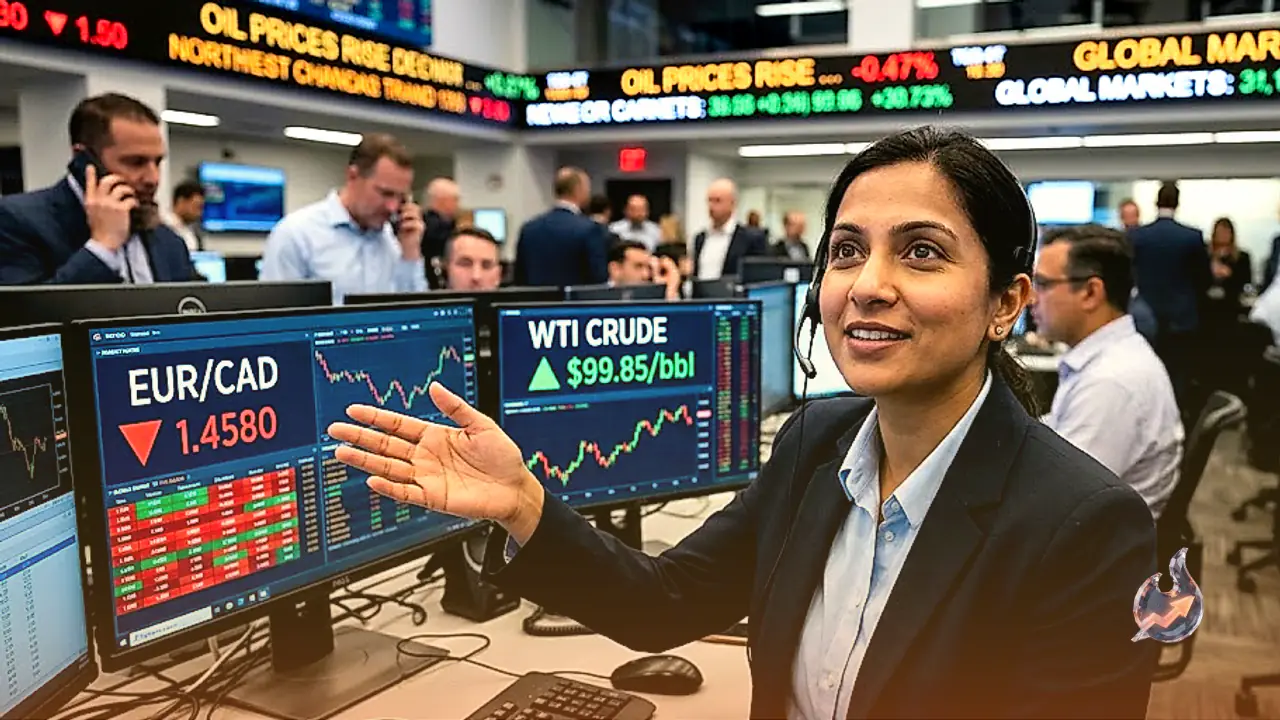

























WTI crude was trading 1.44% higher at $98.05 when these market levels were recorded, as traders weighed oil, dollar and policy signals alongside Iran's message that it does not intend to go to war with Saudi Arabia.
Iran's President Masoud Pezeshkian made the remarks on Monday. He said Tehran has no plan to fight Saudi Arabia, but he also kept pressure on the negotiation track with the United States by saying Iran's demands are unchanged from its earlier position.
Pezeshkian separates regional peace message from US talks
Pezeshkian questioned how talks with the United States could move forward when the United States has not honored its commitments. His central point was that Tehran has not revised the demands it brought to negotiations before. At the same time, he said countries in the region can create security and a dynamic economy through cooperation.
The comments address two different market concerns. A refusal to seek war with Saudi Arabia speaks to regional security, while unchanged demands in US talks keep diplomatic uncertainty in view. For traders, that means the oil market was not looking only at supply data; it was also watching how political language could affect risk around the region.
WTI stays in focus at $98.05
The daily gain put West Texas Intermediate back at the center of crude-market attention. WTI is one of the main reference prices for oil, so a move to $98.05 matters even before new inventory reports or production decisions arrive. Traders usually read that kind of price action together with stock data, OPEC choices and currency moves.
What makes WTI a global benchmark
WTI is one variety of crude oil traded globally. It expands to West Texas Intermediate and sits alongside Brent and Dubai Crude among three major crude categories. Because it functions as an oil-market benchmark, WTI pricing appears often in coverage of crude.
The grade is called "light" and "sweet" because its gravity and sulfur content are relatively low, respectively. Refiners value it as high-quality oil that is easy to process. The crude comes from the United States and reaches markets through Cushing, a hub known as "The Pipeline Crossroads of the World."
Supply, demand and the dollar set the tone
WTI prices, like other asset prices, mainly follow supply and demand. Global growth can raise oil demand, while weak global growth can pull demand lower. Supply can be interrupted by political unrest, wars or sanctions, and that interruption can move prices. Production choices by OPEC's major oil producers also play a major role.
WTI also reacts to the US Dollar because most oil transactions use that currency. A weaker dollar can make oil more affordable for buyers using other currencies, while a stronger dollar can push in the opposite direction. That is why currency moves can matter even when the physical oil market has not changed much.
These drivers can reinforce each other or pull in different directions. For example, a supply disruption can lift prices even if demand is steady, while weaker global growth can weigh on prices even when supply is available. The dollar adds a separate channel because it changes the purchasing power of non-dollar buyers.
Inventory reports show whether crude is tightening
Weekly stock reports from the American Petroleum Institute and the Energy Information Agency can move WTI because inventory changes reflect supply and demand. A draw in stockpiles may signal stronger demand and lift crude, while a build may signal more supply and weigh on crude. For traders, the direction of the change is often as important as the headline number.
API releases its report every Tuesday, with EIA following the next day. In 75% of cases, the two sets of numbers land within a 1% gap of one another. EIA figures are treated as more dependable because the agency is part of the government. That close relationship is why traders watch both releases rather than treating either report as an isolated event.
OPEC quota decisions can shift available supply
OPEC brings together 12 oil-producing nations under the name Organization of the Petroleum Exporting Countries. At meetings held twice a year, members set production quotas collectively. Those quota choices often show up in WTI pricing: cuts can tighten available supply and support prices, while production increases can pressure prices downward.
OPEC+ is the wider grouping. Among the ten extra countries outside OPEC, Russia stands out. The expanded framework matters because supply decisions can involve more than the original OPEC membership. The twice-yearly meeting schedule gives the market regular checkpoints for production policy.
Dollar strength hits the Aussie while USD/JPY recovers
On Monday, AUD/USD stayed weak, touched near 0.7100, then recovered toward 0.7150 before Asian markets opened. A firm US Dollar kept risk assets under pressure, and growing expectations of a Fed rate increase this week pushed the Australian dollar to new monthly lows. The bounce toward 0.7150 did not erase that broader dollar-led pressure.
Investors were expected to watch key data releases from China on Tuesday. USD/JPY found buyers as the week began, moving toward 154.00 in Asia and recovering some of Friday's decline. Even after that bounce, spot prices stayed inside the roughly one-week range and near the almost seven-month low hit last Tuesday, with traders waiting on this week's key central bank events.
For the Australian dollar, the monthly low is important because it shows the pressure was not limited to a brief intraday dip. The pair's move back toward 0.7150 offered some relief, but the dollar and Fed expectations remained the larger forces in the background.
Gold tests $4,300 while Bitcoin moves above $79,000
On Monday, gold gathered buying momentum and moved toward the important $4,300 per troy ounce level. The yellow metal still faced pressure because the US Dollar posted marked gains and US Treasury yields rose across the curve.
Bitcoin crossed $79,000 on Monday while the wider crypto market headed into a week where policymakers were under close scrutiny. After August inflation figures came out last week, traders built in most of the expected 25-basis-point Federal Reserve rate increase, according to QCP analysts. Attention then turned to the language policymakers use to describe future rate decisions.
Gold's struggle showed the two-sided nature of the session. It had enough buying interest to challenge $4,300, but the stronger dollar and higher Treasury yields limited the upside. For crypto, the rate path matters because risk assets often react sharply when policymakers change the expected timing or size of future moves.
Together, the session showed how oil, currencies, gold and crypto can react to the same mix of regional headlines, dollar strength and central bank expectations. WTI's rise, the Australian dollar's monthly lows, USD/JPY's recovery, gold's test of $4,300 and Bitcoin's move above $79,000 all came as markets waited for data and policy signals that could shape the next move.