
























Emerging signs of softness across Singapore's employment landscape are set to play a decisive role in shaping the forthcoming policy choices of the Monetary Authority of Singapore. The Labour Market Pressure Index points to accumulating slack, a structural shift that dampens the rate at which supply-side shocks filter through to consumer prices. Against this macroeconomic backdrop, the Monetary Authority of Singapore is widely projected to hold its prevailing S$NEER policy stance steady, with very minimal risk of further steepening in the currency slope to fend off imported inflation.
Current S$NEER Trajectory and Monetary Settings
Evaluating the baseline outlook for the city-state, analyst Jester Koh pointed out that the central bank is expected to leave its exchange-rate-based framework unchanged. This follows two tightening interventions carried out earlier this year in April and July. With those adjustments already absorbed by the market, the annual appreciation slope is estimated to stand near 1.25%, a trajectory that appears sufficient under current economic conditions.
Nevertheless, policymakers continue to monitor lingering upside risks tied to external costs. Jester Koh noted that there remains a very slight risk of a modest 25 basis points steepening in either the October 2026 or January 2027 monetary policy statements. This contingency primarily reflects recent price momentum in energy markets alongside strengthening food inflation, where unpredictable and adverse weather conditions present additional upward hazards to food costs.
Contrasting Current Conditions with the 2021-2022 Tightening Cycle
A crucial factor calming the monetary policy environment has been the pattern of recurring downside surprises in core inflation readings. When underlying inflationary momentum consistently undershoots forecasts, central bankers face substantially reduced urgency to engineer sharp currency appreciation. Consequently, current supply-side pressures are unlikely to demand the aggressive intervention pace witnessed during 2021 and 2022.
Across that intense two-year window, monetary settings were tightened on five separate occasions, an operation that incorporated three distinct upward re-centring adjustments of the policy band. With current labour market conditions remaining loose enough to restrain domestic wage-price transmission, the economic justification for an aggressive tightening campaign remains absent.
Currency Market Dynamics and Dollar Performance
Broad-based strength in the US Dollar has simultaneously generated ripples across global currency exchanges. The AUD/USD pair struggled to establish a firm path on Monday, succumbing to renewed downward momentum shortly after testing the 0.7140 barrier. The pair sought footing in the lower 0.7100s ahead of the Asian market open on Tuesday, weighed down by an overall rebound in sentiment favoring the Greenback.
Concurrently, USD/JPY receded below the 157.00 threshold during Monday's Asian session, dampened by mild support for the Japanese Yen following intervention concerns linked to Friday's Bank of Japan rate check. Trading desks operated with heightened caution amid a Japanese market holiday and mounting geopolitical friction involving Russia and Ukraine, as well as ongoing tensions across the Middle East. These factors checked the pullback in the US Dollar, ultimately placing a floor under the currency pair's drop.
Precious Metals, Bond Yields, and the Bank of Japan's Rate Move
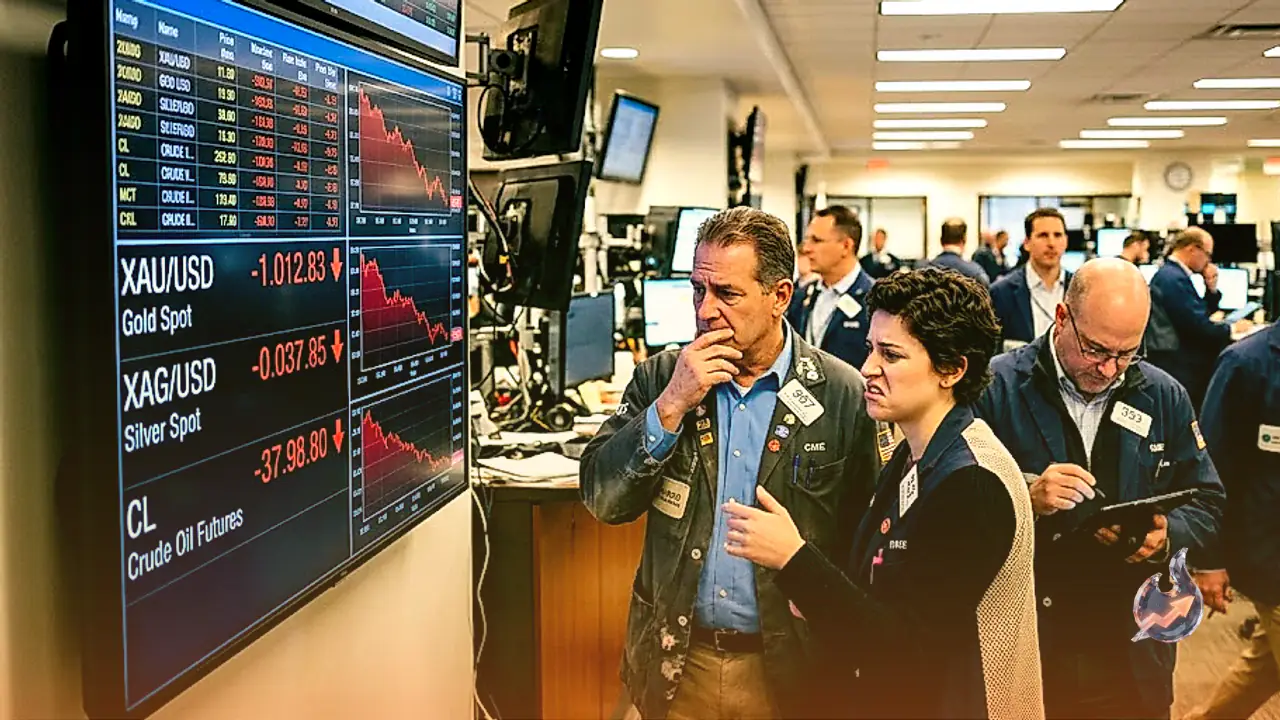
Gold initiated the trading week on defensive footing, changing hands near $4,350 per troy ounce. The precious metal faced downward pressure from a firmer US Dollar, despite softening yields on US Treasury securities across the curve. Investors continued balancing conflicting monetary signals against broader macroeconomic resilience.
As financial markets enter the final stretch of the third quarter, trading conditions display notable divergence. While uncertainty and volatility remain elevated, crude oil prices have trended downward, and equity benchmarks in Europe and the United States prepared to start Monday's session in positive territory. Stresses were visibly clustered in sovereign debt markets, where European and American government bond yields jumped higher late on Friday following another round of jitters.
Adding to global central bank developments, the Bank of Japan lifted its short-term policy interest rate target from 1.00% to 1.25%. Approved via a 7-2 vote, the hike represents a steady continuation of Japan's monetary policy normalisation program and aligned precisely with extensive market consensus leading up to the announcement.