






















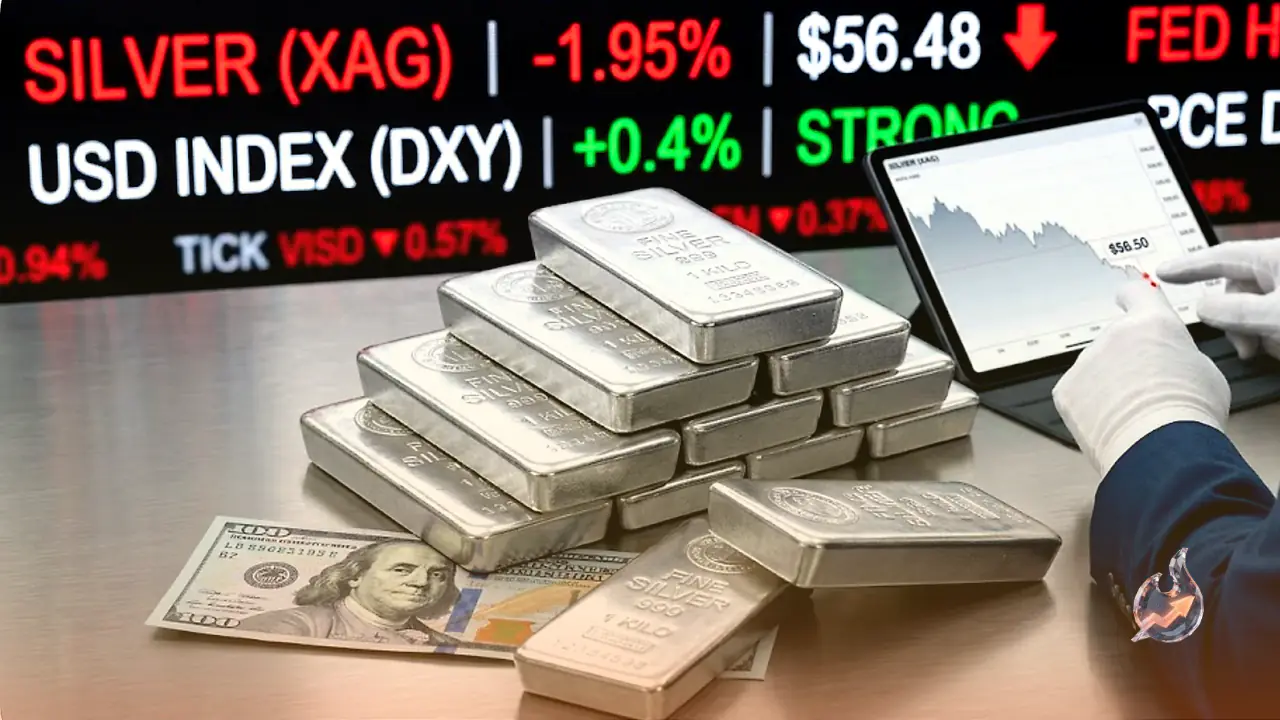

Silver is losing some of its shine right now. XAG/USD has slipped to around $56.50 an ounce, weighed down chiefly by rising expectations of higher US interest rates and a firm dollar that keeps pressing on the precious metal.
For the moment, the market's attention is fixed firmly on the upcoming US inflation numbers. The Personal Consumption Expenditures (PCE) data is due shortly, and forecasts point to headline inflation heating up to 4.1% year-over-year in May, up from 3.8% in April. The core PCE measure is also expected to tick higher to 3.4%. These warmer inflation prints have only added fuel to bets on a rate hike.
A firm dollar makes things harder
The dollar is a big part of silver's slide. The US Dollar Index (DXY) is holding near a one-year high of 101.80. A stronger dollar makes the dollar-priced metal noticeably more expensive for international buyers dealing in other currencies, which in turn drags on demand.
Why silver matters to investors
Silver is a precious metal that sees heavy trading among investors. For centuries it has served as a store of value and a medium of exchange. Even though it is less popular than gold, investors turn to silver to diversify their portfolios, for its intrinsic worth, or as a hedge during high-inflation stretches. It can be bought directly as coins or bars, or traded through vehicles such as Exchange Traded Funds, which track its price on international markets.
What drives the price
Silver prices swing for a wide range of reasons. Geopolitical instability or fears of a deep recession can lift the metal thanks to its safe-haven appeal, though the move tends to be smaller than gold's. Because silver yields nothing, it usually rises when interest rates fall. Its path also hinges on how the dollar behaves, since the metal is priced in dollars (XAG/USD). A strong dollar keeps prices in check, while a weaker dollar tends to push them up. Other forces, such as investment demand, mining supply (silver is far more abundant than gold) and recycling rates, also play their part.
Heavy use across industry
Silver is used widely in industry, especially in sectors like electronics and solar energy, because it has one of the highest electrical conductivities of any metal, even more than copper and gold. A jump in demand lifts prices, while a drop tends to pull them down. The pulse of the US, Chinese and Indian economies can also stir up swings: the large industrial sectors of the US and especially China use silver in many processes, while in India consumer demand for jewellery plays a key role in setting prices.
Silver tends to track gold
Silver usually follows gold's lead. When gold rises, silver typically goes along for the ride, since both share a similar standing as safe-haven assets. The Gold/Silver ratio, which shows how many ounces of silver equal the value of one ounce of gold, can help gauge the relative value of the two metals. Some investors read a high ratio as a sign that silver is undervalued or gold is overvalued. A low ratio, on the other hand, may suggest gold is cheap relative to silver.