






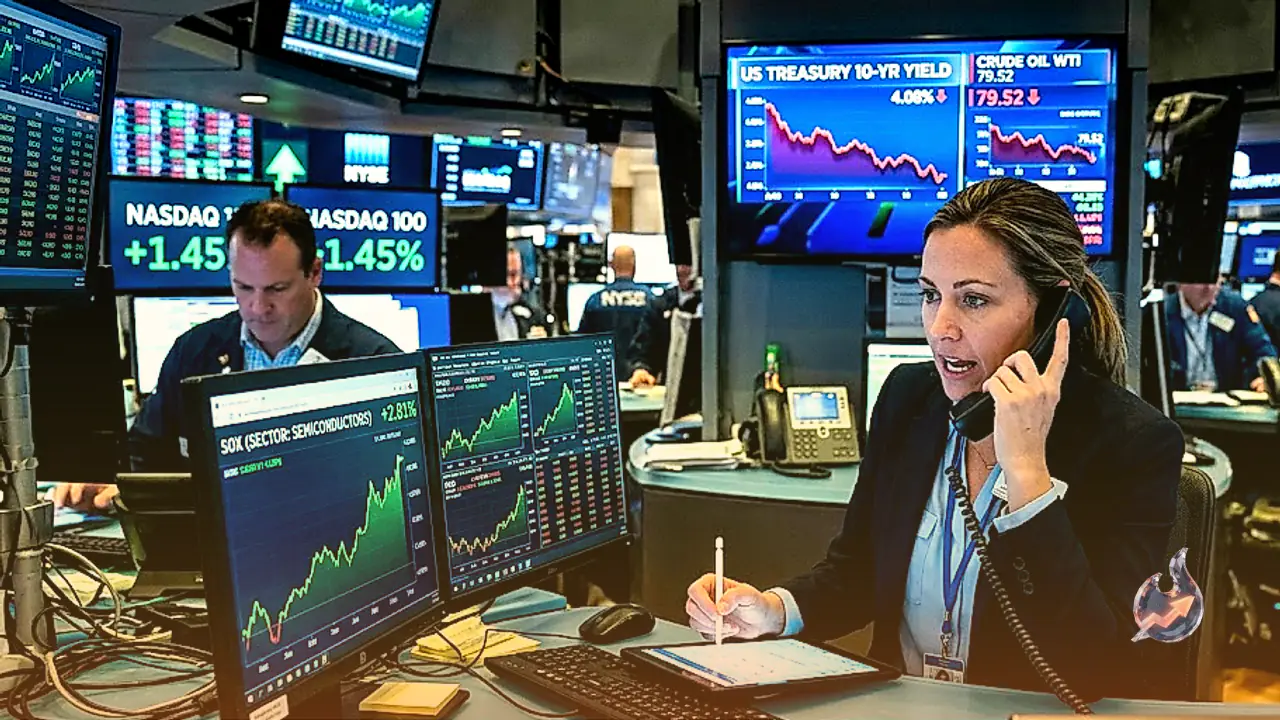
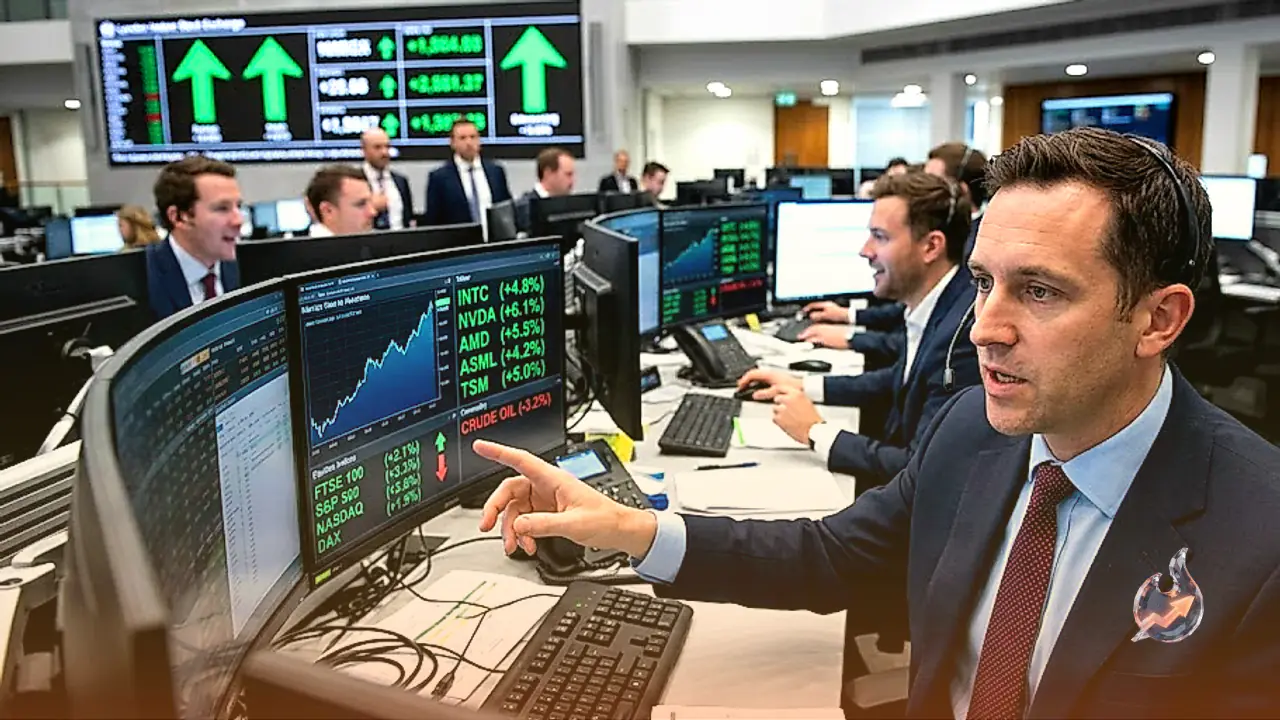














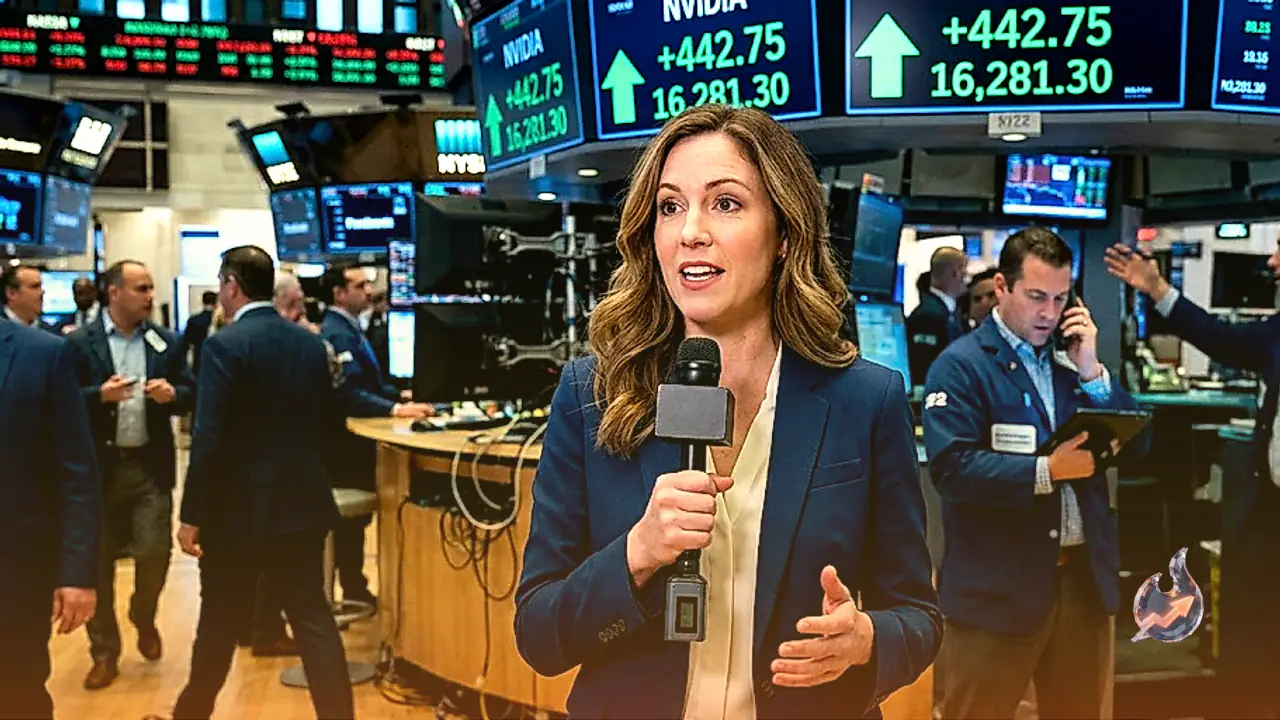

A sharp rally in semiconductor shares triggered an aggressive overnight surge across Wall Street, snapping recent losing runs across major US equity benchmarks. The tech-dominated Nasdaq Composite led the upward charge with an advance of nearly 2 percent, while both the Dow Jones Industrial Average and the S&P 500 recorded gains of roughly 1 percent each. Heavyweights including Nvidia, Micron, Intel, and AMD emerged as the session's star performers, driving broad institutional demand. Market sentiment also found support after the US Federal Reserve enacted a 25-basis-point interest rate hike, representing the central bank's first rate increase in three years. However, this bullish momentum hit immediate friction on Friday morning, with US equity futures drifting into negative territory and signaling cautious positioning across trading desks.
Benchmark Indices Log Solid Closing Gains
During the overnight cash session, the Dow Jones Industrial Average climbed 316.14 points, or 0.61 percent, finishing at 51,778.04. The broader S&P 500 advanced 85.95 points, or 1.14 percent, to reach 7,637.76 at the closing bell. Meanwhile, outperformance in technology propelled the Nasdaq Composite up by 439.88 points, or 1.7 percent, to settle at 26,418.30. A pullback in crude oil prices combined with declining government bond yields materially strengthened investor risk appetite on September 17, 2026. This macroeconomic relief, matched with concerted accumulation in semiconductor names, drove major averages higher throughout the session.
Semiconductors Rebound Following AI Capital Expenditure Worries
Chip manufacturers served as the primary growth engine for the broader market, mounting a decisive recovery following earlier sessions marred by worries over artificial intelligence safety that had clouded expectations for enterprise AI capital spending. Leading the charge, Intel posted an impressive 7.7 percent advance, followed by AMD gaining 6.4 percent and SanDisk rising 6.2 percent. Micron added 5.5 percent, while Nvidia gained 2.5 percent. Equities found broader relief as softer crude prices tempered prevailing inflation fears and spurred a rally across the Treasury curve, allowing the benchmark 10-year US Treasury yield to retrace toward 4.93 percent after crossing the 5 percent threshold earlier in the week. Investors also reacted favorably to the Federal Reserve delivering an interest rate hike that matched consensus expectations, even as central bank policymakers signaled continued monetary tightening to bring inflation under control.
Futures Contract in Early Friday Trading
The overnight optimism paused during the initial trading hours of Friday, September 18, 2026, as US stock index futures moved lower. Dow Jones futures showed modest losses, hovering near 51,804. S&P 500 futures fell 6.50 points to 7,633.50, and Nasdaq 100 futures experienced the steepest setback, shedding 63 points to trade at 29,383.75. According to an analytical note from Charles Schwab, market participants are continuing to absorb the ramifications of the Federal Reserve's first rate increase in more than three years, while ongoing geopolitical unrest, elevated yields, and volatile oil prices remain dominant market drivers.
Energy Benchmarks and Treasury Yield Behavior
Crude oil benchmarks fell by roughly 1 percent in early Friday activity but remained stubbornly above the key $100 psychological barrier. US West Texas Intermediate crude futures dropped 1 percent to trade near $101 per barrel, while Brent crude dropped 1 percent to hover near $104 per barrel. In the broader energy basket, natural gas and gasoline futures recorded declines of between 1 and 2 percent.
In the fixed income space, the 10-year US Treasury yield retreated to 4.95 percent on Thursday, moving away from 5.04 percent, its highest mark since 2007. The easing in bond yields followed the Federal Reserve's rate adjustment and accompanying comments from Chair Warsh, who reaffirmed the central bank's unwavering determination to combat stubborn inflation, reassuring investors regarding institutional policy credibility.
Geopolitical Frictions and Cross-Asset Perspectives
Despite the minor easing in headline energy prices, persistent geopolitical friction and the widening of hostilities into new operational fronts continue to cast an overhang on international equity markets. Ponmudi R, chief executive officer of Enrich Money, noted that investors are expected to track events across the Middle East with high scrutiny, cautioning that any renewed military escalation could quickly undo the recent softening in oil prices and introduce severe volatility into global trading.
Nathan Peterson, director of derivatives research and strategy at SCFR, shared both optimistic and cautionary views on the macroeconomic crosscurrents. Peterson observed that from a bullish standpoint, the consumer remains resilient despite oil pushing higher over the past six weeks, and while yields are elevated, they are not out of control. However, from a short-term trading perspective, Peterson cautioned that the status of the war involving Iran is the primary leading indicator, noting that it does not appear to be progressing well.
Charles Schwab indicated that because the remainder of the week carries a sparse slate of company earnings and economic announcements, market attention will center on future interest rate trajectories against the backdrop of elevated borrowing costs, energy pressures, and geopolitical conflicts. Notably, no economic data releases or corporate earnings reports are scheduled for Friday.