
























Geopolitical friction between Washington and Tehran has reached a fresh high following sharp statements from Iranian leadership. Iran's Foreign Minister Abbas Araghchi firmly dismissed US President Donald Trump's warning of an impending economic D-Day against Tehran. Araghchi stated that the aggressive stance from the United States is primarily an attempt to divert global attention away from Washington's spiraling national debt and mounting interest payment obligations. He emphasized that repeating past confrontational measures will produce no positive outcomes for American policy objectives.
Addressing the newly announced restrictions, Araghchi remarked that doubling down on failed policies will only bring further defeat and deepen the enmity of the Iranian public. He characterized the economic enforcement measures of the US as economic terrorism that directly threatens world economic stability and state sovereignty across the globe. The strong reaction followed President Trump's declaration of the most severe economic isolation campaign ever directed against Iran, alongside explicit warnings that nations extending financial support to Tehran would face grave economic repercussions.
WTI Crude Benchmark and Global Oil Market Drivers
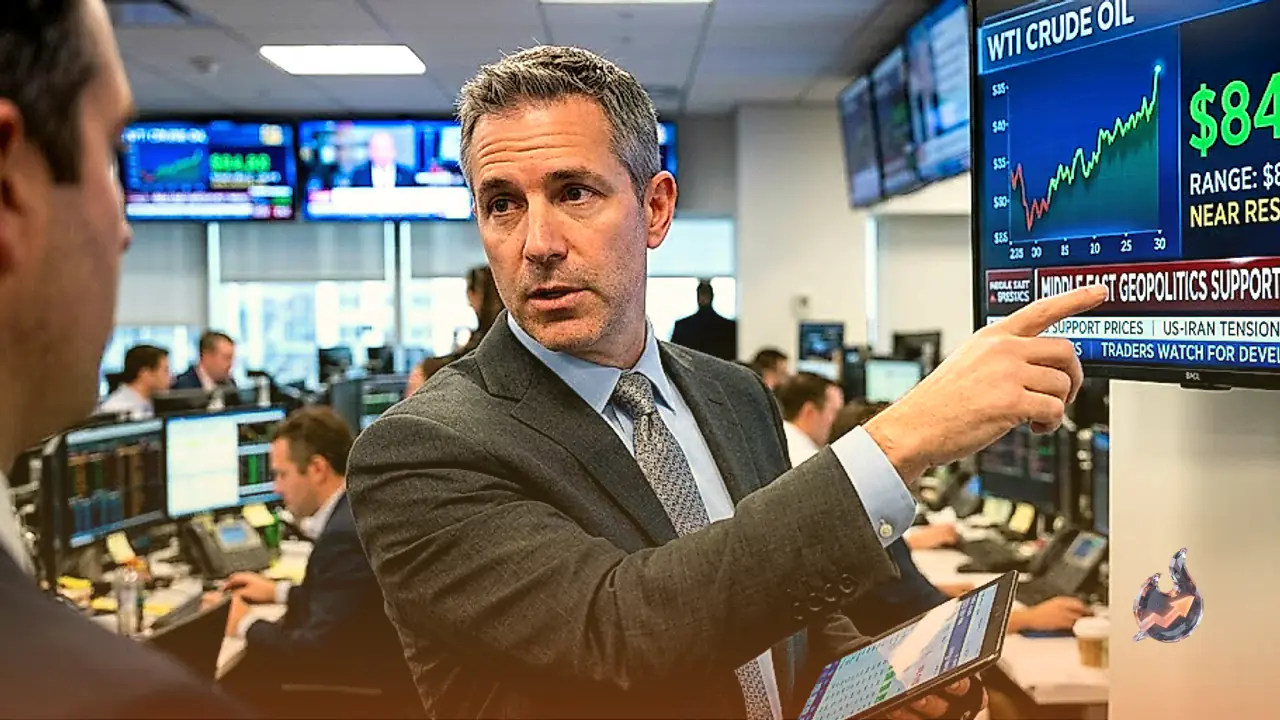
As diplomatic tensions escalated in the Middle East, international energy markets traded with heightened sensitivity. West Texas Intermediate, widely known as WTI Crude, edged up slightly by 0.10 percent to settle near $84.35 per barrel during active market hours. Raw petroleum prices remain highly sensitive to supply disruptions, regional geopolitics, and global macroeconomic indicators.
WTI Crude serves as a primary price benchmark for global petroleum trading alongside Brent Crude and Dubai Crude. Sourced within the United States, WTI is referred to as light and sweet due to its lower density and low sulfur content, making it exceptionally easy to refine into gasoline and high-demand fuels. It is distributed through the Cushing storage hub in Oklahoma, often referred to as the pipeline crossroads of the world. Because of these qualities, WTI spot and futures prices are tracked globally as key economic indicators.
Market fundamentals of supply and demand drive WTI valuation daily. Broad economic expansion enhances industrial demand for transportation and energy, elevating crude prices, whereas sluggish growth weakens consumption. Political instability, armed conflict, and international trade sanctions interrupt physical oil flows, sparking price spikes. Additionally, because crude oil is denominated in US Dollars, fluctuations in the currency exert an inverse influence on oil affordability for non-dollar purchasers worldwide.
Weekly Inventory Reports and OPEC Production Quotas
Traders assess weekly physical stock metrics to gauge demand strength across major economies. Inventory figures published by the American Petroleum Institute, known as the API, and the official Energy Information Administration, or EIA, serve as essential market barometers. A draw in weekly crude inventories indicates expanding consumption relative to supply, pushing benchmark prices upward. Conversely, expanding stockpiles point toward excess supply, exerting downward pressure on barrel prices.
The API publishes its private industry survey every Tuesday, while the government-run EIA releases its official data on Wednesday. Historical data reveals that both reports align within a one percent variation margin roughly 75 percent of the time. Given its status as an independent government institution, market participants generally view EIA figures as the definitive standard for inventory verification.
Supply levels are also directly managed by the Organization of the Petroleum Exporting Countries, a coalition of 12 oil-producing nations that establishes official production targets during biannual conferences. Curtailments in OPEC output quotas constrain global supply, elevating spot prices, whereas production increases lower costs. The broader OPEC alliance, including 10 non-member partner nations led prominently by Russia, exercises significant influence over global supply management.
Foreign Exchange Trends and Gold Market Dynamics
Currency and precious metals markets mirrored the shifts in geopolitical risk and monetary liquidity sentiment. The British Pound held steady near 1.3600 against the US Dollar in European trading, consolidating below its highest level recorded since May 11. Dollar sellers paused as market participants analyzed the long-term systemic impact of newly announced liquidity interventions by the US Treasury Department.
Similarly, EUR/USD entered a consolidation phase just below the 1.1700 resistance mark after touching multi-month highs reached in late May. Currency traders maintained a cautious posture, awaiting fresh macroeconomic catalysts such as US Jobless Claims figures while keeping a close watch on Middle East security risks.
In commodities, spot gold pulled back modestly below the $4,500 per ounce threshold during Asian trading sessions. Despite minor profit-taking prompted by a stabilizing US Dollar following hawkish Federal Reserve meeting minutes, gold remained positioned near multi-week highs set earlier on Thursday. Sustained weakness in US Treasury yields helped cushion the downside for the precious metal.
Crypto Market Rebound and US Treasury Liquidity Interventions
Digital assets displayed renewed momentum following systemic liquidity announcements by American fiscal authorities. Major cryptocurrencies, including Ripple, Solana, and Cardano, demonstrated solid floor support. Market analysis indicated positive technical momentum for XRP and SOL, whereas ADA moved cautiously near key support levels. XRP traded around $1.0951 following a strong 10 percent rally during the previous session.
The financial backdrop was significantly influenced by an unscheduled announcement from the US Treasury Department. Stepping outside its standard calendar schedule at 12:32 GMT on Wednesday, the Treasury declared a substantial expansion of its bond buyback operations. Under the revised framework, maximum liquidity support operations targeting 10-year to 20-year and 20-year to 30-year bond maturities will double from $2 billion to at least $4 billion per operation. Scheduled to take effect from September 9 through November 4, this intervention aims to reinforce liquidity across long-term debt markets amidst heightened market uncertainty.