




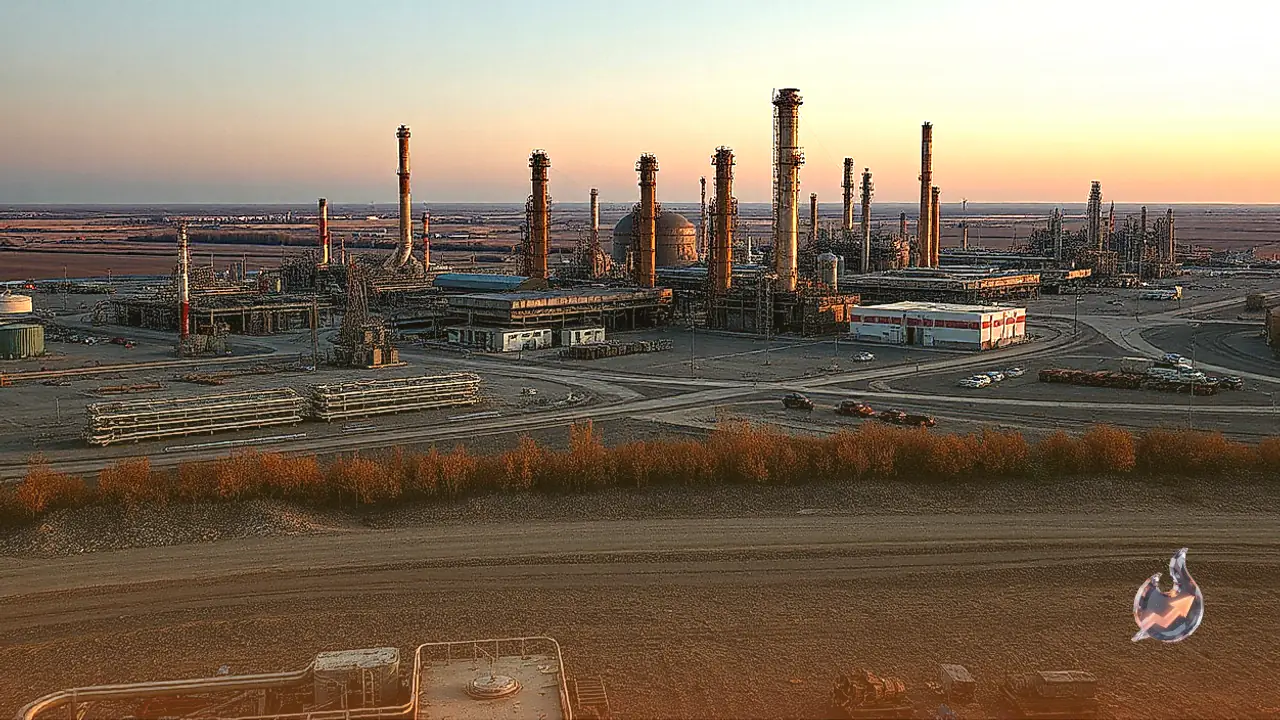


















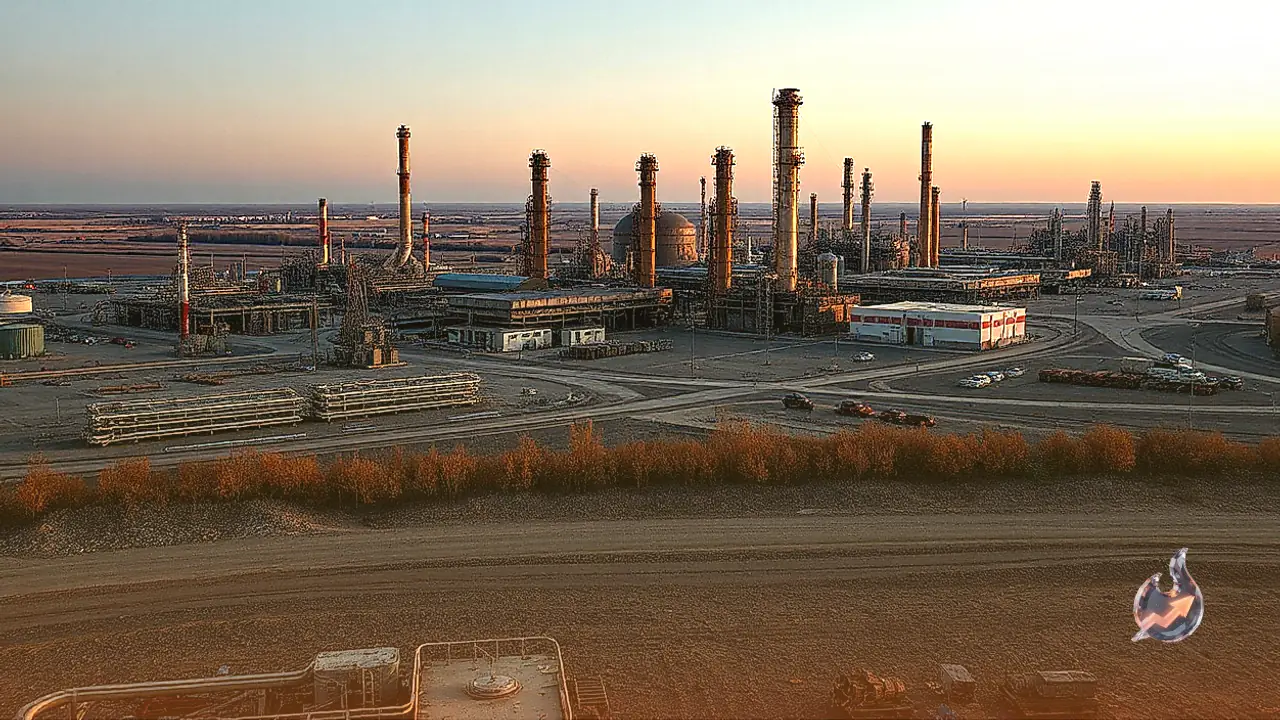

Ukrainian forces have renewed military drone operations against critical Russian refining assets, ending a temporary suspension of roughly two weeks. The resumption of deep-strike drone sorties proceeds against diplomatic cross-currents and direct resistance to pressure exerted by US President Donald Trump ahead of the US midterm elections. The tactical escalation introduces immediate supply uncertainty into global energy markets, forcing traders to reassess pricing baselines across refined products and crude benchmarks.
Three Refineries Struck Across Consecutive Nights
The operational sequence unfolded over three straight nights beginning on October 30, with uncrewed aerial vehicles executing targeted strikes against three geographically dispersed Russian processing complexes. The designated assets included Rosneft’s Novokuybyshevsk refinery situated in the Samara region, the Bashneft-Novoil plant operating in Ufa, and LUKOIL’s NORSI industrial refinery located in Kstovo. Each targeted facility represents a cornerstone of domestic processing capacity, responsible for converting regional crudes into transportation fuels and high-yield petrochemical feedstocks. Concentrated strikes across these distinct administrative territories highlight an ongoing logistical threat to primary processing infrastructure.
Understanding WTI Crude: Physical Qualities and Benchmark Status
In the wake of refinery disruptions, international market scrutiny routinely focuses on West Texas Intermediate, widely known by its market ticker WTI. WTI represents a foundational crude grade actively negotiated across global clearing houses alongside Brent and Dubai Crude, forming the core tripartite framework of modern oil valuation. The grade earns the technical classifications of light and sweet because of its low API gravity and minimal sulfur concentration. These chemical characteristics ensure that refiners can distill the feedstock into gasoline, diesel, and aviation fuels with far less refining overhead compared to heavier, sour varieties. WTI is gathered within production fields across the United States and routed into physical storage and distribution terminals at Cushing, Oklahoma, an essential junction formally designated as The Pipeline Crossroads of the World. Because of this massive physical volume and terminal transparency, WTI serves as an essential market barometer frequently monitored across international financial media.
Mechanics of Price Determination: Supply, Demand, and the Dollar
Value trajectories for WTI crude obey classic economic drivers of physical supply and commercial demand. Robust global economic expansion bolsters commercial transport, industrial activity, and consumer mobility, which consistently accelerates crude consumption and underpins spot valuations. Conversely, periods of sluggish industrial expansion or recessionary distress dampens fuel drawdowns, softening pricing structures. Supply equilibrium remains sensitive to geopolitical flashpoints, open warfare, and targeted sanction regimes that interrupt pipeline throughput, shipping channels, or processing plants. In tandem with structural disruption, formal quota determinations enacted by the Organization of the Petroleum Exporting Countries introduce immediate swings in market balance. Furthermore, because international crude trade is conducted predominantly in US Dollars, exchange-rate swings exert a strong pricing effect: a softer greenback reduces purchasing costs for holders of foreign currencies, stimulating broader buying, whereas a stronger dollar suppresses global affordability.
Market Guidance from Weekly API and EIA Petroleum Inventories
Traders rely heavily on periodic storage metrics published by the American Petroleum Institute and the Energy Information Agency to track the health of physical supply and demand balances. Fluctuations documented across these weekly releases provide actionable clues regarding immediate refinery demand and commercial drawdown velocities. A documented draw in commercial inventories generally points toward elevated end-user demand or supply constraints, which acts to propel crude futures higher. In contrast, inventory builds indicate lagging refinery intake or an oversupplied physical market, which typically depresses outright valuations. The private API summary enters the market every Tuesday, followed on Wednesday by the official statistical bulletin from the EIA. Historical tracking shows that results reported by both organizations match within a 1% margin roughly 75% of the time. Nonetheless, commercial trading desks accord greater institutional reliability to the EIA data release because it originates from a regulated government agency.
The Cartel Architecture: OPEC and the Expanded OPEC+ Coalition
Global production discipline is steered by OPEC, an assembly of 12 petroleum-producing nations that convenes twice a year to orchestrate coordinated extraction ceilings for sovereign members. Strategic decisions hammered out during these ministerial sessions carry substantial market weight over WTI delivery contracts. Whenever OPEC members elect to trim collective quotas, available supply contracts across spot hubs, exerting upward momentum on global barrel prices. When the cartel authorises output increases, the enlarged influx of physical supply achieves the opposite outcome, lowering market prices. The wider alliance known as OPEC+ incorporates ten additional non-OPEC crude-exporting states into this production framework. Among these supplemental members, Russia stands as the primary participant, making its sovereign refining stability and export capacity an integral factor in collective quota calculations.
Movements Across G10 FX Pairs and Global Safe-Haven Assets
Regional volatility coincided with broader recalibrations across major currency pairings and commodity desks during Monday trading. In foreign exchange, AUD/USD recovered from early Asian session losses as fresh diplomatic optimism concerning Iran improved market sentiment, putting a ceiling on the safe-haven US Dollar and underpinning the risk-aligned Australian currency. Despite the intraday advance, spot transactions held below the one-month peak recorded last Thursday, with market participants hesitant to establish aggressive long positions prior to the Reserve Bank of Australia’s monetary policy announcement.
Concurrently, USD/JPY found upward momentum during Monday's Asian hours, rebounding from Friday troughs below the 157.00 psychological threshold. Uncertainty surrounding the schedule of subsequent interest rate hikes from the Bank of Japan continued to sap investor appetite for the Japanese Yen. Simultaneously, prospects for Middle East diplomatic de-escalation constrained unilateral upside in the US Dollar, even as market participants debated whether Japanese fiscal authorities might intervene in foreign exchange markets to stabilize the weakening Yen.
Gold Price Dynamic and Forthcoming US Economic Releases
Physical gold commenced the trading week on a steady tone, engineering a modest technical rebound after touching its lowest price point since October 2025 during the preceding Friday session. Easing pressure on the US Dollar, tied to prospective Middle East diplomatic talks, provided breathing room for bullion. However, sustained expectations for interest rate hikes by the US Federal Reserve limited upside for the non-yielding precious metal. Market focus now shifts toward significant US macroeconomic indicators due across the start of the month, including the ISM Manufacturing index and Friday’s comprehensive Non-Farm Payrolls employment release.