
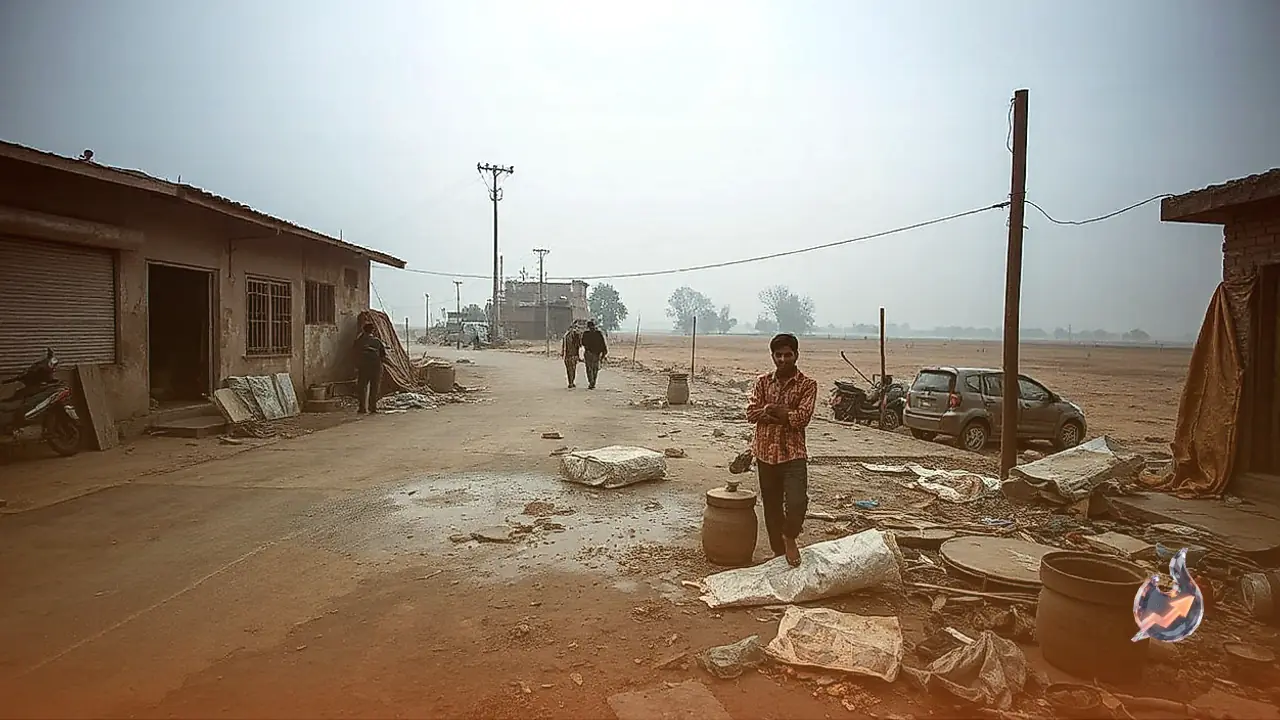















With only a few days remaining before the festival of Diwali, traditional pottery households across Jamui district in Bihar have ramped up their work to shape earthen lamps and handmade clay toys. However, harsh weather conditions caused by the impact of Cyclone Arnav have thrown their seasonal operations into disarray. Prolonged cloud cover, unexpected rainfall, and persistent humidity have directly hindered the delicate drying and firing processes required for clay products. Local artisans now fear that the total volume of earthen lamps supplied to the market will decline sharply compared to last year. Although the skies have begun to clear, potter families are now working round the clock to salvage their output before the festive rush peaks.
Generations of Craftsmanship Face Climate Disruption in Shivandih
In the Shivandih neighbourhood of Jamui town, 60-year-old Mohan Pandit spends long hours spinning his potter wheel to mould fresh clay. Mohan Pandit has been crafting earthen lamps and pots for the past 48 years, having started this artisan trade at the young age of 12. His ancestral family has preserved the tradition of working with clay across multiple generations, relying on festive seasons as their primary commercial anchor. Yet, according to Mohan Pandit, the sudden disruption brought by unseasonal weather this year is unprecedented in recent memory. The persistent rain and damp air have made it difficult for his household to prepare even half the number of lamps they delivered during the previous festive season.
Production Plunges from 40,000 Lamps to Under Half
The scale of the disruption becomes evident when compared against the previous year's festive output. Last Diwali, Mohan Pandit's household successfully produced around 40,000 clay lamps to meet festive demand across local markets. This time, the unseasonal weather triggered by Cyclone Arnav has constrained production severely. Mohan Pandit indicated that meeting even half of last year's tally will be an uphill task, given the narrow window of clear weather remaining before the festivities begin. With Diwali approaching rapidly, the entire family has mobilized every available resource to accelerate output and minimize the shortfall.
Sons Leave Masonry Jobs to Assist at the Potter Wheel
The urgency to deliver enough lamps within limited days has forced the family to reallocate its workforce. Mohan Pandit has three sons, two of whom earn their daily livelihoods as construction masons. Recognizing the soaring demand for festive lamps and the extreme shortage of preparation time, both sons have temporarily stepped away from their masonry work. They are currently working alongside their father, operating the wheel, kneading clay, and shaping lamps. Simultaneously, the women of the household and other relatives are engaged in moulding festive clay toys and arranging the finished pieces for drying.
Sunlight Dependence and Worries Over Seasonal Livelihoods
Diwali represents the single most crucial commercial window of the year for traditional pottery communities, as market appetite for terracotta lamps and decorative clay items surges. The craft relies entirely on favourable weather conditions. Once raw lamps are shaped on the wheel, they require adequate sunlight and dry air to cure thoroughly before they can enter the kiln for firing. Damp conditions caused by the cyclonic disturbance delayed this critical stage significantly. Now that weather conditions have improved, the artisans in Shivandih are working day and night to produce as many lamps as possible, balancing festive commitments against lingering fears of significant seasonal revenue loss.