





















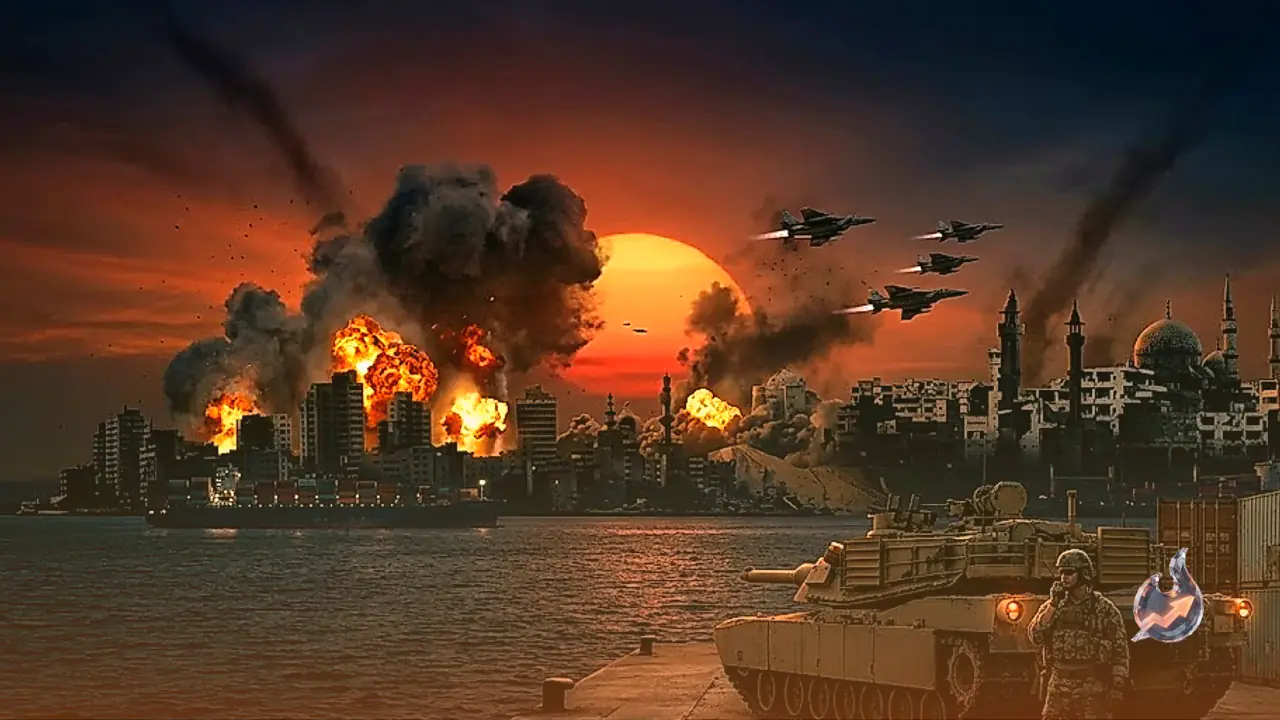

The geopolitical landscape across the Middle East has entered a highly volatile phase as the United States military executes its ninth consecutive night of intense aerial bombardments directed at Iranian positions. According to statements from Washington, this sustained series of airstrikes launched on Sunday was explicitly authorized to penalize Tehran. The forceful American response comes in direct retaliation for the recent loss of American military personnel, marking a grim milestone as the first US combat deaths since the latest resurgence of direct hostilities between the two rival nations. This prolonged exchange of fire threatens to destabilize an already fragile region, drawing in multiple neighboring countries and rattling global economic stability.
Military Casualties and Expanding Battlegrounds
The human cost of this escalating conflict continues to mount for the American armed forces. Defense officials recently confirmed the death of yet another American service member deployed in the Middle Eastern theater. This tragedy occurred in the restive northern territories of Iraq. According to military reports, the soldier was killed while specialized explosive ordnance disposal teams were attempting the controlled detonation of a downed Iranian uncrewed aerial vehicle. Neutralizing captured or crashed drones is a highly dangerous but necessary procedure to prevent the recovery of hostile technology and to eliminate the immediate threat of unexploded payloads.
In a parallel and equally somber development, the United States Central Command, commonly known as CENTCOM, disclosed that search teams have located previously unidentified human remains within the borders of Jordan. This discovery is directly connected to a separate, highly destructive Iranian drone attack. That specific incursion had already resulted in the confirmed deaths of two American troops, while leaving a third soldier officially classified as missing in action. The recovery of these remains highlights the broad geographical scope of the current hostilities, stretching well beyond traditional conflict zones.
A Wave of Regional Aerial Assaults
The shockwaves of the conflict are being felt across the Persian Gulf and beyond. Air raid sirens, a chilling sound rarely heard in peacetime, blared relentlessly across the island kingdom of Bahrain. This widespread alert was triggered after Iranian military forces unleashed a fresh and coordinated wave of long-range ballistic missiles coupled with single-use attack drones. This sophisticated barrage did not single out one enemy but rather targeted a multitude of strategic sites simultaneously distributed across Bahrain, Jordan, Kuwait, and Iraq, illustrating Tehran's capability to project power across multiple borders.
The defensive responses varied dramatically across the targeted nations. In Jordan, the incoming Iranian missile barrage triggered emergency sirens particularly close to the vital southern port city of Aqaba. Jordanian military authorities swiftly reported that their advanced air defense networks successfully intercepted and neutralized three incoming missiles mid-flight. They confirmed that, fortunately, these interceptions prevented any ground casualties or infrastructural damage within their jurisdiction.
Conversely, the situation in neighboring Kuwait painted a picture of significant devastation. The Kuwaiti armed forces released statements confirming that the aerial attacks successfully breached their defenses, striking critical civilian infrastructure. Specifically, the bombardment targeted essential power generation facilities and crucial water desalination plants. These strikes ignited massive fires and inflicted what officials termed as severe damage upon these vital institutions, potentially threatening the daily utility access for the local civilian population.
Israel's Stance and Maritime Chokepoints
The conflict has also brushed against the borders of Israel, adding another layer of complexity to the regional crisis. On Sunday, the Israeli defense apparatus reported the successful interception of a hostile Iranian drone that had navigated perilously close to the volatile border separating Israel and Syria. In the aftermath of this aerial encounter, Israeli Defense Minister Israel Katz delivered a stark and unambiguous warning directed at the leadership in Tehran. He stated unequivocally that the Israeli military forces stand ready and will immediately re-engage in direct combat operations if attacked.
Beyond the immediate military skirmishes, the geopolitical friction is causing severe disruptions to international maritime commerce. The Strait of Hormuz, a narrow and strategically vital waterway through which a massive portion of the world's energy supplies flows, saw a dramatic reduction in commercial transit over the weekend. Data provided by the financial shipping monitor LSEG revealed that a mere four transport vessels navigated the perilous strait on Sunday. This figure represents a staggering fifty percent decline from the eight vessels that braved the crossing just the previous day.
Economic Indicators and Shifting Monetary Policies
Despite the persistent military tensions gripping the Middle East, the broader financial markets are simultaneously grappling with complex domestic economic signals. In the commodities sector, the price of crude oil experienced a notable upward trajectory, driven directly by fears of supply chain disruptions. Conversely, the value of the American dollar posted unexpected losses during the same trading period. As traders look toward the immediate future, the upcoming week's financial agenda will be heavily dominated by crucial corporate earnings reports in the United States, pivotal policy announcements from the European Central Bank, and breaking news flows originating from the United Kingdom. American equity markets, in particular, are facing a critical stress test as investor focus rotates heavily toward technology earnings.
On the macroeconomic front, the latest inflation metrics offer a glimmer of hope. The Consumer Price Index (CPI) for the month of June registered a surprising 0.4 percent decline on a month-over-month basis. This contraction is highly significant, marking the largest single-month decrease since the economic shocks of April 2020. This sharp monthly drop successfully dragged the overarching annual inflation rate down to 3.5 percent, a substantial improvement from the 4.2 percent recorded in May, effectively snapping a three-month streak of acceleration. When examining core prices, the data showed zero growth for the month. On an annualized basis, this core metric dropped to 2.6 percent, with both headline and core figures falling below consensus estimates.
Decoding Financial Market Sentiment: Risk-On vs Risk-Off
To understand the erratic movements of global capital during times of war and economic uncertainty, it is essential to grasp the fundamental concepts of market sentiment, frequently categorized by the financial jargon terms risk-on and risk-off. These descriptive phrases refer to the collective appetite and tolerance for risk that international investors are willing to stomach during any given trading period.
In a climate characterized by a risk-off market mentality, fear and uncertainty regarding the future dictate investor behavior. Participants actively choose to play it safe, redirecting capital into less risky, defensive assets that are more certain of bringing a return, even if modest. During these anxious periods, the value of major government bonds tends to rise, while gold historically shines as a premier safe haven.
The foreign exchange market is profoundly influenced by this defensive posture. Safe-haven fiat currencies, most notably the Japanese Yen (JPY), the Swiss Franc (CHF), and the US Dollar (USD), all benefit immensely. The US Dollar surges primarily because it serves as the world's reserve currency, and investors rush to purchase US government debt, believing the largest economy is unlikely to default. The Yen experiences heightened demand largely due to domestic bondholders who rarely dump their holdings in a crisis. Similarly, the Swiss Franc attracts frightened capital because strict Swiss banking laws offer enhanced capital protection.
The Mechanics of Optimistic Trading
In stark contrast, when conditions stabilize, the market transitions into a risk-on phase. During these periods of optimism, investors become significantly more willing to purchase risky assets. Typically, a risk-on environment serves as a powerful catalyst for global stock markets to rise, while the vast majority of raw commodities, except gold, experience price appreciation due to a positive growth outlook. Furthermore, speculative assets, including cryptocurrencies, frequently see upward momentum.
The ripple effects of this optimism profoundly impact the valuations of specific national currencies. The currencies of nations that function as heavy commodity exporters naturally strengthen because of the anticipated surge in global demand. Consequently, the Australian Dollar (AUD), the Canadian Dollar (CAD), and the New Zealand Dollar (NZD) all tend to rise in risk-on markets. Even minor foreign exchange pairs associated with resource-heavy markets, such as the Russian Ruble (RUB) and the South African Rand (ZAR), ride this wave. Investors purchase these currencies foreseeing that heightened economic activity will inevitably result in greater future demand for raw materials.