
























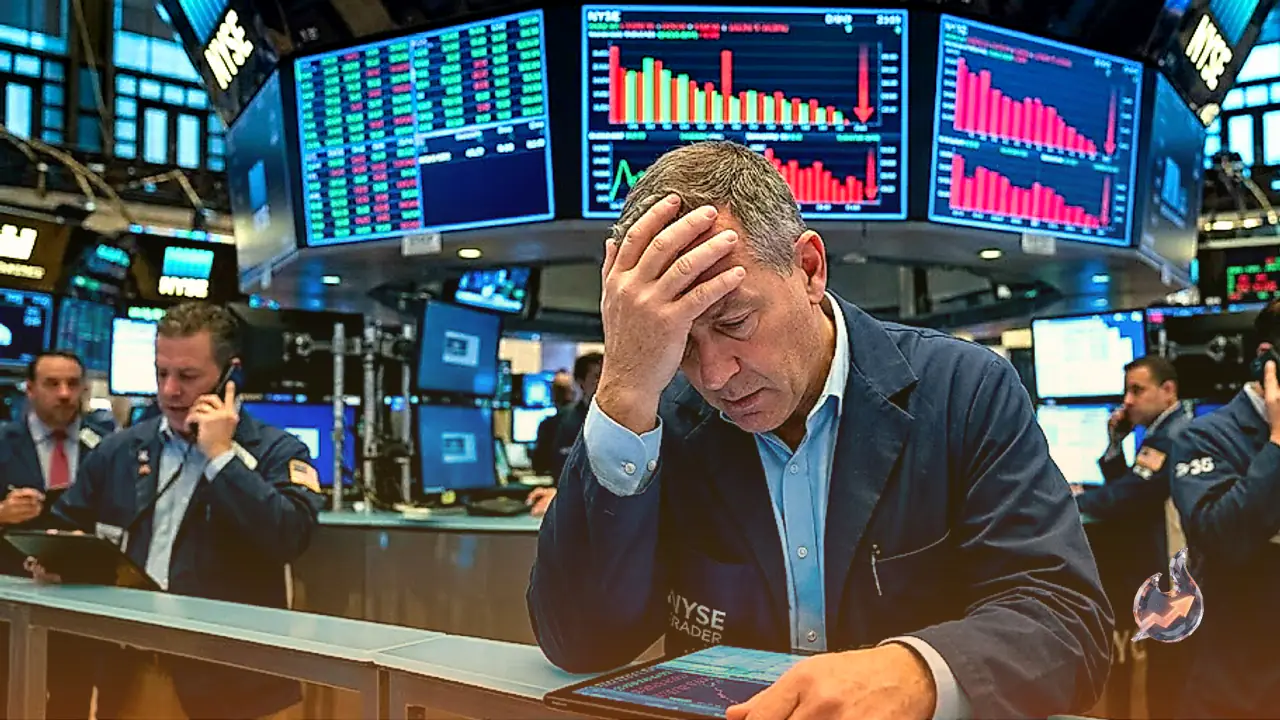

US equity markets experienced a sharp selloff on July 29, deeply rattling investor confidence across Wall Street. Despite the Federal Reserve keeping its benchmark interest rate targeted in the 3.5% to 3.75% range in line with general expectations, financial markets reacted negatively to hawkish internal signals. The central cause of the steep decline was an unexpected 9-3 vote split among Federal Open Market Committee members, suggesting an increased probability of an aggressive interest rate hike at the upcoming September 2026 policy meeting.
Major Indices Plunge with Dow Experiencing Worst Slide Since April 2025
Selling pressure remained heavy throughout the trading day across all major US benchmarks. The Dow Jones Industrial Average collapsed by 1,153.18 points or 2.2% to settle at 51,594.14, closing very close to its intraday trough of 51,551.18. This marked the single worst daily loss for the index since April 2025. Simultaneously, the tech-centric Nasdaq Composite dropped 433.97 points or 1.74% to finish at 24,442.94, hovering near its daily low of 24,425.34. The broader S&P 500 index also receded by 112.63 points or 1.52% to close at 7,316.15.
Heavyweight Stocks Drop Alongside Escalating Middle East Tensions
Leading corporate names registered significant losses during regular market hours. Investment banking titan Goldman Sachs dropped by more than 5%, while chip giant Nvidia, banking firm JP Morgan, and aerospace manufacturer Boeing all saw their stock prices decline between 3% and 4%. Beyond central bank policy, renewed geopolitical conflict in the Middle East drove up crude oil prices, compounding market anxiety. A report by financial firm Charles Schwab indicated that market participants have become increasingly skeptical regarding massive spending by technology hyperscalers, demanding clear proof of monetization, cash flow generation, and spending discipline before supporting premium stock valuations.
Federal Reserve Policy Statement and Chair Kevin Warsh's Remarks
In its official policy declaration, the FOMC noted that economic activity continues to expand at a solid pace despite macroeconomic uncertainties stemming from the Middle East. The statement highlighted strong productivity growth and capital investment, while observing that employment gains matched workforce expansion with minimal change in the unemployment rate. However, policymakers emphasized that inflation remains elevated above their 2 percent target due to supply-side disruptions in sectors like energy. Speaking at the post-meeting press conference, Fed Chair Kevin Warsh reiterated the central bank's unwavering focus, stating that the committee remains resolute in its commitment to delivering price stability.
After-Hours Tech Earnings Dynamics and Market Outlook
Corporate quarterly earnings drove divergent price action during extended trading. Microsoft shares surged 9% after hours following financial results that comfortably surpassed Wall Street estimates, propelled by robust growth in its cloud computing and artificial intelligence segments. Conversely, Meta Platforms fell over 6% as shareholders expressed concern over the timeframe required to monetize heavy AI infrastructure investments. Market focus is now turning toward upcoming financial reports from tech giants Amazon and Apple, alongside major firms including Mastercard, Bristol-Myers, and Coinbase.
Analyst Perspectives on Market Valuation and Rate Trajectory
Market experts noted that anxiety over technology sector valuations and corporate capital expenditures heavily influenced trading Sentiment. Ponmudi R, Chief Executive Officer of Enrich Money, explained that while the Fed's rate decision eliminated immediate uncertainty, the split among FOMC members highlights that future interest rate adjustments remain strictly dependent on incoming economic data. Moving forward, investors will closely analyze upcoming inflation readings and growth indicators to gauge the central bank's next policy steps.


