



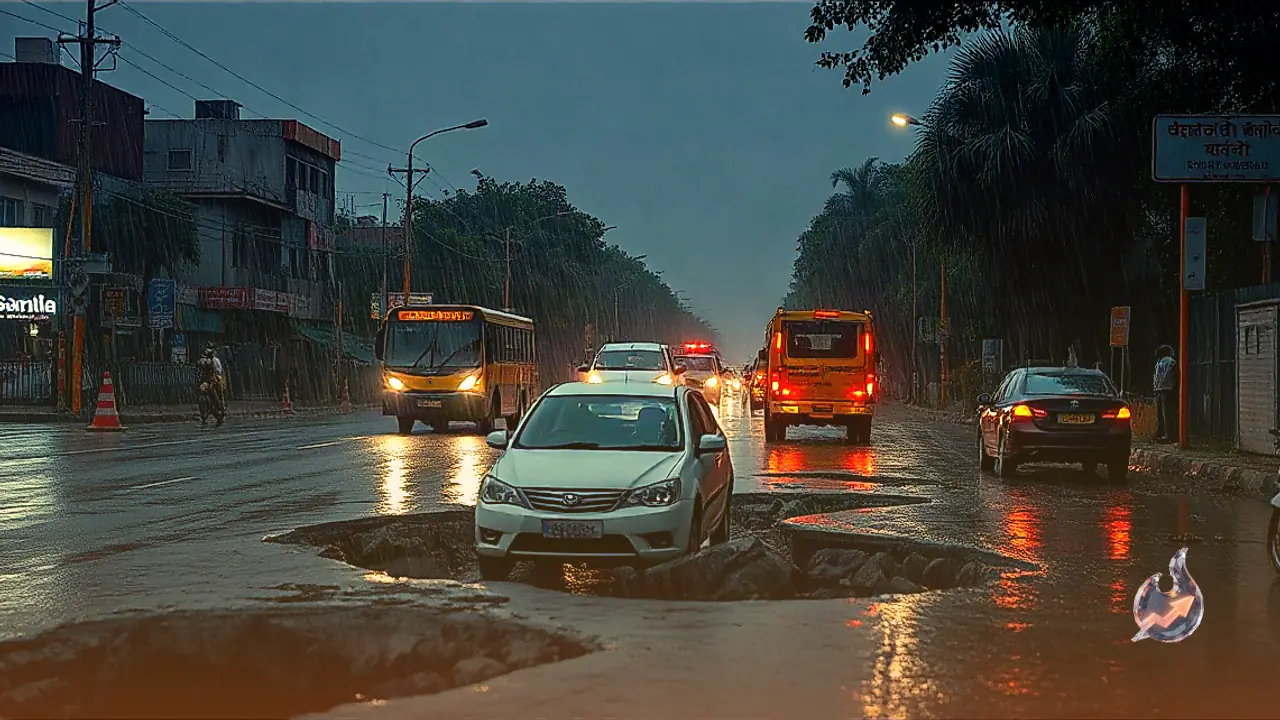



















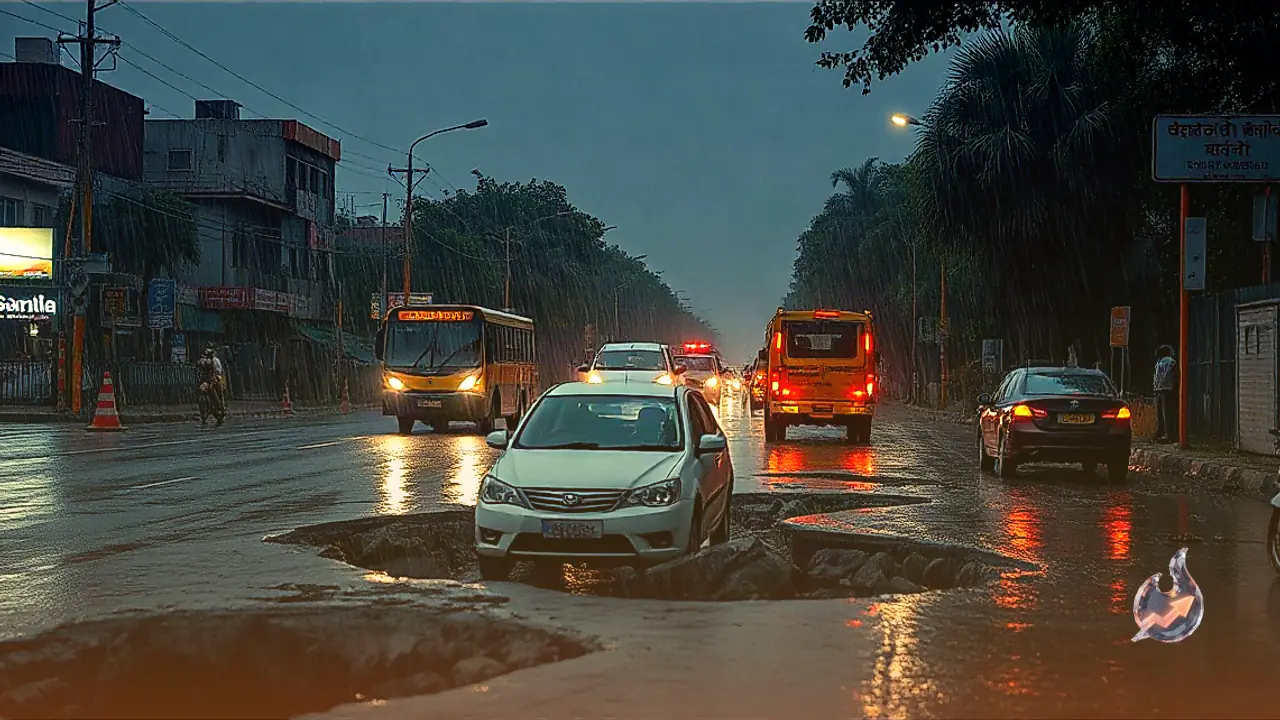

Not every thoroughfare in Faridabad resembles a smooth expressway where motorists can race toward New Delhi within minutes. Moving away from urban centers toward rural outskirts, commuters encounter battered roads and scattered potholes that continuously compound their daily woes. While the Sahupura Road facilitates travel for residents across roughly twenty villages, the Palla Thana Road, alternatively known as the Palla-Basantpur or Palla-Sehatpur main corridor, has remained a persistent source of distress due to prolonged neglect. During the monsoon season, these depressions fill with rainwater, exponentially increasing dangers for two-wheeler riders. Medical experts elaborate on the extent of spinal damage caused by sudden vehicular drops into potholes, the immediate precautions to follow after a fall, and the warning signs indicating that back pain requires urgent medical attention.
Monsoon Rains Amplify Road Accident Risks
In a conversation, Dr. Sachin Goel, Neurosurgeon and Head of Department at Marengo Asia Hospital in Faridabad, points out that road cavities create substantial hurdles during the rainy season. When someone rides a motorcycle through waterlogged streets, identifying hidden craters becomes nearly impossible. Consequently, two-wheelers can easily skid, causing riders to tumble and sustain bodily trauma. Many patients arrive at the clinic with head injuries, while others suffer from fractured spinal columns. Therefore, helmet usage remains mandatory for bikers, as road deterioration during the wet season dramatically elevates personal risk.
Spinal Trauma Caused by Pothole Impacts
Dr. Sachin Goel explains that riding a motorcycle into an unseen pothole or experiencing a sudden jolt carries a high probability of spinal injury. In numerous scenarios, victims suffer outright bone fractures along the spine. Older adults face an elevated vulnerability because their bone density naturally diminishes with advancing age. Frequently, elderly passengers riding as pillion riders on motorcycles are thrown off balance when the vehicle slips or jerks violently inside a depression, leaving them susceptible to severe vertebral fractures.
Assessing Your Condition Immediately After a Fall
Dr. Sachin Goel advises that if someone falls into a road cavity, the primary priority is to remain composed and evaluate personal well-being. Check whether the head has sustained any direct trauma. Inspect the body for extensive injuries and active bleeding. If heavy bleeding occurs, attempt to apply manual pressure to stem the flow. Following a fall, verifying whether the lower back feels secure and confirming that limbs move without restriction are critical steps in the assessment process.
Keeping the Body Immobile During Severe Injuries
Dr. Sachin Goel notes that if individuals suspect major trauma or experience intense back pain, they should maintain complete stillness on the spot. Avoiding unnecessary movement in such circumstances is vital. Remaining horizontal until an ambulance or medical assistance arrives is the safest course of action. Throughout the rainy season, the volume of such patients surges, with emergency wards receiving roughly three to four daily cases involving similar accidents.
Practicing Caution While Driving in Wet Conditions
Dr. Sachin Goel emphasizes that motorists must reduce their driving speeds during rainstorms to navigate road imperfections safely. When rainwater submerges a surface irregularity, accurately gauging its depth becomes impossible, necessitating slower and more controlled driving for both cars and bikes. For motorcycle operators, wearing a helmet is an absolute prerequisite for personal safety on wet thoroughfares.
Severe Jolts Triggering Muscle Strains
Dr. Sachin Goel mentions that when a two-wheeler plunges into a depression, occupants experience a sudden, forceful shock. This violent jolt frequently triggers stubborn muscular strains across the lower back region. Recovery from such discomfort can occasionally take up to an entire month. Anyone who experiences a severe physical impact while driving followed by persistent pain should consult a medical professional without delay.