

















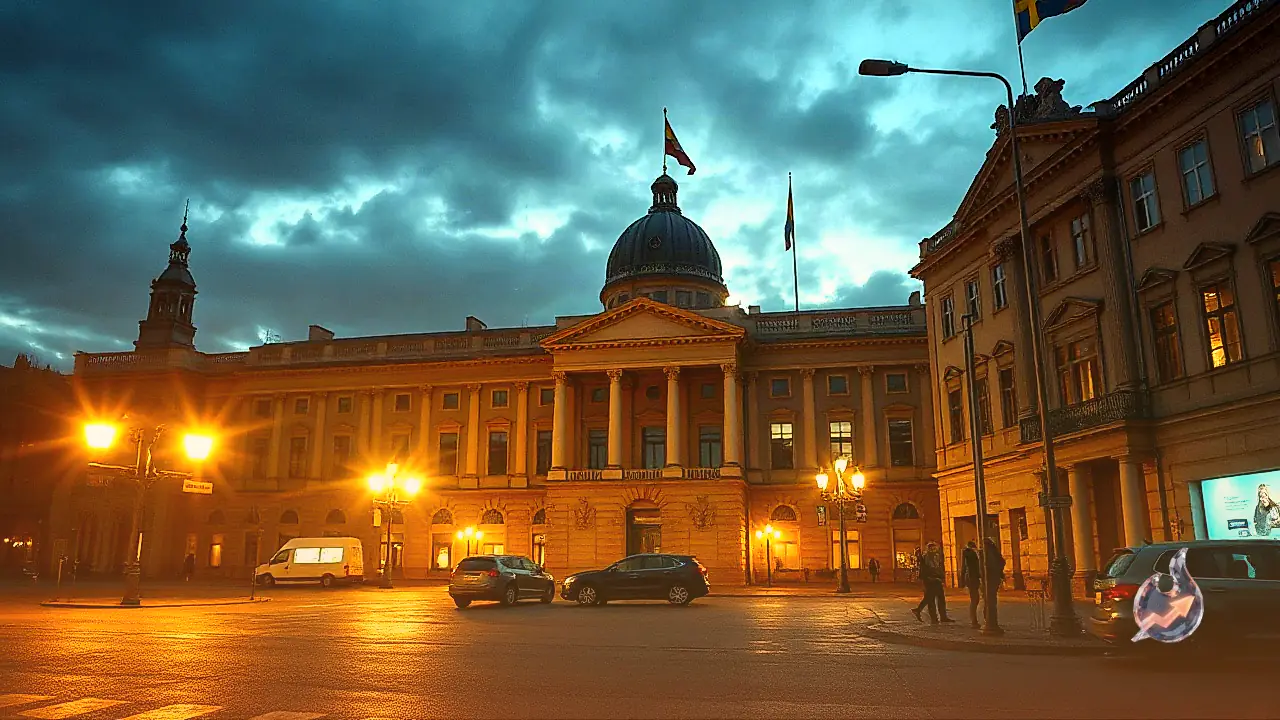

Sweden's political landscape is shifting as exit polls from Sunday's general election indicate that the left-wing political bloc is leading the race to establish a new government. According to projections released by public broadcasters SVT and TV4, the four-party left-leaning coalition is projected to secure 51.3% of the total votes, while the right-wing alliance trails behind with 46.8%. If these preliminary projections are officially confirmed, it would pave the way for Social Democrats leader Magdalena Andersson to return as Sweden's prime minister, a high-profile role she previously held from 2021 to 2022.
Right-Wing Dynamics and the Sweden Democrats
Meanwhile, the current conservative Prime Minister Ulf Kristersson had earlier pledged cabinet positions to his hard-right allies if he successfully manages to retain power. Kristersson's administration has received legislative backing from the hard-right Sweden Democrats, a party with historical neo-Nazi roots. Exit poll data suggests that this party, which first secured seats in parliament in 2010, is heading toward its first-ever electoral setback in terms of declining popular support. Sweden’s parliamentary framework traditionally relies on two major political blocs comprising four parties on each side, making coalition agreements and minority governments a common occurrence in Scandinavian governance. Andersson's Social Democrats have remained a dominant political force in the nation ever since the conclusion of World War Two. Conversely, the Sweden Democrats were founded by Nazi sympathizers in the 1980s and faced a political cordon sanitaire for decades, until a breakthrough in 2022 propelled them to become the country's second-largest party following a campaign centred heavily on immigration and rising violent crime rates.
Voter Choices and Key Campaign Issues
Speaking to the press after casting her ballot on Sunday, Magdalena Andersson framed the democratic choice before voters by questioning whether the nation wanted a government completely dominated by the Sweden Democrats—an unprecedented scenario in Swedish political history—or a administration led by her focused on cooperation. On the other side of the political spectrum, Prime Minister Ulf Kristersson emphasized the necessity of continuing his alliance's governance agenda. Speaking to reporters after voting in his home municipality of Strangnas, Kristersson expressed confidence that voters shared genuine enthusiasm for the continuation of their ongoing policy work. Throughout the intensive election cycle, national security, combating gang-related crime, and state welfare spending emerged as the central issues dominating public discourse.