























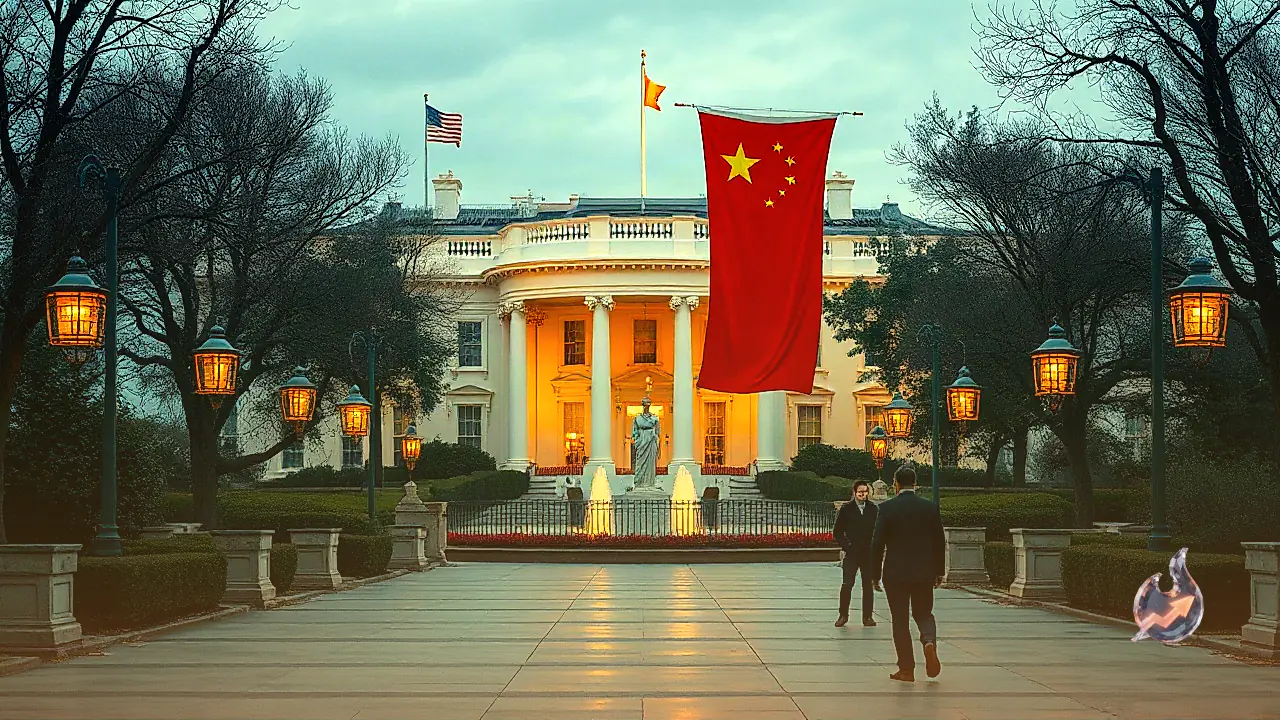

Diplomatic discussions in Washington delivered little clarity on bilateral trade tariffs, triggering immediate adjustments across international foreign exchange markets. As China's paramount leader Xi Jinping visited the White House, the offshore Chinese currency weakened, sending USD/CNH upward for a third straight trading session and lifting the currency pair to its highest mark since the beginning of September. While the Chinese leader used the platform to highlight long-standing bilateral bonds, diplomatic goodwill, and shared technological responsibilities, his remarks completely bypassed the sensitive issue of import duties. Coupled with an unexpectedly brief extension of the existing tariff truce, market participants quickly reassessed their currency exposure.
Tariff truce extended to January 10, defying hopes for a six-month extension
A central economic development emerged when Treasury Secretary Bessent announced on Wednesday that the tariff truce agreed upon in Busan, which was originally set to expire on November 10, has now been extended only until January 10. Financial institutions and global trade analysts had widely anticipated an extension spanning six months or longer to allow substantive negotiations. The primary function of this Busan framework is to prevent punitive tariffs on Chinese merchandise from snapping back to higher levels. Because the reprieve lasts merely two months, exporters holding US Dollars face significantly less urgency to convert their balances into Chinese Yuan prior to January, dampening demand for the Chinese currency in spot and offshore dealings.
Three-session rally lifts USD/CNH as daily indicators show technical resistance
The offshore currency pair staged a noticeable recovery following days of intense Yuan strength. During Monday and Tuesday, USD/CNH traded down near the 6.6900 territory, a zone where the Yuan touched its strongest valuation in three and a half years. However, following the announcement of the short truce extension, Wednesday's trading candle formed the largest gain of the three-day rebound. The advance reversed the downward move that originated on September 17 and propelled the exchange rate to 6.7200, matching levels last seen in early September. Despite the rebound, the pair remains constrained beneath its 50-day Exponential Moving Average (EMA) near 6.7300, a dynamic ceiling that has capped upside price action since the second week of July. Meanwhile, the daily Stochastic Relative Strength Index (Stoch RSI) continues to hover in a flat posture just above the midpoint of its range, having failed to turn higher alongside the spot price advance since mid-September.
Live market metrics for USD/CNY (CNY=X) place the rate at 6.70, reflecting a modest 0.05 percent uptick from the previous close of 6.70. Over the past 52 weeks, the currency pair has traded across a spectrum between 6.70 and 7.19, with present trading volume tracking at 1.00 times its 20-day average. Technical indicators show the 14-day Relative Strength Index (RSI) at 34, while the Moving Average Convergence Divergence (MACD) stands at -0.01 against a signal line of -0.01, maintaining a flat histogram at 0.00. The broader moving average structure indicates a lingering long-term downtrend, characterized by a death cross where the 50-day EMA at 6.73 resides below the 200-day EMA at 6.85. The 20-day EMA sits at 6.71, with simple moving averages positioned at 6.73 for the 50-day and 6.84 for the 200-day. The 20-day Bollinger Bands span from 6.69 to 6.73, centered around a middle band of 6.71, with prevailing prices contained within these bounds. The 14-day Average Directional Index (ADX) reads 44, signaling strong trend conditions, while the Stochastic fast and signal lines sit at 32 and 17 respectively. Daily volatility via the 14-day Average True Range (ATR) reads 0.00, establishing 20-day support near 6.70 and resistance near 6.73. The primary pivot point rests at 6.71, flanked by resistance barriers at 6.71 (R1) and 6.72 (R2), and downside support cushions at 6.70 (S1) and 6.69 (S2).
Xi Jinping's White House address emphasizes partnership and AI governance
Wire reports summarized Xi Jinping's remarks at the White House across 21 concise points, centering primarily on peaceful coexistence, bilateral cooperation, and regular institutional dialogue. The speech omitted any reference to trade duties, with the sole quantitative target dedicated to cultural exchange. The core messages delivered by Xi included the following points
- He expressed genuine pleasure at visiting a beautiful United States.
- Speaking on behalf of the Chinese population, he conveyed warm congratulations on the upcoming 250th anniversary of the founding of the United States.
- He underscored that both China and the United States are great nations populated by great peoples.
- He stated his presence was dedicated to carrying forward friendship and expanding practical bilateral cooperation.
- He observed that both powers carry a joint duty to advance human progress globally.
- He affirmed his willingness to work alongside Donald Trump to steer the course of US-China relations constructively.
- He noted that open, thorough, and sustained conversations serve to deepen mutual comprehension and trust.
- He urged continued engagement across diplomacy, trade, economic policy, and law enforcement channels.
- He reiterated that China's economy remains open and welcomes direct investments from US corporations.
- He signaled a readiness to enhance joint counter-narcotics efforts and operational law enforcement collaboration.
- He voiced the expectation that Chinese enterprises operating in the US receive fair and equitable treatment.
- Addressing technological frontiers, he affirmed that both countries possess the competence and responsibility to steer artificial intelligence (AI) for the common good.
- He urged that economic and strategic competition remain constructive and respect established boundaries.
- He called for routine, uninterrupted lines of communication between both armed forces.
- He unveiled an initiative to invite 100,000 American young people to travel to China over the next five years.
Economic roots of the dispute: From the 2018 friction to Trump's second administration
Broadly understood, a trade war represents a cross-border economic dispute sparked by extreme protectionist measures. It typically involves unilateral trade barriers such as tariffs, which inevitably trigger retaliatory countermeasures, raise cross-border shipping and production expenses, and drive up domestic living costs. The modern US-China trade dispute began in earnest in early 2018 when President Donald Trump imposed tariffs on an extensive array of Chinese imports, citing intellectual property violations and discriminatory trade practices. In response, Beijing placed counter-tariffs on key American exports, including automobiles and agricultural commodities like soybeans.
Although the two nations signed the Phase One trade agreement in January 2020, intended to stabilize relations by mandating structural changes to China's trade regime, the global outbreak of the Coronavirus pandemic shifted priorities away from bilateral compliance. Following Trump's initial term, President Joe Biden kept the existing tariff structures active and introduced supplementary restrictions on specialized goods. The election of Donald Trump as the 47th US President reopened the trade conflict. Having campaigned on a pledge to implement sweeping 60 percent tariffs on all Chinese goods upon taking office, a measure he enacted on January 20, 2025, the administration restarted the confrontation where it concluded. These escalations continue to disrupt international distribution networks, suppress business capital investment, and place upward pressure on Consumer Price Index measures worldwide.
Cross-asset movements: Australian Dollar, Yen interventions, and Gold under pressure
The delicate geopolitical backdrop resonated across multiple asset classes in international sessions. The Australian Dollar (AUD/USD) weakened toward the 0.7000 threshold during Asian trade following the publication of domestic labor numbers for August. While Australian employment growth exceeded projections by adding 39.5K positions, the national unemployment rate climbed to 4.6 percent against an anticipated 4.5 percent, leaving market participants hesitant ahead of the Trump-Xi discussions.
In foreign exchange, USD/JPY retreated from three-week highs to trade around 158.00 as elevated Japanese government bond yields provided support to the Yen amid growing concerns over official currency intervention. Concurrently, the US Dollar maintained multi-week strength supported by firm US Treasury yields and lingering expectations of a restrictive Federal Reserve stance. In monetary policy, the Bank of Japan lifted its benchmark overnight interest rate from 1.00 percent to 1.25 percent through a 7-2 committee vote, marking another deliberate move toward policy normalization that matched broad market projections.
Precious metals experienced parallel pressure, with gold prices drifting lower for a second consecutive session. Gold bullion fell beneath the $4,300 benchmark during European trading hours, marking a one-week low as investors awaited substantive updates from the summit. While broad expectations for a transformative breakthrough remained subdued, traders closely monitored whether discussions would yield concessions on rare earth supplies, advanced technology export controls, or an extended schedule for the bilateral tariff pause.