
























Few companies have ruled the stock market the way Nvidia (NVDA) has over the past few years. Its market cap has swelled to a size larger than the entire GDP of most countries. That meteoric climb is exactly what set off the global AI boom, pulling a long line of companies into the same race. AMD is one of them, and a handful of its newer breakthroughs are now starting to look like a real threat to Nvidia. Here is how that could play out.
The Real Engine Behind Nvidia's Profits
The record run in Nvidia's shares traces back to one thing: the enormous demand for its chips. AI models need Nvidia's GPUs (Graphics Processing Unit) to run, and keeping those processors going is far from cheap. To rent computing power from Nvidia-powered cloud servers, companies shell out anywhere from $2,500 to $3,000 every single month. The whole business rests on that recurring payment, collected through cloud providers such as AWS and Lambda Labs.
How AMD Is Turning Into a Threat for Nvidia Stock
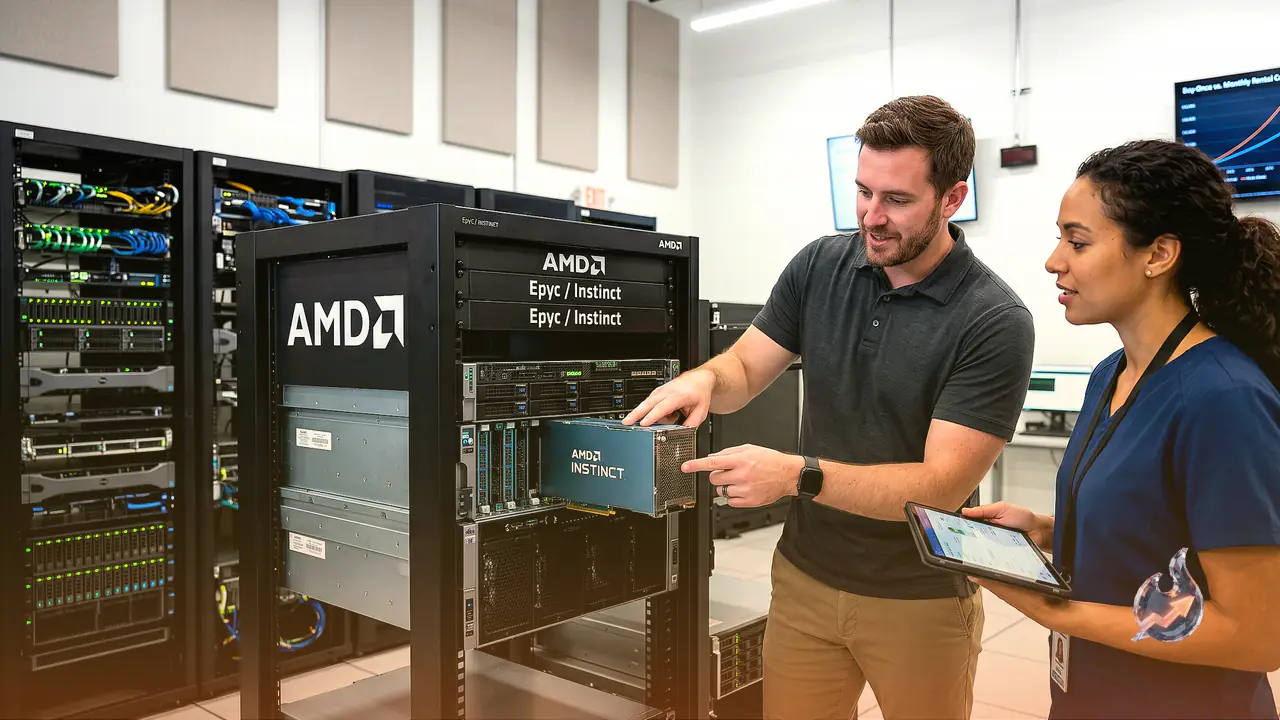
This is where the real challenge begins. At CES (Consumer Electronics Show) this year, AMD CEO Lisa Su showed off a $1,499 mini PC that was running the same class of AI model companies normally pay heavily for each month. In other words, a single affordable machine bought once could do the very job that has so far demanded a steady stream of rental fees.
That fresh approach from AMD could wipe out Nvidia's monthly fee for good. Around the same time, Google has signed deals with Anthropic and Meta to swap out Nvidia chips for its own.
Nvidia's rental model has held up purely because it had no real rival. With AMD's novel design, that picture could shift very soon. What should worry Nvidia even more is that AMD has a foothold in both the CPU and GPU markets, while Nvidia, for now, serves only the GPU side.
The Risks That Cut Both Ways
AMD may have the muscle to unseat Nvidia's dominance, but a one-time purchase solution carries a catch of its own: stagnation. Companies would buy a processing unit once and might not feel the need to upgrade for years. That would hit profits directly, leaving them to plateau at a certain point.
On top of that, other players could step in with their own cheaper alternatives. And Nvidia itself could roll out newer processing units that eventually pose a threat to AMD too.