






















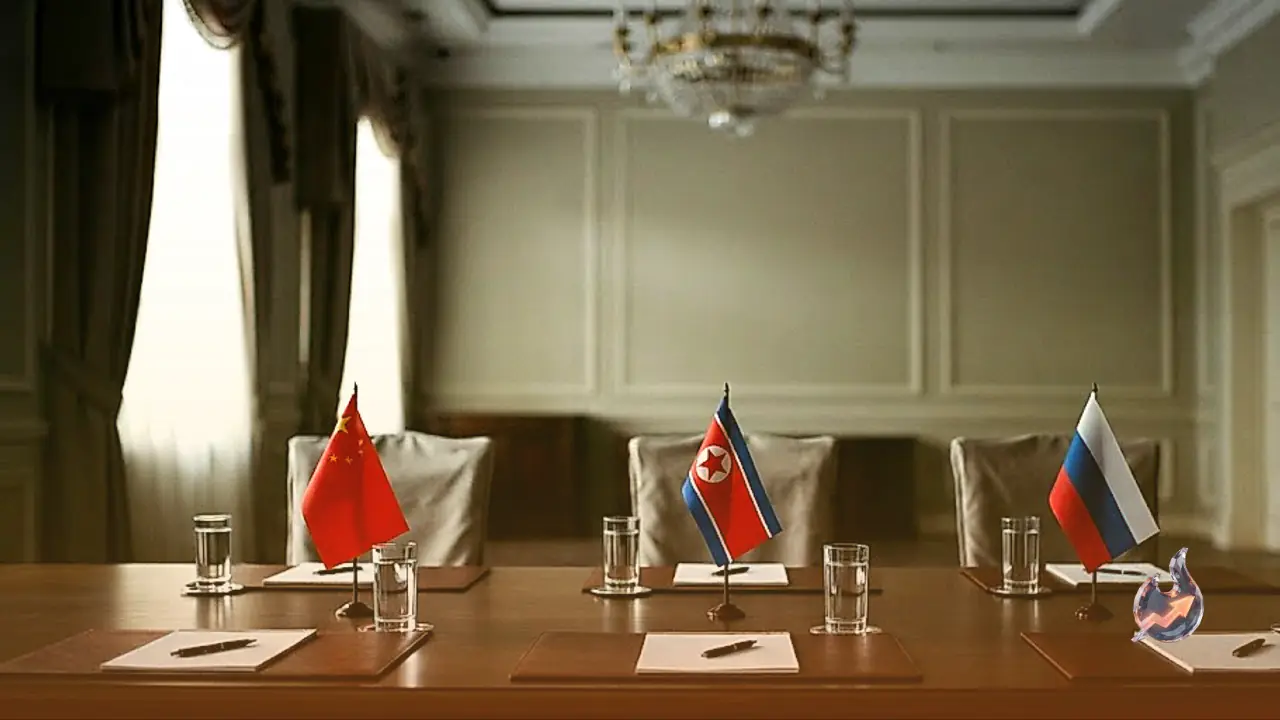

North Korea was once heavily isolated from the rest of the international community. Due to stringent United Nations sanctions, virtually no nation was willing to openly associate with Pyongyang, but the landscape has shifted dramatically over time. Today, a fierce race appears to be underway between China and Russia, with both major powers vying to keep North Korean leader Kim Jong Un firmly in their respective spheres of influence.
Reflecting this deepening alignment, two brand-new bridges connecting to North Korea have been opened to traffic. Russia officially inaugurated the Yakov Novichenko Bridge on September 7, 2026. Shortly after, a newly constructed bridge spanning the Yalu River between China and North Korea was opened on October 15.
These bridges serve as much more than simple conduits for transit and commerce. They stand as clear indicators of a rapidly expanding partnership at a critical juncture. Moscow currently receives vital support from North Korea for its military campaign in Ukraine, while Beijing remains determined to maintain its historical influence over its volatile neighbor.
Why Russia and China Are Courting Pyongyang
Both Russia and China share direct land borders with North Korea, making the regime a matter of profound strategic importance to both capitals, though their primary motivations differ. For Russia, North Korean military personnel and locally manufactured munitions have become essential assets in the protracted war against Ukraine. Pyongyang has provided troops alongside other forms of vital military backing, prompting Moscow to reciprocate with extensive cooperation. This reliance has intensified as the prolonged conflict exerts mounting pressure on the Russian public and Ukrainian strikes penetrate deeper into Russian territory.
China, meanwhile, harbors a distinct set of security concerns. Beijing and Pyongyang share a border stretching over 1,200 kilometers, meaning any instability within North Korea directly threatens the security, political stability, and economic vitality of China's northeastern provinces. Furthermore, Beijing wants to prevent deepening ties between Moscow and Pyongyang from eroding its own longstanding leverage over the regime. This balancing act drives China's ongoing efforts to reinforce bilateral relations, a strategy underscored by the opening of the new cross-border infrastructure.
Implications for Donald Trump
This tightening geopolitical entente between North Korea, Russia, and China carries direct consequences for the United States. In particular, the shifting dynamics threaten to complicate efforts by US President Donald Trump to arrange a renewed face-to-face meeting with Kim Jong Un.
Trump stated in August that he anticipated holding discussions with the North Korean leader once again. However, Pyongyang has shown little to no reciprocal interest in pursuing such a summit thus far. Backed by stronger ties with its powerful neighbors, North Korea appears in no rush to engage Washington on American terms.