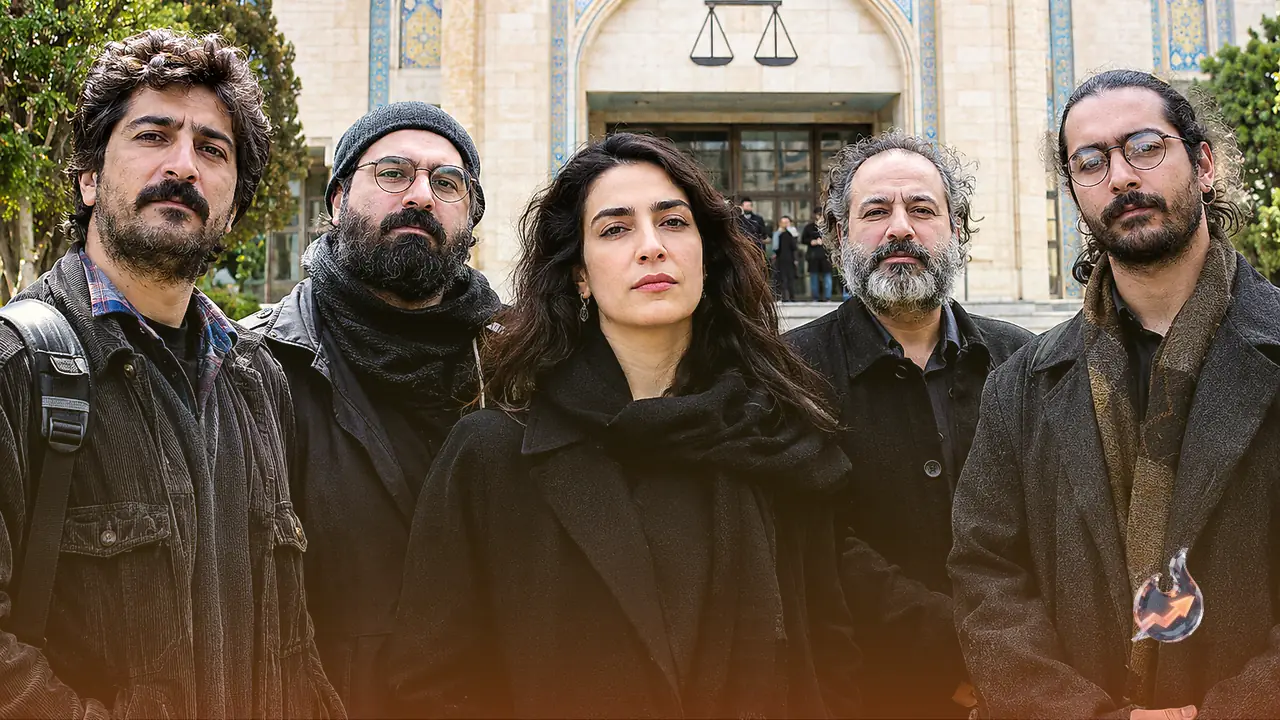

In a strict enforcement of dress codes and censorship regulations, Iranian judicial authorities in the city of Qom have administered 74 lashes each to 29-year-old singer Parastoo Ahmadi and four male members of her musical and production ensemble. The corporal punishment followed a criminal conviction stemming from an online music performance where Ahmadi appeared without the mandatory Islamic headscarf. Legal representatives confirmed that despite exhaustive appeals to overturn, reduce, or postpone the penalty, enforcement officials insisted on carrying out the flogging immediately.
The Livestream Performance and Judicial Rulings
The case originated in December 2024 when Ahmadi broadcasted a concert live on her YouTube channel wearing a sleeveless dress and leaving her hair uncovered. Under Iran's governing statutes, which enforce strict interpretations of Islamic law, women are barred from staging public singing performances and are legally required to observe modesty by wearing loose garments and covering their hair. Following the broadcast, legal proceedings were initiated against the group.
By June, a criminal court in Qom found Ahmadi and eight co-defendants guilty of violating public decency laws through the distribution of what prosecutors categorized as obscene and indecent material, allegations that all the accused consistently rejected. Alongside the 74 lashes, the judiciary handed down supplementary sanctions, barring the artists from participating in any audiovisual activities and banning them from international travel for a duration of two years. An appellate court in Qom reviewed the case toward the end of September, ultimately rejecting the defence's petition and affirming the original sentences in full.
Execution of the Sentence and Rights Backlash
The physical punishment was administered on Monday at the third branch of the Criminal Sentence Enforcement Office in Qom. Reformist publication Etemad reported statements from defence attorney Mostafa Nili identifying the four male team members flogged alongside Ahmadi as Soheil Faghih-Nasiri, Amin Taheri, Amirali Pirnia, and Mohsen Lashkari. Another member of the legal defence team noted that lawyers exhausted every procedural avenue available to secure an overturn, reduction, or suspension of the penalty, yet administrative authorities pushed forward with prompt implementation.
The execution of the flogging drew immediate condemnation from domestic cultural figures and international civil society groups. Bahar Ghandehari, advocacy director at the US-based Center for Human Rights in Iran (CHRI), voiced sharp opposition, stating, "Parastoo Ahmadi's flogging for singing and dressing as she chooses is a flagrant violation of her fundamental rights and a chilling demonstration of the Iranian authorities' determination to suppress women's freedoms and to violently punish anyone who dares to challenge their discriminatory laws and policies." International watchdogs reiterated that judicial flogging constitutes cruel, inhuman, and degrading treatment, violating global conventions against torture.
The Shadow of the 2022 Uprising
Iran's mandatory dress code mandates that women and post-pubescent girls conceal their hair beneath a hijab and disguise their silhouettes in public spaces. Tensions surrounding these mandates reached historic peaks in September 2022 following the death in custody of Mahsa Amini, a 22-year-old Kurdish woman detained in Tehran by morality police over allegations of improper attire. Her death ignited nationwide unrest where women and girls publicly waved and burned their headscarves in open defiance of the clerical establishment, prompting a security crackdown that left hundreds dead.
In the months and years following the 2022 demonstrations, widespread civil disobedience has taken root across the country, with numerous women refusing to veil their hair in day-to-day public life. State entities have countered this persistent pushback through cyclical crackdowns involving detentions, official warnings, and the punitive closure of commercial establishments accused of serving unveiled patrons.
Economic Turmoil, Regional War, and Capital Punishment
Public dissatisfaction in the Islamic Republic flared again this past January when widespread economic distress triggered mass demonstrations against the ruling authorities. Security apparatuses mounted an intense suppression campaign that resulted in thousands of deaths and the detention of tens of thousands of citizens. Following the outbreak of armed conflict between Iran and the United States and Israel in late February, Iranian authorities have sharply increased the application of capital punishment against accused demonstrators.
According to documentation compiled by the Norway-based NGO Iran Human Rights, capital sentences have been executed against at least 39 men connected to the January economic rallies, along with two individuals convicted over the 2022 demonstrations. The organization also reported the executions of 16 individuals tied to prohibited political groups and 17 people convicted on charges of espionage or foreign collaboration. Furthermore, Iran Human Rights warned that 121 other participants rounded up during the January unrest, among them six women and five juvenile offenders, have already received death sentences and face an imminent risk of execution.