























Recent developments in Yemen, marked by aggressive military advances from Houthi rebels, have introduced fresh volatility into the global economic landscape. The Iran-backed insurgent group, which established control over large portions of Yemen back in 2014, has successfully compelled the army of the internationally recognized government to retreat from the strategic Red Sea coastline. This withdrawal was executed primarily to reallocate forces for the defense of their interim capital, Aden.
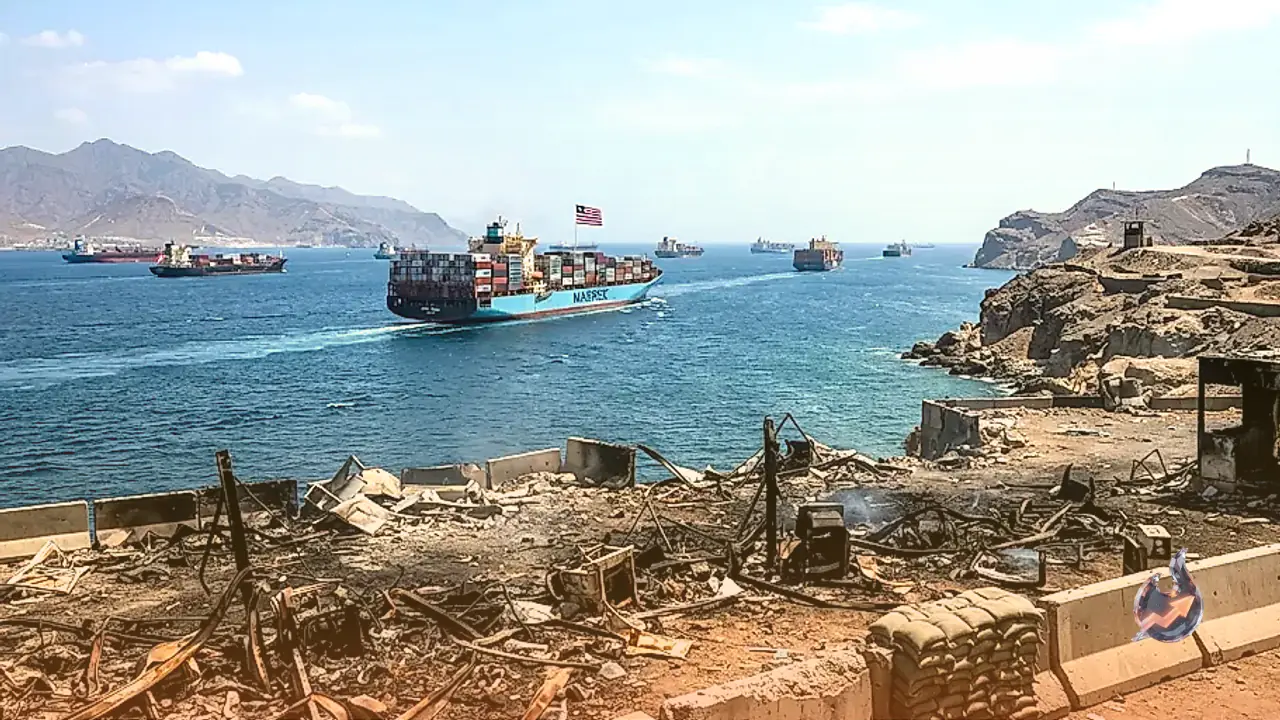
This aggressive territorial push signals grave consequences for Yemen's legitimate government, its Saudi Arabian allies, and by extension, international trade networks worldwide. Situated at the southwestern tip of the Arabian Peninsula, Yemen is characterized by a mountainous, heavily armed, fiercely tribal, and economically disadvantaged demographic profile. The nation features two distinct coastlines: one oriented toward the Indian Ocean, housing the historically prosperous trading hub of Aden, and another facing the Red Sea, which encompasses the critical maritime bottleneck at the southern exit known as the Bab al-Mandab Strait, frequently referred to in English as The Gate of Tears.
The Strategic Importance of the Bab al-Mandab Strait
Control over this narrow maritime chokepoint grants the ability to intercept, restrict, or threaten commercial shipping traffic transiting between the Mediterranean Sea, the Red Sea, and the broader Indian Ocean. Under normal operational circumstances, this vital corridor accommodates approximately 12% of global maritime trade, with a daily volume ranging between 70 to 150 vessels. However, contemporary conditions have disrupted this flow significantly. Although Houthi leadership maintains that their operations pose no direct threat to neutral commercial shipping, their active military engagement with Saudi Arabia renders transit through rebel-controlled coastal waters extremely hazardous for Saudi oil tankers.
When geopolitical tensions escalated in February following the outbreak of hostilities between the United States, Israel, and Iran, Tehran countered by restricting oil exports originating from the Persian Gulf via another crucial petroleum chokepoint, the Strait of Hormuz. This blockade triggered a sharp surge in global crude oil prices, intensified inflationary pressures, and burdened economic recovery worldwide. In response, Saudi Arabia activated an alternative strategy, known as Plan B, to bypass vulnerable maritime routes.
Instead of dispatching petroleum shipments past hostile Iranian coastal positions where tankers faced constant threats from drones and naval mines deployed by Iran's Islamic Revolutionary Guards Corps, Saudi authorities initiated overland pumping through their East-West Pipeline to a designated export terminal located at Yanbu along the Red Sea. This operational workaround maintained stability for a temporary period. However, the fragile truce between Saudi Arabia and the Houthi movement deteriorated in July, resulting in a drone strike targeting the pipeline and subsequent missile and drone attacks directed against infrastructure assets across Saudi Arabia.
Military Escalation and Regional Security Concerns
On the ground, Houthi forces seized the tactical initiative by executing a rapid offensive down the Red Sea coastal plain, driving the Yemeni military into a disorganized retreat. A subsequent counter-offensive appears to have faltered, leaving the Houthi movement in complete control of the Bab al-Mandab Strait and adjacent offshore islands. Nicholas Hopton, a former British Ambassador to both Yemen and Iran and current director-general of the UK-based Middle East Association, noted that the official government's decision to prioritize Aden's defense at the expense of other territories indicates severe military setbacks for the Saudi-backed administration, warning that the international community should be deeply concerned.
Hopton cautioned that if the port city of Aden, home to approximately 1.25 million residents, were to fall under Houthi control, it would undoubtedly precipitate an escalation of the regional crisis and deepen fragility within the global economy, amplified by the broader US-Iran conflict. Conversely, Mohammed al-Basha, a Yemeni founder of the US-based risk advisory firm Basha Report, argued that capturing the heavily defended urban center of Aden would present substantial tactical difficulties for the insurgents. Basha explained that an assault on a densely populated metropolis would entail heavy human casualties, while the open terrain of the coastal plains would leave advancing Houthi units vulnerable to opposing air power.
At present, analysts suggest the Houthis may pursue a negotiated surrender strategy, attempting to exploit existing political fragmentation and internal divisions among southern factions to secure their objectives without engaging in a costly urban military campaign. Alternatively, the conflict could settle into an entrenched, low-intensity stalemate characterized by reduced casualty rates while the nation remains permanently partitioned between Houthi-controlled territories and the fragmented factions of the Saudi-backed Yemeni military. Retired British defense attaché to Yemen, Col Iain Smailes, warned that the ongoing Houthi territorial expansion could provoke another spike in petroleum prices, mirroring market reactions observed when the Bab al-Mandab Strait was seized in September.