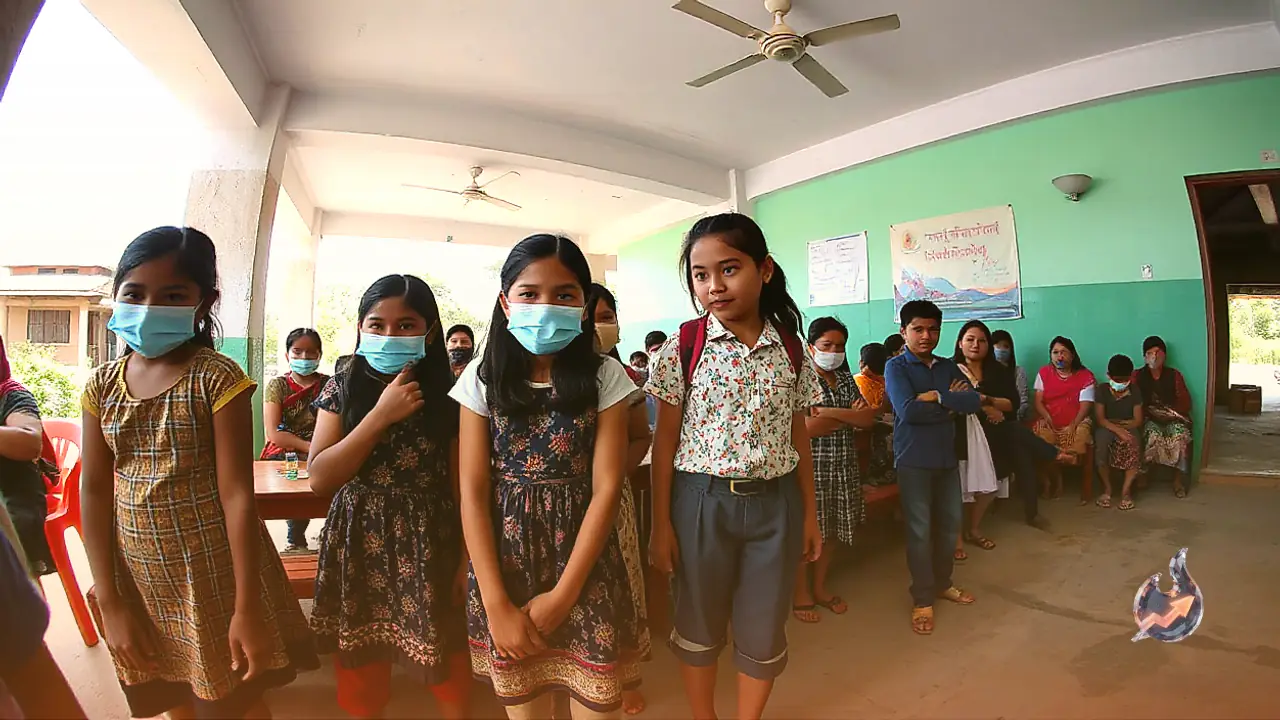

India has crossed a major public health milestone as the nationwide immunization drive targeting fourteen-year-old girls surpassed one crore doses in less than nine months. The Union Health Ministry announced on Saturday that the nationwide campaign provides free and voluntary single-dose HPV vaccinations at designated government healthcare facilities with parental consent.
Leading States and Vaccination Progress
Mizoram is among six states across the country to achieve full one hundred percent coverage of their identified target populations. Alongside Mizoram, the states of Gujarat, Uttar Pradesh, Andhra Pradesh, Madhya Pradesh, and Bihar have successfully met their complete immunization targets. Meanwhile, Assam has recorded ninety-five point six three percent coverage, followed closely by Telangana at ninety-five point two eight percent, Karnataka at ninety-three point one six percent, and Uttarakhand at ninety point one seven percent.
Regional Statistics and Beneficiary Numbers
Additional states have also made substantial progress, with Chhattisgarh reaching eighty-six point two one percent and Rajasthan recording eighty-five point two three percent. Regions including Kerala at seventy-seven point zero two percent, Tamil Nadu at seventy-six point one two percent, Odisha at seventy-four point nine zero percent, and the Union Territory of Dadra and Nagar Haveli and Daman and Diu at seventy-two point nine nine percent have all surpassed the seventy percent threshold. In terms of total beneficiaries, Uttar Pradesh leads the nation with more than twenty-nine point three three lakh girls vaccinated, followed by Bihar with over thirteen point seven zero lakh and Gujarat exceeding seven point seven five lakh.
Campaign Launch and Implementation Strategy
Launched by Prime Minister Narendra Modi in February of this year, the nationwide initiative reflects strong public confidence and coordination between federal and regional administrations. The Ministry of Health and Family Welfare noted that the diverse geographical and demographic success demonstrates the effectiveness of implementation strategies tailored to local needs. Paediatricians, gynaecologists, and medical experts from institutions such as the All India Institute of Medical Sciences (AIIMS) have actively addressed public concerns regarding vaccine safety.
Digital Infrastructure and Community Outreach
Frontline health workers, including ASHAs, ANMs, and teachers, have engaged directly with parents and local communities to encourage participation and counter misinformation. Furthermore, digital infrastructure like the U-WIN platform has facilitated real-time monitoring, district-level gap assessment, appointment booking, and the issuance of digital certificates. Programme managers utilize the system to locate eligible girls and ensure efficient resource allocation.
ALSO READ: Mizoram: MCCI seeks stricter Benami Act enforcement to safeguard Mizo entrepreneurs