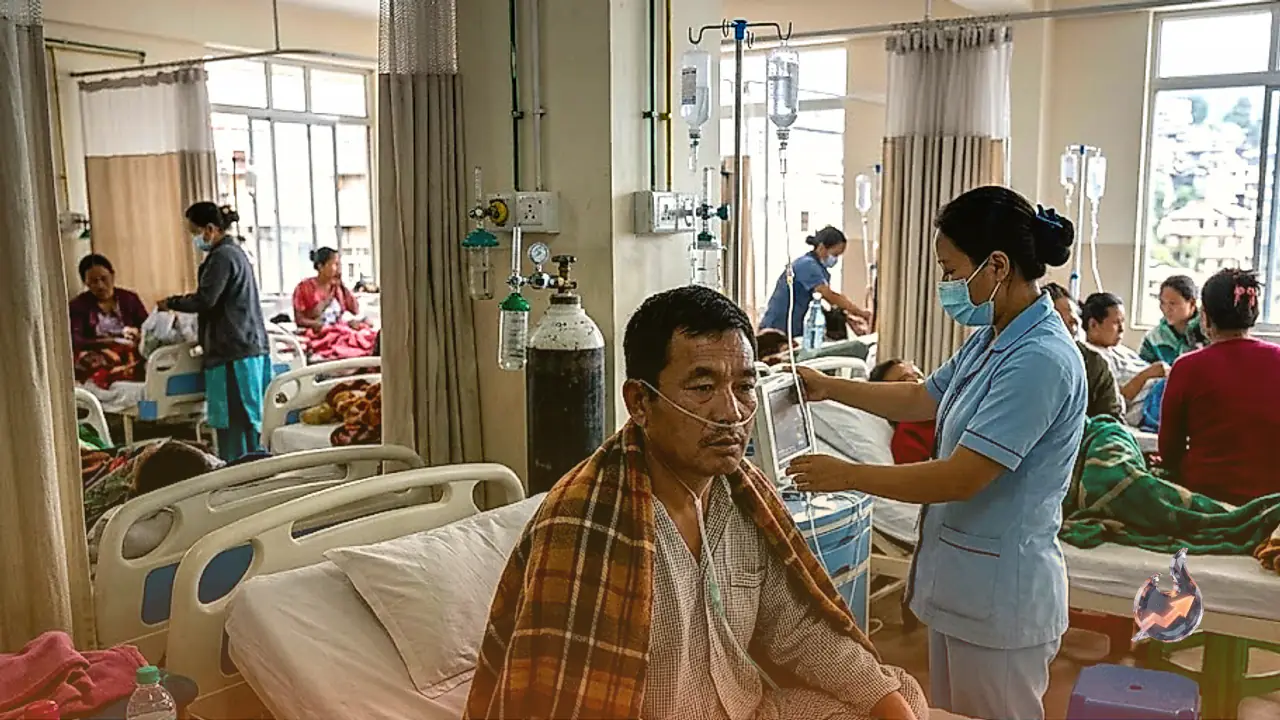






















Official demographic data from the Mizoram state government's Annual Report on Registration of Births and Deaths 2025 shows that vital events across the state remained heavily concentrated in non-urban localities. Over the course of 2025, the state documented a total of 31,294 live births alongside 10,055 fatalities, with rural territories driving the volume across primary demographic metrics.
Rural Communities Drive Birth Numbers and Higher Fertility Rates
Out of the 31,294 deliveries registered across the state, rural areas logged 17,426 births, surpassing the 13,868 recorded in urban municipalities. This gap was reflected in overall birth rates as well: the state closed the year with a birth rate of 20.78 per 1,000 residents, driven upward by the rural rate of 21.74 compared to the urban figure of 19.69. Institutional healthcare facilities handled 18,537 deliveries during the year, comprising 14,140 institutional births in rural zones and 4,397 across urban clinics and hospitals.
Gender Distribution and Divergent Sex Ratios
A closer look at gender representation reveals that male births reached 15,751, while female births stood at 15,543. These numbers established an overall statewide sex ratio of 987 females per 1,000 males. However, geographic differences presented a stark contrast. In rural settlements, the sex ratio stood positive at 1,012 females per 1,000 males, whereas urban municipal jurisdictions lagged behind with a ratio of 955 females per 1,000 males.
Mortality Trends and Child Health Indicators
The state registered 10,055 deaths in 2025, which corresponds to an aggregate crude death rate of 6.68 per 1,000 population. Fatalities among males accounted for 6,520 cases, compared to 3,535 among females. Mirroring birth registrations, rural deaths formed the larger share at 6,758 incidents, while urban areas accounted for 3,297 deaths.
Infant mortality figures indicated 263 infant deaths throughout the year, divided between 134 boys and 129 girls. Villages recorded 168 of these deaths, while towns documented 95 cases, establishing a statewide infant mortality rate of 8.4 per 1,000 live births. At the regional level, the rural infant mortality rate was higher at 9.64, compared to 6.85 in urban locations. In addition, health authorities documented 69 stillbirths statewide, with 45 occurring in rural localities and 24 in urban facilities. This yielded an overall stillbirth rate of 2.20, consisting of a 2.58 rural rate and a 1.73 urban rate.