























Aspiring entrepreneurs looking to bypass traditional employment often seek commercial ventures that require minimal initial capital while ensuring year-round cash flow. While many modern startups struggle due to inadequate planning and elevated overheads, establishing a plant nursery offers a stable enterprise with exceptionally low inventory risks. In Bhagalpur, entrepreneurs are tapping into this steady demand to generate healthy monthly earnings on modest outlays. The core strength of the operation lies in its microscopic unit production cost of merely 2 to 3 rupees, against retail market realization ranging anywhere from 10 to 100 rupees.
Boosting Profit Margins Through Self-Grafting Methods
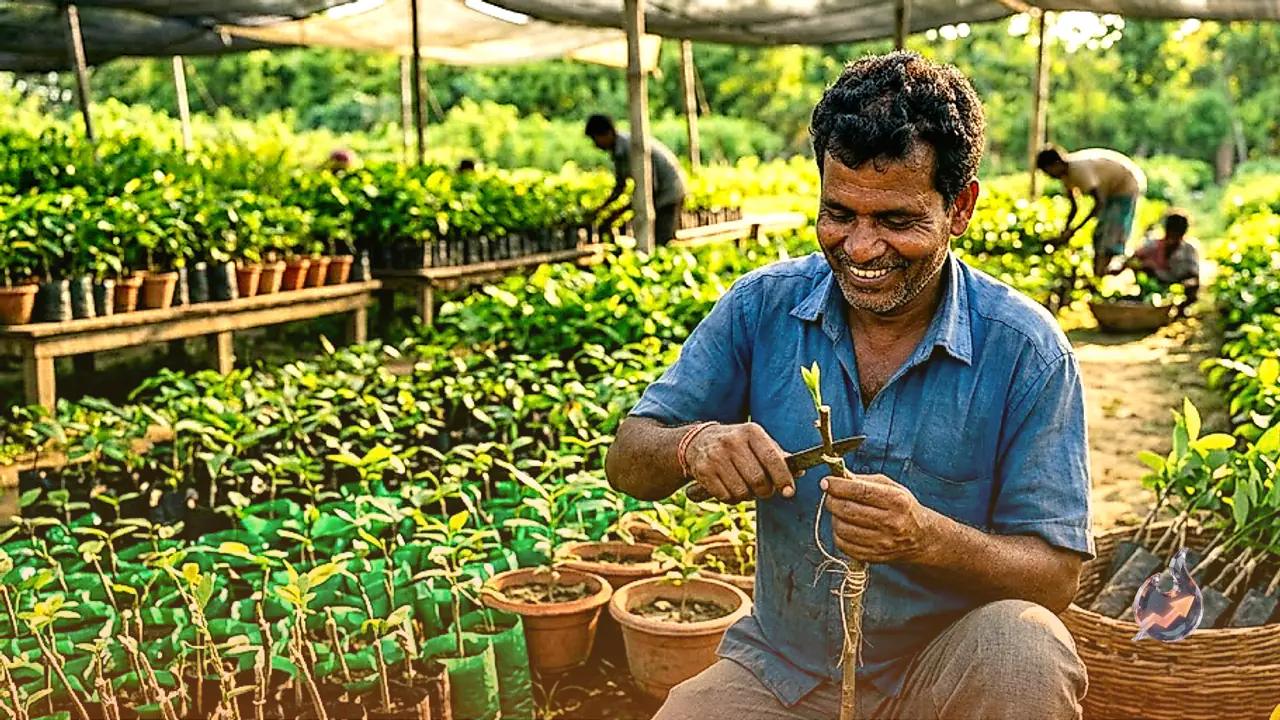
Experienced local nursery operator Ashok Choudhary notes that the primary determinant of long-term success in this trade is producing one's own planting stock rather than outsourcing. Purchasing ready saplings from distant wholesale hubs severely compresses operating margins, whereas propagating plants independently using grafting methods keeps input expenses negligible. Creating an individual grafted cutting or young sapling costs scarcely 2 to 3 rupees in basic materials and labor. Even when sold at an entry-level price of 10 rupees, the transaction yields a direct net profit of 7 to 8 rupees per plant.
Scaling this modest volume to a standard throughput of just 100 saplings sold in a single day translates into significant and reliable daily savings for the proprietor. Furthermore, inventory that remains unsold immediately does not depreciate; as the sapling matures to a height of two to two and a half feet, its market value climbs substantially to between 75 and 100 rupees. Natural biological growth effectively turns unsold inventory into a higher-value asset.
Evaluating Nursery Categories and Mitigating Inventory Risk
Commercial nurseries generally operate across three distinct segments. The first category centers on ornamental flora and gardening species, catering to home decorators and landscape projects. The second segment focuses on perennial fruit-bearing plants, prominently featuring varieties such as mango, guava, and lemon. The third category handles seasonal vegetable and fruit seedlings, covering crops like chilli, papaya, and short-cycle vegetable starts.
From a risk-management perspective, seasonal vegetable starts and papaya seedlings carry noticeable inventory hazards, as failure to distribute them within a narrow planting window leads to spoilage and total loss. Conversely, fruit-bearing and flowering plant nurseries carry almost no obsolescence risk. Unsold perennial fruit saplings simply grow larger, commanding even higher retail prices in subsequent weeks. With disciplined plant care and sound propagation techniques, this low-capital initiative provides a reliable path to substantial wealth creation within a relatively short period.