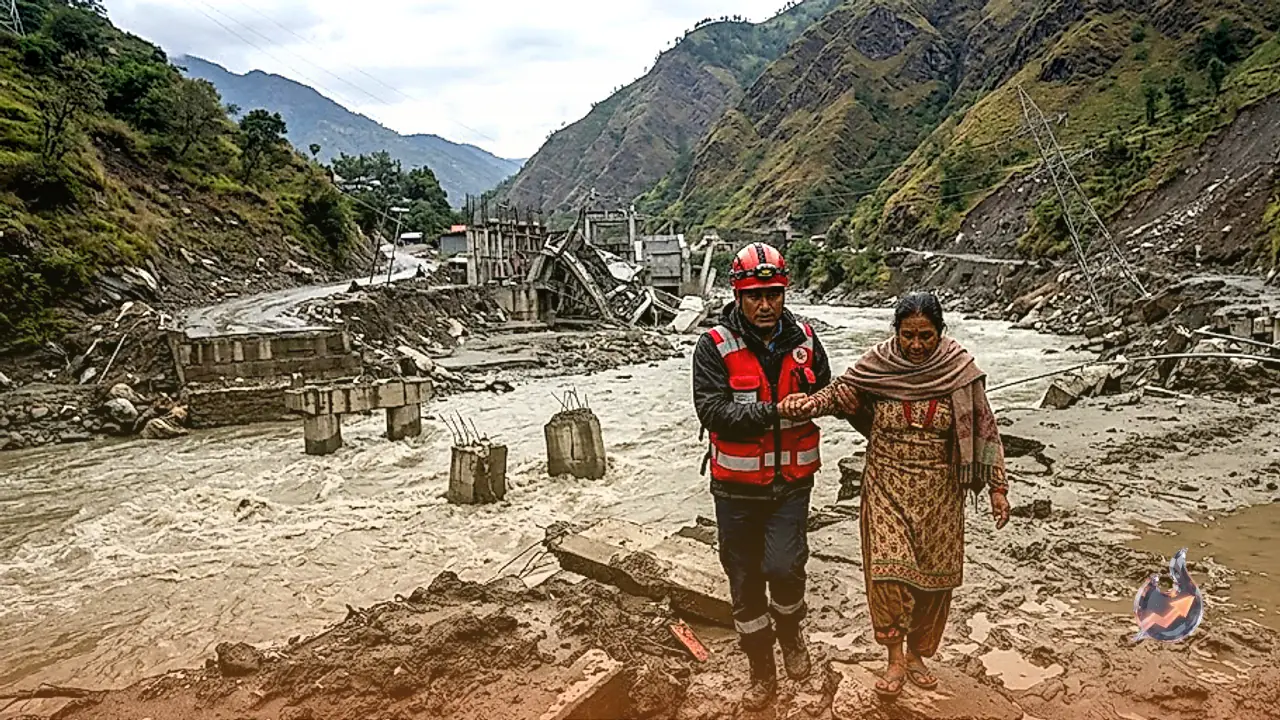























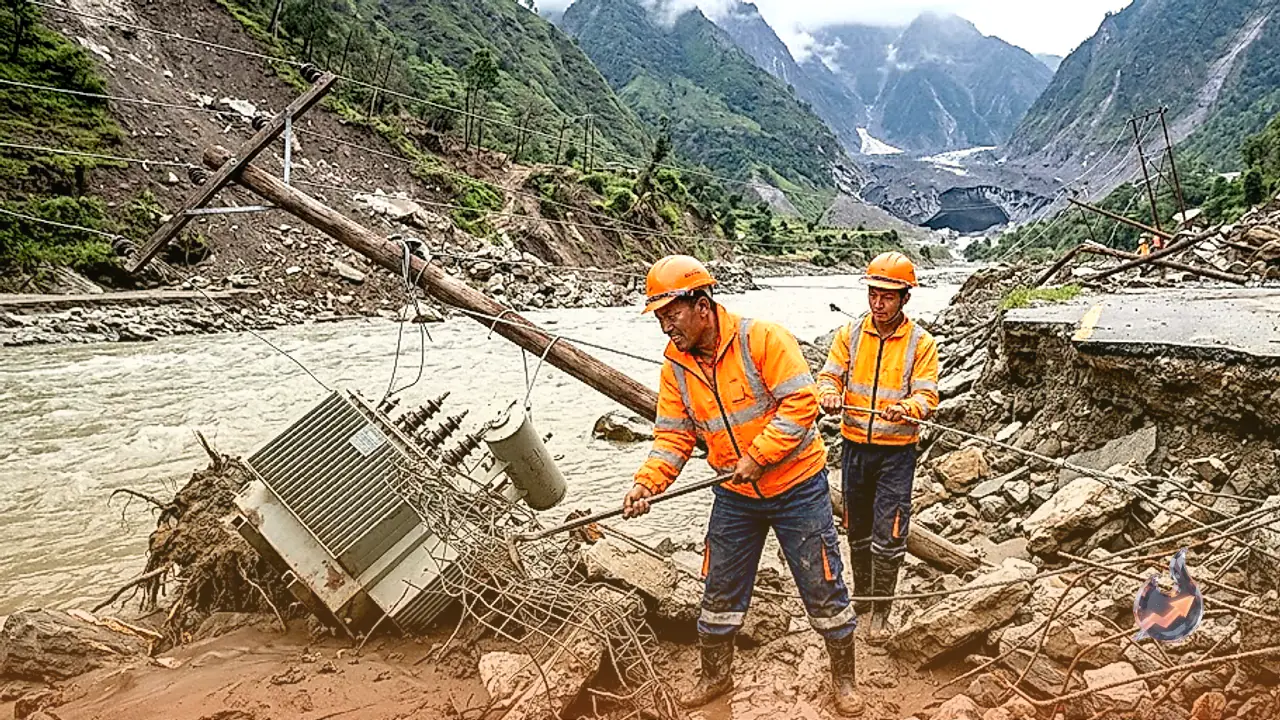

Nepal is grappling with a severe economic setback following a catastrophic flash flood that swept through the Bhote Koshi River corridor, leaving a trail of destruction across critical infrastructure, transportation links, and power generation facilities. The surge of water, mud, and debris has devastated entire communities and damaged vital national assets, threatening to stall the country's broader economic recovery for years to come.
Himalayan Glacial Collapse Triggers Devastating Downstream Surge
The natural disaster originated on August 26 when a massive collapse of ice and rock occurred in the high-altitude Himalayan region. The sudden disruption unleashed a violent torrent through the Bhote Koshi River, carrying vast quantities of sediment and boulders downstream. The floodwaters rushed through Rasuwa and extended into adjacent downstream districts, severely impacting Nuwakot and Dhading.
Official reports issued by Nepal's government as of August 27 confirmed that 359 bodies had been recovered from the flood-affected zones. Hundreds of people remain missing as emergency teams continue search and rescue operations amid destroyed terrain. Beyond the catastrophic human loss, authorities reported widespread destruction to local settlements, energy facilities, transit corridors, and essential public utilities.
Infrastructure Damage Reaches Rs 200 Billion Along Critical Trade Corridors
The immediate physical destruction represents a massive financial strain on national resources. Nepal's Physical Infrastructure Minister provided a preliminary estimate indicating that damage to roads and bridges alone stands at approximately Rs 200 billion. Officials emphasized that this initial figure reflects only visible damage to transport networks and does not encompass the full magnitude of long-term economic losses.
The flood severely impacted the Himalayan trade and travel corridor, destroying key facilities in the Rasuwagadhi border zone. This area serves as a primary commercial and tourism connection linking Nepal with Tibet. The destruction of border crossings, highway bridges, and connecting roads has halted cross-border freight movement and stranded vital trade routes, threatening regional commercial supply chains.
Hydropower Sector Faces Dual Penalty as 748 MW Capacity Sustains Damage
Nepal's energy sector suffered a heavy blow, with preliminary evaluations revealing that 14 hydropower projects sustained significant damage. These facilities, comprising both operational power stations and plants currently under construction, represent a combined capacity of roughly 748 MW. The damaged sites include essential generation units and high-voltage transmission structures along the river basin.
Hydropower is widely recognized as one of the central drivers of Nepal's future economic development and export revenue. The destruction creates a double economic burden for the country. State authorities and private developers must allocate substantial capital toward structural repairs and equipment replacement while simultaneously losing expected revenue from electricity generation and trade during the extended downtime.
Disaster Escalates Existing Economic Slowdown and Growth Challenges
The timing of the natural disaster amplifies existing macroeconomic vulnerabilities. Prior to the event, the World Bank's April 2026 economic outlook projected Nepal's GDP growth to slow to 2.3% in FY2026, down from 4.6% in FY2025. Economists had attributed this deceleration to lingering effects from the September 2025 unrest, reduced tourism inflows, elevated energy import costs, and broader global economic uncertainty.
Earlier forecasts by the World Bank anticipated a gradual economic rebound, predicting growth rates to average around 4.4% across FY2027 and FY2028. That projected recovery relied heavily on active post-disaster reconstruction, accelerated hydropower development, and a resurgence in domestic consumer spending. The extensive destruction caused by the August 26 floods now casts significant doubt over whether those growth targets remain achievable within the expected timeframe.
Severe Disruptions to Tourism, Local Small Businesses, and Supply Chains
The national economy relies heavily on four primary pillars: tourism, remittances, agriculture, and service industries. The destruction along the northern river corridor directly undermines key segments of these sectors. Local enterprises located far beyond the immediate flood zone are feeling the financial ripple effects of severed transport links.
Hotels, restaurants, vehicle operators, retail shops, tour guides, and small merchants throughout the valley depend on steady tourist transit along Himalayan routes. With main highways severed and border facilities closed, the loss of visitor traffic cascades across the regional supply chain. Small business owners face severe income losses while continuing to bear fixed operating costs during a period of reduced commercial activity.
Agricultural Losses Strain Rural Livelihoods and Household Earnings
Agriculture remains a vital source of livelihood for millions of citizens across Nepal, making rural communities exceptionally vulnerable to environmental disasters. The floodwaters destroyed mature crops ready for immediate harvest while depositing thick layers of silt and debris across arable land. Soil erosion and flooded fields threaten to impair soil quality and agricultural productivity for future planting cycles.
In addition to crop loss, the flooding destroyed livestock, irrigation canals, storage sheds, and secondary agricultural roads. Historic disaster assessments in Nepal demonstrate that floods generate prolonged hidden economic losses for rural households. Damaged infrastructure prevents farmers from bringing goods to market, reducing immediate family incomes while compromising future agricultural output and food security.
Phased Recovery Framework: Emergency Response to Multi-Year Rebuilding
While official estimates for comprehensive national economic recovery remain unavailable, analysts outline a multi-phase reconstruction timeline. The initial phase, spanning the first few weeks and months, centers on search and rescue operations, temporary shelter provision, clearing mud and debris, restoring basic road connectivity, and reaching isolated mountain settlements.
The intermediate phase, covering six to 18 months, will involve large-scale reconstruction of primary highways, damaged bridges, municipal power networks, and civic infrastructure. However, rebuilding major hydropower stations and complex high-altitude facilities will require several years. Reconstructing massive concrete dams and intake tunnels in difficult terrain presents major engineering and financial hurdles that will extend the timeline significantly.
Reconstruction Spending versus Genuine Wealth Accumulation
Macroeconomic metrics may show a temporary surge in headline GDP statistics as government and private rebuilding expenditure accelerates. Increased public spending on concrete, steel, labor, transport, and equipment creates immediate demand across construction and service sectors. The World Bank had previously factored this reconstruction activity into its long-term economic growth projections for Nepal.
However, economists caution that reconstruction-driven GDP growth should not be mistaken for genuine economic prosperity. Spending billions of rupees simply to replace pre-existing roads, bridges, and power stations represents recovering lost national assets rather than creating new wealth. The diverted financial resources reduce funds available for new developmental projects, education, healthcare, and technology investments.
Adapting to Climate Vulnerability in High-Altitude Himalayan Zones
The disaster highlights the increasing vulnerability of high-altitude Himalayan ecosystems to extreme climate events, including glacial lake outbursts, rock avalanches, and flash flooding. Scientists note that rising global temperatures contribute to thermal instability in alpine environments, increasing the risk of sudden environmental disruptions throughout mountain river basins.
To safeguard future economic development, Nepal must shift its disaster management approach from reactive emergency response to proactive climate resilience. Building long-term economic stability will require investing in advanced early-warning networks, flood monitoring equipment, climate-proof highway engineering, and safer design standards for hydropower installations. The country faces the critical challenge of ensuring that rebuilt assets are capable of enduring future Himalayan environmental shocks.