





















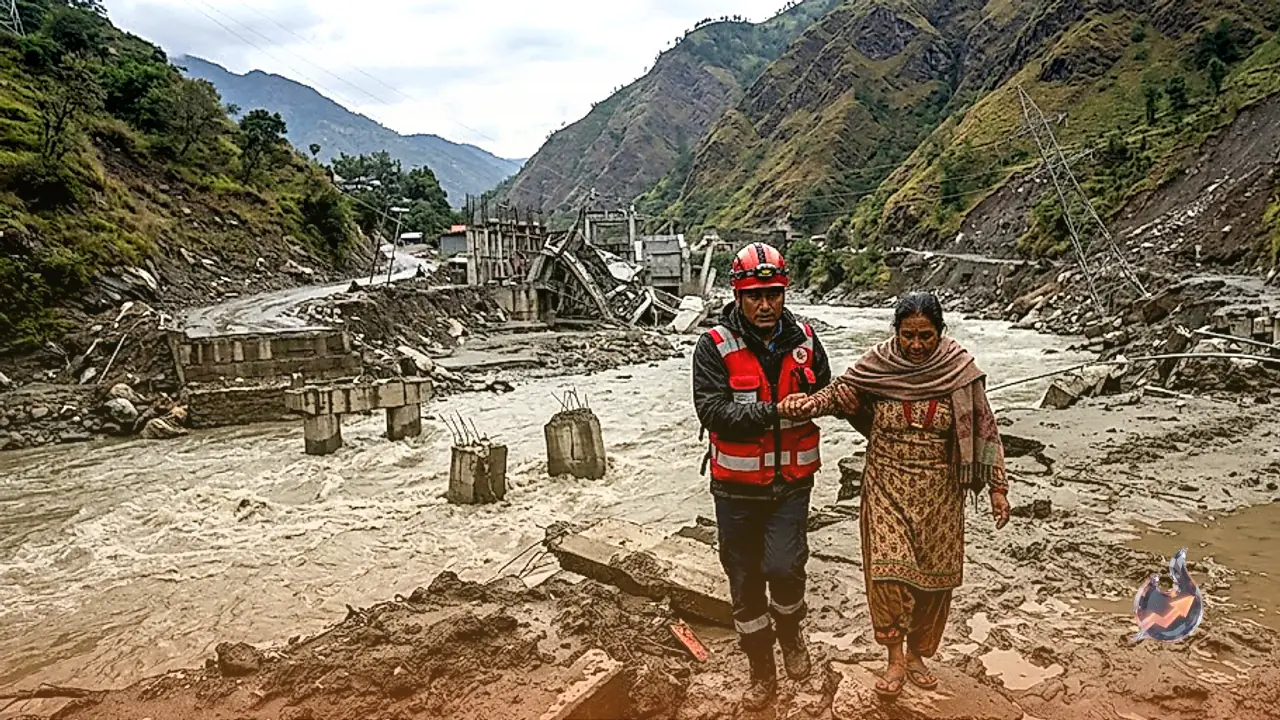

Nepal is confronting a severe economic shock following a destructive flash flood that swept through the Bhote Koshi River corridor, leaving a trail of human tragedy and destroying vital national infrastructure. Triggered on August 26 by a massive rock and ice collapse in the high Himalayas, the torrent of water, mud, and debris surged through Rasuwa and downstream districts including Nuwakot and Dhading. Beyond wiping out residential homes, highways, and bridges, the disaster has dealt a heavy blow to an economy already struggling to rebuild growth momentum. As rescue teams navigate debris-strewn terrains, policymakers face a daunting reconstruction challenge that will test the country's fiscal and structural endurance for years to come.
Devastating Human Toll and Widespread Destruction
The immediate fallout of the disaster has been felt in human loss and physical devastation. Official updates released as of August 27 confirm that 359 bodies have been recovered from affected zones, with hundreds of people still reported missing. The sudden velocity of the floodwaters gave residents little time to seek higher ground, sweeping away entire hamlets and severing vital telecommunication links. In Rasuwa and neighboring downstream corridors, extensive damage to public facilities and private properties has left local communities isolated, complicating immediate relief operations and emergency search missions.
Compounding an Existing Economic Slowdown
The disaster hits Nepal at a fragile juncture in its macroeconomic cycle. According to the World Bank's April 2026 economic forecast, Nepal's GDP growth was already projected to decelerate to 2.3% in FY2026, down from 4.6% recorded in FY2025. That prior deceleration had been driven by persistent disruptions following the September 2025 civil unrest, sluggish tourism recovery, elevated domestic energy costs, and broader global market volatility. While the World Bank had anticipated a gradual recovery toward an average growth rate of 4.4% across FY2027 and FY2028 supported by post-unrest reconstruction and domestic demand, the flood damage threatens to derail those medium-term projections.
Infrastructure Losses Estimated at Rs 200 Billion
Transportation and civil connectivity have borne the heaviest physical impact of the floodwaters. Nepal's Physical Infrastructure Minister provided a preliminary damage assessment putting the destruction to roads and bridges at approximately Rs 200 billion. Officials emphasized that this initial figure reflects direct structural losses only and does not capture the wider economic fallout caused by supply chain halts. Key transit arteries and strategic bridges have been severed, preventing the flow of cargo, agricultural produce, and commuter transport between major economic centers.
Severe Blow to 14 Hydropower Projects Totaling 748 MW
The calamity has hit Nepal's hydropower sector, a primary pillar of its clean energy strategy and export revenue goals. Initial field reports indicate that 14 hydropower projects representing a combined capacity of approximately 748 MW have sustained significant damage. This total includes both operational plants and facilities under active construction. The physical destruction of power houses, water conduits, transmission corridors, and access roads creates a double economic loss: power developers and the government must allocate immense capital to rebuild assets while forfeiting ongoing electricity generation revenues.
Border Trade Disrupted along the Rasuwagadhi Tibet Corridor
The flood severely damaged the strategic Himalayan trade and tourist transit hub surrounding the Rasuwagadhi border crossing. As a critical point of connectivity between Nepal and Tibet, the destruction of border infrastructure has halted cross-border freight traffic and tourist movement. The economic ripple effects extend far beyond the immediate border points. Accommodation operators, restaurants, freight transporters, retail shops, mountain guides, and micro-enterprises dependent on transit flow through these mountain passes now face prolonged operational halts and lost income.
Agricultural Ruin and Hidden Rural Losses
Agriculture remains the primary livelihood source for a majority of Nepal's rural population, and the flood has inflicted deep harm on the sector. Beyond destroying crops ready for harvest, the floodwaters deposited silt across fertile lands, washed away livestock, and ruined rural irrigation channels, storage facilities, and feeder roads. Economic evaluations of past disasters in Nepal show that floods create substantial hidden financial burdens for farming households. Loss of farm machinery, destroyed topsoil, and ruined infrastructure translate into reduced immediate household earnings and diminished agricultural productivity in subsequent planting seasons.
A Multi-Stage Phased Recovery Timeline
While official estimates for the total cost of disaster recovery remain unfinalized, reconstruction will necessarily proceed in distinct phases over several years. The initial weeks and months will focus on humanitarian relief, temporary housing, clearing river channels, and restoring emergency road access to stranded populations. The subsequent 6 to 18 months will require intensive capital spending to reconstruct secondary road networks, electrical distribution lines, bridges, and public buildings. However, fully restoring major destroyed hydropower installations and strategic border infrastructure will likely require several years due to complex engineering requirements and difficult terrain access.
Reconstruction GDP vs Genuine Wealth Creation
As state funds and international assistance are deployed toward rebuilding roads, bridges, power plants, and civic buildings, increased demand for construction materials, labor, and transport services will generate a temporary statistical rise in GDP figures. This dynamic aligns with earlier World Bank projections that reconstruction spending would inflate top-line growth rates. However, economists caution that GDP gains driven purely by replacement spending do not reflect genuine wealth creation. Replacing pre-existing physical assets consumes valuable capital simply to restore lost capacity rather than expanding the nation's productive potential.
Climate Instability Demands Structural Resilience
High-altitude environments across the Himalayas face growing vulnerability to glacial lake outbursts, rockfalls, and flash flooding linked to rising global temperatures. Although determining the precise influence of climate factors on any individual weather event requires detailed scientific study, experts agree that atmospheric warming increases high-altitude instability. For Nepal, this reality means disaster management can no longer function merely as a reactive emergency response. Long-term economic policy will require substantially higher capital allocation toward early-warning monitoring networks, climate-hardened road design, resilient hydropower engineering, and proactive flood defense systems to withstand future mountain hazards.