























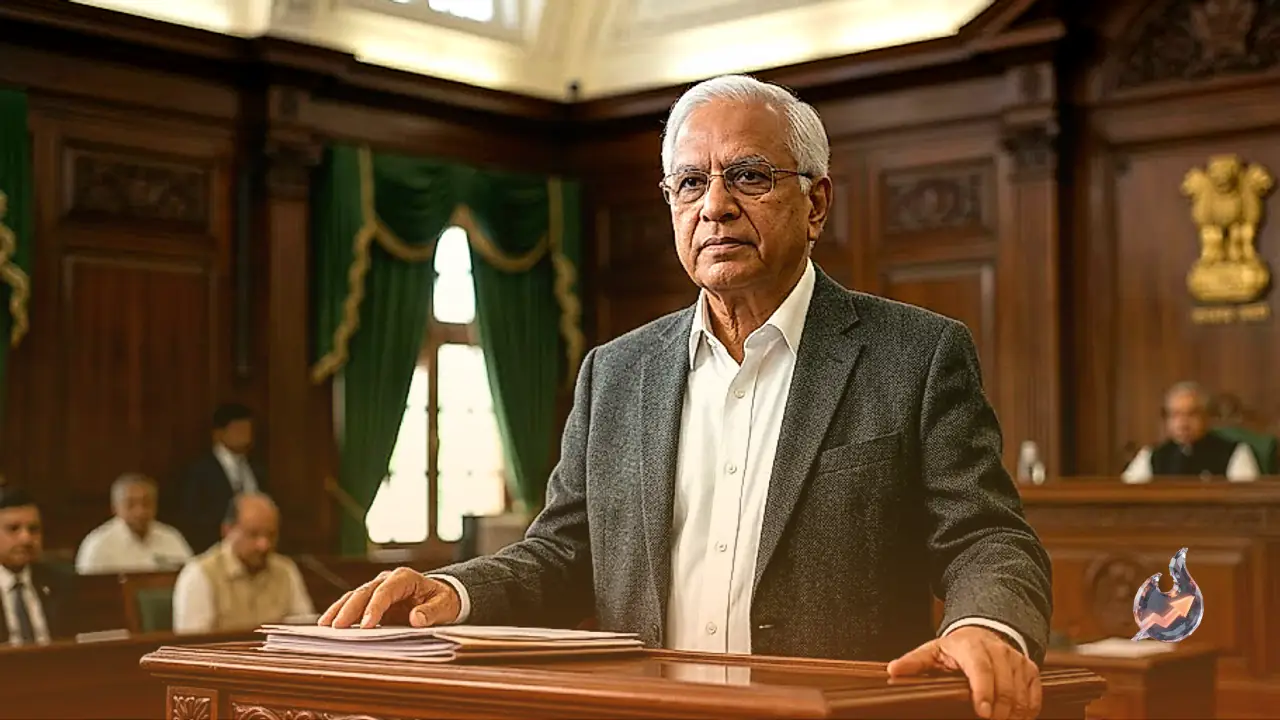

Millions of pensioners under the Employees' Pension Scheme may have to wait longer for any relief, as the government has told Parliament that no final decision has been taken on raising the minimum monthly pension from Rs 1,000 to Rs 7,500 or on merging dearness allowance with basic pay.
Background to the demand
The Employees' Provident Fund Organisation (EPFO) has replaced the older EPS-95 pension framework with EPS-2026, and this transition has reignited discussions on raising pension payouts for subscribers. Employee organisations have for a long time pressed for the minimum monthly pension of Rs 1,000 to be increased to Rs 7,500. Alongside this, they have also demanded that dearness allowance (DA) be merged with basic pay, so that future benefits and pension calculations are computed on a higher base. Both these demands were raised in Parliament, seeking a clear response from the government.
What the government told Parliament
Union Minister of State for Labour and Employment Shobha Karandlaje responded to these questions in detail. She said trade unions, public representatives and other stakeholders have repeatedly demanded that the government raise the minimum pension and merge DA with basic pay. On the pension question, she clarified that EPS-95, now referred to as EPS-26, is a defined contribution-defined benefit scheme, meaning the benefit paid out is directly proportional to the contribution made. In other words, it is a social security scheme entirely dependent on contributions, not a scheme guaranteeing a fixed payout regardless of funding.
How contributions to the pension fund work
Under the existing rules of EPS-95 or EPS-26, subscribers are entitled to a fixed minimum pension of Rs 1,000. The employer currently contributes 8.33 percent to the pension fund, which comes out of the 12 percent of basic salary deposited into the employee's PF account. On top of this, the central government adds a contribution of 1.16 percent. However, this entire structure has a cap, EPFO's contribution is currently calculated only on a maximum salary of Rs 15,000, meaning contributions do not rise beyond that salary threshold.
Why the Rs 7,500 pension hike is not happening yet
The Union Minister of State told Parliament that the government itself supports continuing the minimum pension of Rs 1,000, but no decision has been made so far to raise it to Rs 7,500. She added that the government is indeed considering applications received for raising the pension of employees contributing under EPFO, and deliberations on this are ongoing. However, any such major decision will require a full assessment of contributions flowing into the pension fund as well as the future liabilities such a hike would create. At present, no concrete view has been reached on this, and any further step will only be taken after consultations with all stakeholders.
Where things stand on merging DA with basic pay
Since the announcement of the 8th Pay Commission, discussions have intensified among employees over whether the existing dearness allowance will be merged with basic pay. Employee organisations have also raised this same demand during meetings with the Pay Commission. However, the government has not yet made any formal announcement on merging DA with basic pay. There is an established rule governing this: if dearness allowance crosses 50 percent at the time a Pay Commission is constituted, it is supposed to be merged into the basic salary.
What could happen next
For now, the government has given no firm commitment on either issue, raising the minimum pension to Rs 7,500 or merging DA with basic pay, though it has acknowledged that internal deliberations are underway on both fronts. Employee organisations will now be watching further discussions and the Pay Commission's eventual recommendations closely, as these will determine when, and in what form, a decision on these long-pending demands finally arrives.