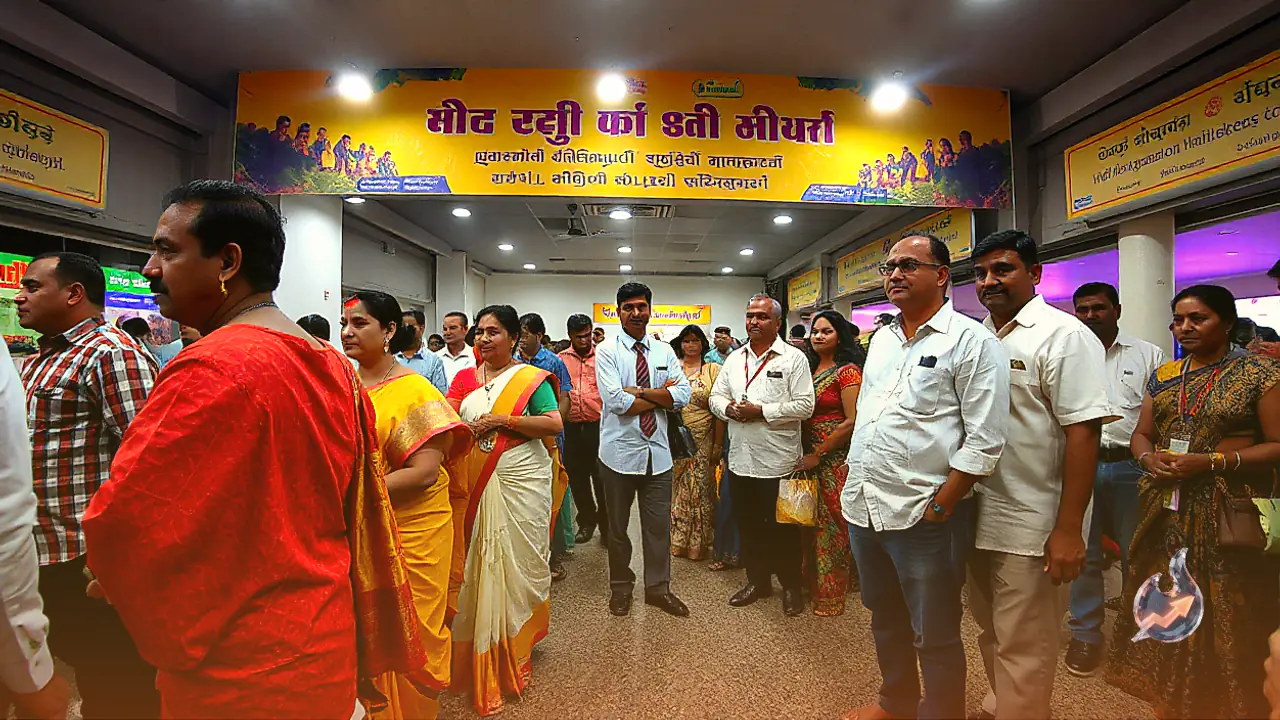

























Domestic precious metal rates witnessed an upward revision on Wednesday, exactly two days before the Dhanteras festival. The price rise spanned all major purity brackets, including 24-carat, 22-carat, and 18-carat categories, affecting retail buyers planning festive purchases. Escalating consumer footfall across major jewellery showrooms coincided with these revised rates, which reflect both festive restocking and ongoing market adjustments across multiple states.
24-Carat Bullion Price Trends
The price of 24-carat gold moved upward within an expansive range, increasing by Rs 27 per 1 gram up to Rs 2,700 for 100 grams. Under this movement, the rate for 10 grams reached Rs 1,39,910, while an 8-gram allocation traded at Rs 1,11,928. At parallel trade points, 24-carat gold was quoted at Rs 14,045 per 1 gram and Rs 1,40,450 per 10 grams. These increments set the benchmark for pure bullion, coins, and investment bars during peak festive procurement.
Movements in 22-Carat and 18-Carat Jewellery Rates
Popularly used for crafted jewellery, 22-carat gold witnessed steady upward gains across all quantity tiers. Rates climbed by Rs 25 for 1 gram, Rs 200 for 8 grams, Rs 250 for 10 grams, and Rs 2,500 for 100 grams. Consequently, the price for 22-carat gold on November 4 stood at Rs 12,875 per 1 gram, Rs 103,000 per 8 grams, Rs 128,750 per 10 grams, and Rs 128,750 per 100 grams. In other retail benchmarks, 10 grams and 8 grams held at Rs 1,28,250 and Rs 1,02,600 respectively, with a corresponding 100-gram jump of Rs 2,500.
For 18-carat gold, which caters extensively to lightweight and stone-studded designs, prices advanced by Rs 20 per 1 gram to Rs 2,000 for 100 grams. This brought 18-carat gold to Rs 10,534 per 1 gram and Rs 1,05,340 per 10 grams. Gold bearing 750 purity stood at Rs 1,04,930 per 10 grams and Rs 83,944 per 8 grams, with per-gram pricing settling at Rs 10,318.
Breakdown Across Purity Grades
Physical markets outlined distinct valuations across standard fineness grades. Gold of 999 purity was priced at Rs 13,758 per 1 gram, whereas 995 purity traded at Rs 13,703 per 1 gram. The benchmark 916 purity grade was pegged at Rs 12,602 per gram. In lower-purity segments, 750 purity stood at Rs 10,318 per 1 gram, followed by 585 purity gold at Rs 8,048 per 1 gram. These gradations provide structured price points for consumers balancing purity preferences against expenditure caps.
Retail Chains and Regional Outlets
Prominent jewellers updated their store displays to reflect the price revision. At Malabar outlets, 22-carat gold was quoted at Rs 12,825 per 1 gram and Rs 1,28,250 per 10 grams, while its 24-carat counterpart stood at Rs 13,991 per 1 gram and Rs 1,39,910 per 10 grams.
Retail stores of Joyalukkas listed 22-carat gold at Rs 12,825 per 1 gram and Rs 1,28,250 per 10 grams. These identical figures applied across outlets in Andhra Pradesh, Delhi, Gujarat, Karnataka, Kerala, Maharashtra, and Odisha. Similar price rises for 22-carat gold were observed across Tanishq and IBJA channels ahead of the festival.
Domestic Demand Rebound and Global Consumption Dynamics
India's physical gold market showed notable recovery from a sluggish second quarter, posting quarter-on-quarter growth across segments. Driven by seasonal jewellery purchases, aggregate demand rose 25% sequentially to 162 tonnes during the third quarter. Even with this pickup, volumes stayed 29% below the levels seen in the third quarter of 2025, constrained by a elevated historical base and pricing-related affordability barriers, as noted by the World Gold Council.
Despite affordability hurdles, India retained its standing as the foremost jewellery market globally, representing 32% of total worldwide jewellery consumption during Q3 and 27% across the initial nine months of 2026. The World Gold Council report noted that inventory restocking by retailers and growing store footfalls signal robust demand prospects for the fourth quarter's wedding and festival calendar. Moderating price spikes may aid transaction activity, though persistently high cost levels could continue to limit overall tonnage.