






















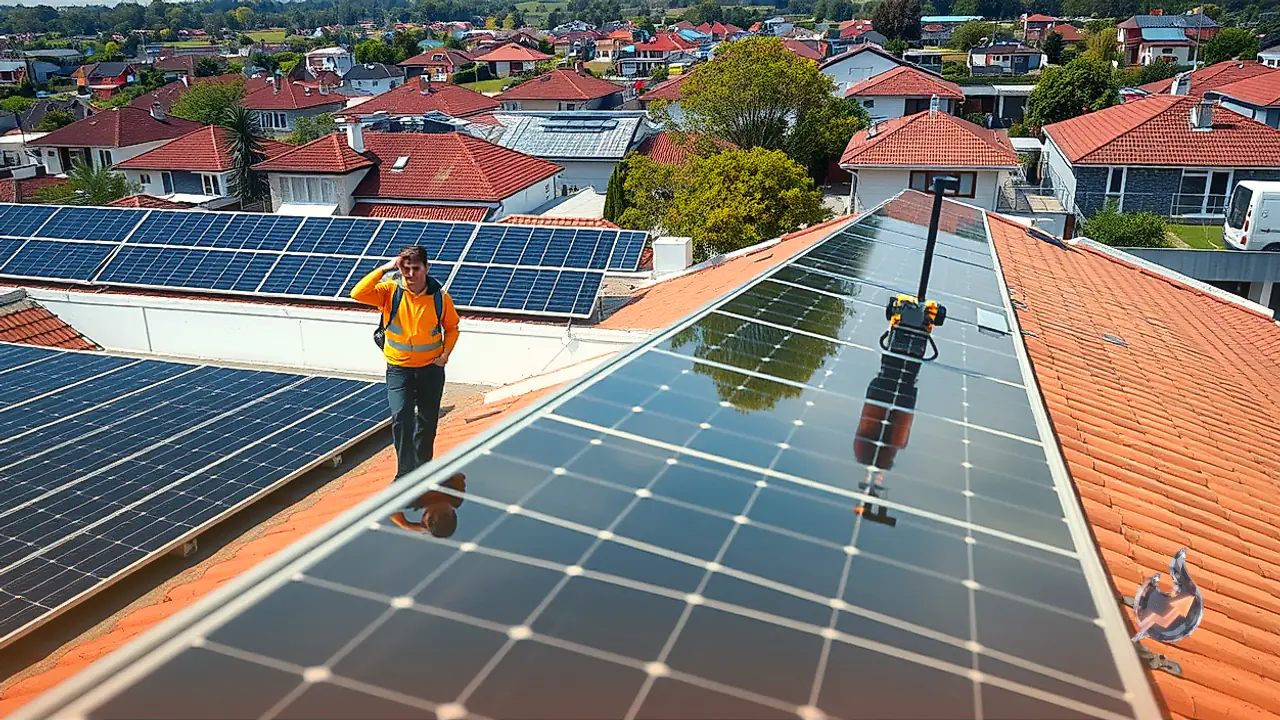

Across the country, the transition toward residential clean energy is expanding at a remarkable pace as homeowners seek insulation from rising electricity bills while minimizing their environmental footprint. A major catalyst behind this rapid shift is the extensive financial backing provided by government authorities. Through direct financial incentives, both central and provincial administrations are substantially lowering the entry barrier for installing rooftop solar arrays. In several regions, the combined weight of these support mechanisms offsets nearly 60 percent of the total installation expenditure, leaving the homeowner responsible for only the remaining 40 percent of capital costs.
Central Assistance Structure Under PM Surya Ghar Scheme
At the national level, the PM Surya Ghar initiative enforces a standardized subsidy schedule applicable to all states. This central grant is disbursed directly into the beneficiary's registered bank account following technical verification. The financial grant scales according to the installed generation capacity in the following manner
- 1 Kilowatt Installation: Setting up a one kilowatt domestic setup entitles the resident to a direct grant of Rs 30,000.
- 2 Kilowatt Installation: Scaling up to a two kilowatt setup doubles the central grant to Rs 60,000.
- 3 Kilowatt or Higher Systems: For installations of three kilowatts or larger, the central incentive reaches an upper ceiling of Rs 78,000.
It is critical to note that while homeowners are free to set up capacities exceeding three kilowatts, the central financial grant remains firmly capped at Rs 78,000. Any capacity added beyond the three kilowatt threshold does not attract higher monetary allocations from the union government.
State-Level Top-Up Subsidies Across Key Regions
In addition to the baseline central allocation, several regional administrations provide supplemental top-up subsidies to further ease the financial burden. Under the regulatory landscape governing installations in 2026, states such as Uttar Pradesh, Bihar, and Haryana provide distinct regional grants, whereas certain other territories maintain reliance solely on the central framework.
Uttar Pradesh Additional Incentives
The government of Uttar Pradesh provides supplementary financial backing ranging from a minimum of Rs 15,000 up to a maximum of Rs 30,000. This state contribution functions completely on top of the central assistance. Under state rules, a 1 kilowatt residential array qualifies for an extra Rs 15,000, while a 3 kilowatt or larger system can draw the full additional allowance of Rs 30,000, bringing substantial financial relief to local applicants.
Haryana Tiered Assistance Policy
Haryana has structured its state incentives based on household demographics. General category households receive a top-up of Rs 10,000 per kilowatt, subject to an upper cap of Rs 20,000. Concurrently, to support economically underprivileged segments, Antyodaya and low-income families are granted up to Rs 25,000 per kilowatt in extra provincial assistance, drastically reducing out-of-pocket setup costs.
Incentive Landscape in Bihar, Madhya Pradesh, and Punjab
Bihar operates a tiered additional grant system providing Rs 15,000 for 1 kilowatt, Rs 30,000 for 2 kilowatts, and up to Rs 45,000 for 3 kilowatt installations. When paired with central grants, this structure makes adoption exceptionally economical. On the other hand, Madhya Pradesh currently does not extend any substantial provincial top-up beyond the standard central support. Similarly, Punjab residents must rely primarily on the baseline central grant of up to Rs 78,000, as separate large-scale state allocations are not active at present. State energy policies, however, are subject to periodic revisions based on administrative targets.
Unified Registration Architecture via National Portal
Despite differences in provincial top-up incentives, the operational workflow for securing approvals and funds remains completely standardized across India. Every resident, irrespective of geography, must process their paperwork through the centralized portal at pmsuryaghar.gov.in. State utilities participate within this single digital channel to verify local compliance, ensuring that procedural rules, feasibility vetting, and technical standards maintain national uniformity.
Step-by-Step Installation and Subsidy Roadmap
To navigate the transition successfully without delays or documentation errors, consumers should follow a structured sequence of actions
1. Assessing Consumption Metrics and Usable Roof Surface
Begin by reviewing recent electricity bills to determine average monthly energy consumption in units. This baseline data helps identify whether a 1 kilowatt, 2 kilowatt, or 3 kilowatt array matches household demands. Simultaneously, evaluate the physical dimensions of the roof. Typically, an uninterrupted surface of approximately 300 to 400 square meters receiving unhindered sunlight throughout the day is required for a standard 3 kilowatt installation.
2. Compiling Compulsory Verification Records
Assemble all required documentation before initiating the online workflow. Essential records include an Aadhaar-linked active bank account, verified mobile contact number, latest utility billing copy, bank passbook or cancelled cheque leaf, property ownership documentation, and clear photographic evidence of the open roof space.
3. Portal Enrollment and Form Submission
Navigate to the national portal at pmsuryaghar.gov.in and select the dedicated option for rooftop solar registration. Complete the initial profile creation by choosing the appropriate state, local power distribution company (DISCOM), consumer account number, and contact details. After logging in via the one-time passcode delivered to the mobile device, fill out identity, residence, and electrical connection parameters while uploading digital copies of all mandatory papers.
4. Distribution Utility Feasibility Assessment
Once the submission is lodged, the file is routed automatically to the designated DISCOM for technical validation. Utility engineers will visit the residence to evaluate structural feasibility, electrical connection compatibility, and grid connectivity parameters. Formal DISCOM concurrence is an absolute prerequisite before hardware work begins.
5. Vendor Allocation and Physical Assembly
Upon receipt of utility feasibility clearance, select an installer from the roster of vendors approved by the Ministry of New and Renewable Energy (MNRE) on the portal. The chosen engineering team will arrive at the site to assemble mounting structures, position photovoltaic panels, and configure the inverter. This structural deployment typically takes between 1 and 3 days to complete.
6. Bidirectional Meter Integration and Official Inspection
Following hardware assembly, a bidirectional net meter must be commissioned. This specialized meter tracks both the units imported from the public utility grid and the surplus green electricity exported back to it. DISCOM inspectors then conduct a rigorous on-site audit to certify technical compliance, wiring safety, and operational readiness.
7. Bank Details Confirmation and Fund Crediting
With all physical audits completed and operational certificates issued on the platform, confirm the Aadhaar-seeded bank account information. Once verified by the administration, the monetary subsidy is transferred directly into the bank account, typically within 15 to 30 days, though administrative timelines may occasionally extend to between 30 and 60 days.
Crucial Regulatory Compliance and Financing Provisions
Homeowners must strictly ensure that their solar components and service providers comply with the Approved List of Models and Manufacturers (ALMM) maintained by authorities. Undertaking installations through unapproved vendors or employing non-compliant hardware completely disqualifies the applicant from claiming any government financial support.
Beyond direct grants, the operational framework provides sustained recurring benefits, allowing households to realize up to 300 units of free power each month through net metering mechanisms. For applicants looking to finance the upfront capital expenditure, the national portal also embeds concessional loan financing choices. Any operational hurdles or technical questions during the lifecycle can be directed straight to local DISCOM branches or designated helpdesks.