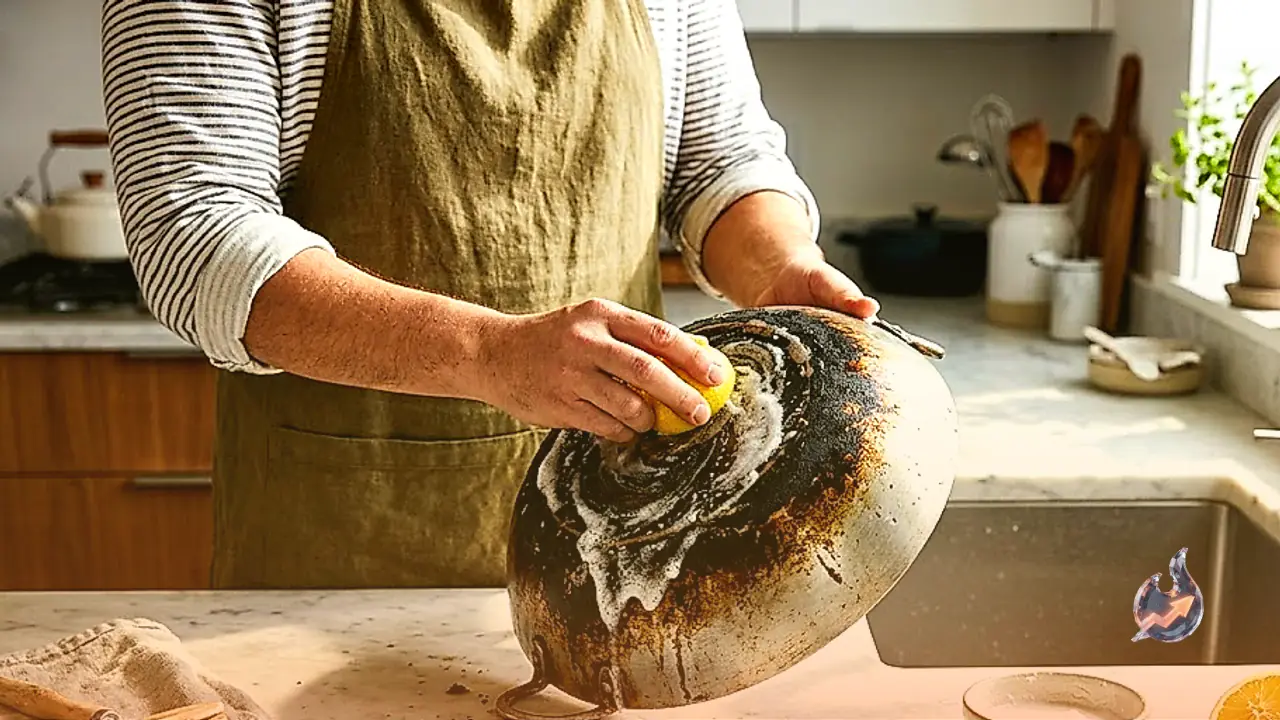

In daily household cooking, the wok or kadhai remains one of the hardest working utensils in any kitchen. From deep frying savoury snacks to tempering lentils and sauteing vegetables, it stays on direct flame for extended periods. While the inner cooking surface receives regular washing and scrubbing after every meal, the underside and exterior base are frequently neglected. High gas flames, stray oil drippings, and bubbling gravies gradually bake onto the metal base over weeks and months. Over time, this mixture of grease and heat forms a thick, black, carbonised layer that resists ordinary dishwashing soap, turning routine cleaning into an exhausting struggle.
Loosen Burnt Carbon With a Hot Soapy Salt Soak
Attempting to scrub off months of baked carbon immediately with standard cleaning pads often wastes effort and risks damaging the metal finish. The most effective starting point is softening the hardened crust. To do this, find a broad basin or a larger flat-bottomed container capable of holding enough water to submerge the bottom section of your wok. Fill it with water, add a generous measure of liquid dish soap or washing powder, and incorporate two spoons of salt. Place this container on the stove to heat the mixture thoroughly.
Once the water turns hot, switch off the heat and lower the inverted kadhai into the solution so its blackened underside remains fully covered. The synergy of heat, salt, and degreasing soap gradually breaks down the hardened fat molecules. Allow the cookware to soak undisturbed for approximately 10 to 15 minutes. Lift the wok out of the basin and wait until the metal cools to room temperature. Once safe to touch, scrub the softened bottom using a gentle cleaning pad. For utensils carrying ancient, heavily charred residues, repeating this soaking cycle once more helps lift deeper layers without manual strain.
Apply a Dense Baking Soda Paste to Dissolve Lingering Marks
Even after a thorough soak, older cookware may retain stubborn dark patches and burnt crusts that cling tightly to the aluminium. Baking soda serves as a reliable, mildly abrasive home cleaner that breaks down acidic burnt grease without eating away at the base metal. Prepare a treatment by measuring several spoonfuls of baking soda into a bowl, then stirring in just enough water to form a thick, spreadable paste.
Spread this paste generously over every burnt section on the kadhai base. Let the coating rest undisturbed for 15 to 20 minutes to allow the alkaline agent sufficient time to penetrate the carbonised spots. Afterwards, use a damp sponge or a soft-bristled non-scratch scrubber to rub the area in circular patterns. Aluminium is a relatively soft cookware metal, so intense downward force should be avoided to prevent scratching the surface. Once the marks lift away, rinse the utensil thoroughly under running water and dry it completely with a clean kitchen towel.
Harness Citrus Power With Lemon Juice and Leftover Rinds
Natural citric acid present in lemons functions as a potent degreasing agent that cuts through sticky films and heat stains. To tackle remaining discoloration, combine fresh lemon juice with your regular dishwashing liquid in equal measures and coat the stained exterior. Allow the acidic mixture to sit against the metal for several minutes before gently buffing the area with a standard cleaning sponge and rinsing clean.
Leftover squeezed lemon rinds can also serve as effective natural scrubbers. Sprinkle fine salt onto the interior pulp of a spent lemon half and rub it directly against the greasy base of the wok. The natural grain of the salt combined with the remaining citrus juice helps dislodge oily residues, reducing the physical pressure needed to clean the surface. While thick carbon deposits may demand repeated treatments over several cleaning sessions, regular application keeps aluminium cookware noticeably brighter and prevents fresh layers from building up.
Vital Precautions to Avoid Cookware Damage
Maintaining the structural integrity and appearance of aluminium utensils requires avoiding harsh cleaning habits. When cleaning the exterior of a kadhai, refrain from using sharp steel wool or rigid wire brushes, as these aggressive tools carve deep furrows into soft aluminium surfaces that trap even more grease in future use. Always confirm that the metal has completely cooled before introducing it to water or cleaning pastes to prevent warping.
Resist the urge to pry or scrape thick burnt crusts with kitchen knives, metal spatulas, or pointed objects. Chiselling off carbon crusts inevitably dents the curvature and scratches the protective finish. Finally, whenever opting for commercial descaling powders or specialised kitchen cleaners, read the manufacturer label instructions carefully to protect your hands and prevent unexpected discoloration on the cookware.