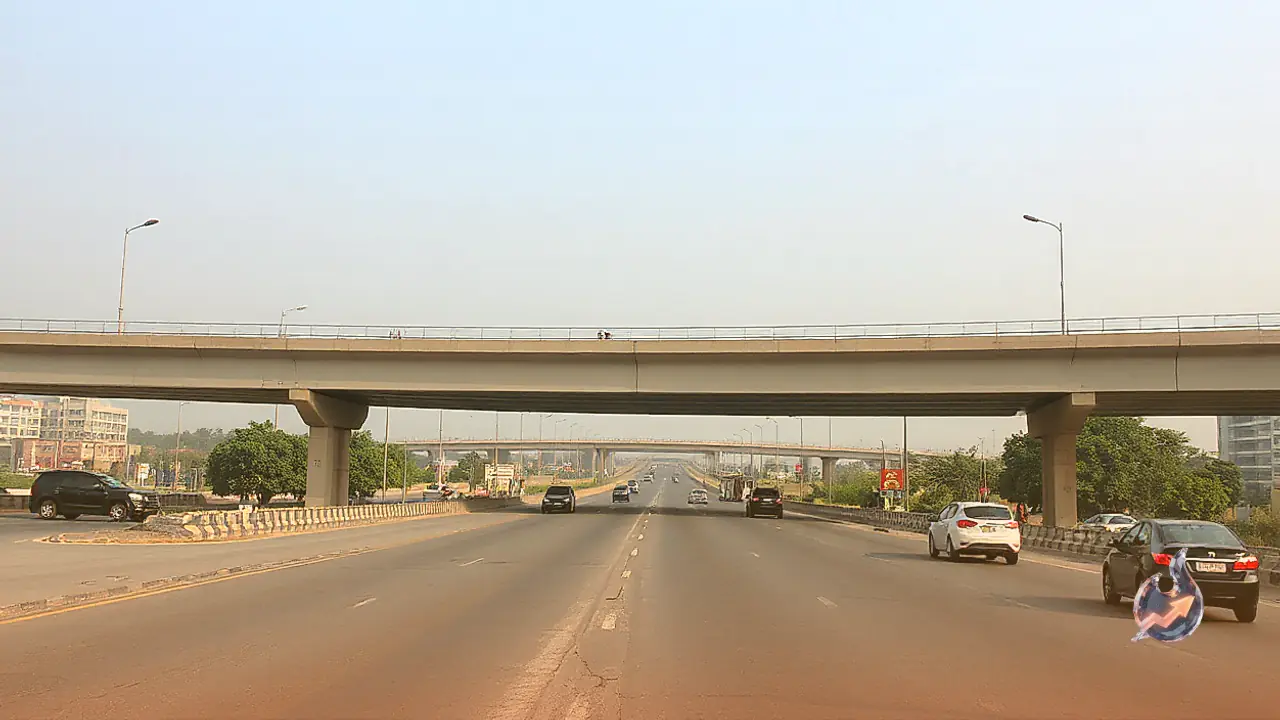

Commuters traveling between Noida and Greater Noida are set to receive major relief from peak-hour traffic bottlenecks on the expressway. Authorities have finalized plans to construct a 610-meter long flyover at Sector 150 to eliminate persistent congestion. Estimated to cost around 84 crore rupees, the four-lane elevated structure will establish seamless direct connectivity between Sector 148 and Sector 150. Beyond local sector residents, the infrastructure push is expected to streamline travel for thousands of commuters navigating between Noida, Greater Noida, Ghaziabad, and Delhi, significantly reducing travel times during busy office hours.
Addressing Expressway Bottlenecks and Local Growth
At present, commuters residing in Sector 150 and neighbouring locations rely primarily on an existing underpass to cross the Noida-Greater Noida Expressway. Sector 150 has rapidly transformed into a prominent residential hub, home to numerous high-density housing societies and major real estate developments. This rapid urban expansion has driven a sharp surge in the volume of local vehicular traffic.
During morning and evening peak hours, the existing underpass witnesses severe traffic gridlocks as office-goers and residents attempt to cross the busy expressway simultaneously. The resulting queues frequently lead to substantial delays. By providing an additional high-capacity elevated crossing, the proposed four-lane flyover will divert a significant volume of local traffic away from the underpass, relieving systemic congestion and restoring smooth movement on surrounding sector roads.
Architectural Engineering: Arch Design and 65-Meter Pillar-Less Span
The design framework of the new flyover incorporates modern engineering principles tailored to minimize disruption to expressway traffic. Spanning a total length of approximately 610 meters, the structure will feature four wide lanes to accommodate heavy traffic volumes effortlessly from both directions.
A standout highlight of the project is its arch design featuring a 65-meter central span constructed without any central support pillars over the main expressway. This pillar-less span ensures that vehicular flow along the arterial Noida-Greater Noida Expressway underneath remains completely uninterrupted both during and after construction. Ramps and connecting road networks will link the elevated bridge smoothly to the existing sector road infrastructure.
DPR Status, IIT Roorkee Clearance, and Construction Timeline
The Detailed Project Report (DPR) for the flyover has already been completed. To ensure structural safety and engineering precision, the complete design package has been forwarded to experts at IIT Roorkee for rigorous technical evaluation and vetting.
Once technical approval is formally granted by IIT Roorkee, the administration will initiate the competitive tendering process to select a qualified construction agency. Official project guidelines specify a target construction timeframe of approximately 1.5 years (18 months) from the date work commences on site. The total expenditure for the execution of the project is estimated at 84 crore rupees.
Wider Regional Impact Across Delhi-NCR and 20 Nearby Villages
The benefits of the upcoming flyover will extend far beyond the immediate precincts of Sector 150 and Sector 148. The project is designed to integrate into the broader traffic management system across the National Capital Region (NCR), facilitating faster transit for commuters traveling between Delhi, Ghaziabad, Noida, and Greater Noida.
Additionally, the infrastructure improvement will directly benefit residents of roughly 20 villages situated along the Yamuna Khadar belt and the southern periphery of the expressway. By enhancing local road connectivity, the flyover will help the region accommodate future traffic growth driven by ongoing residential and commercial developments.