

















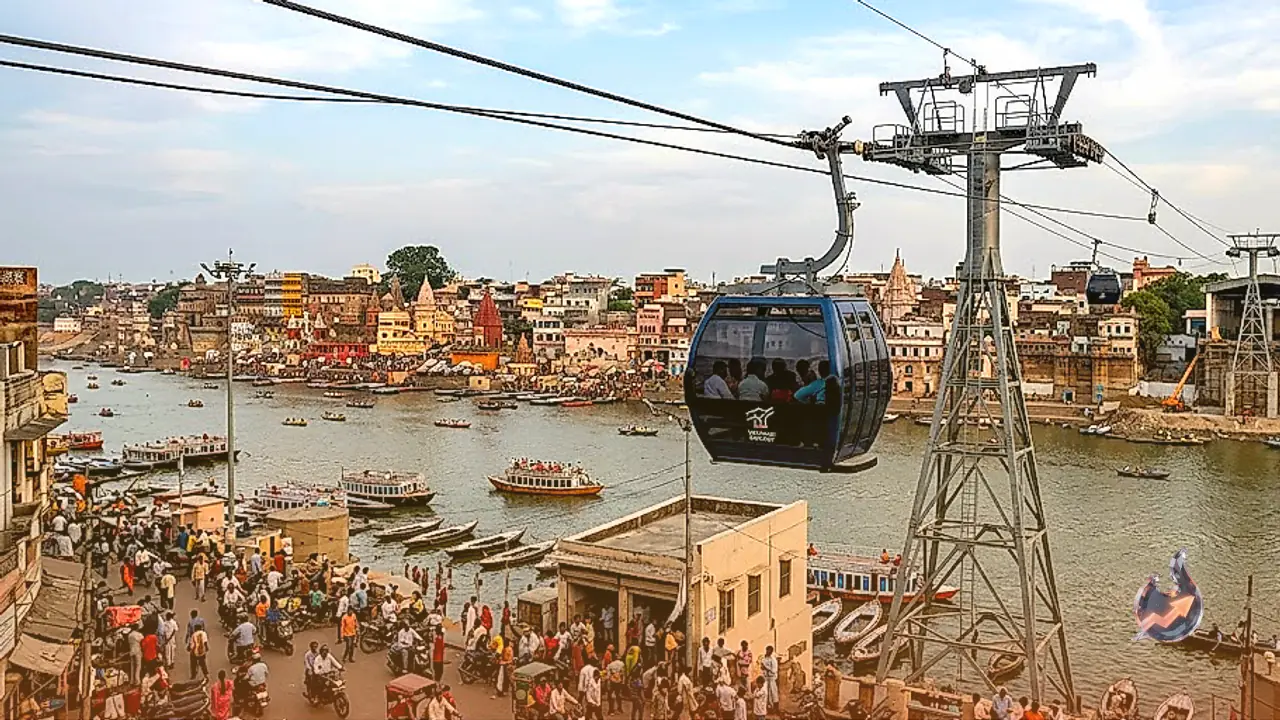

Reducing dependence on traditional surface transport networks like congested roads and railways, several key regions across the country are now deploying modern cable car transit systems. These ambitious infrastructure initiatives are transforming connectivity across eight major urban centers and pilgrimage locations, backed by a massive estimated total expenditure of one lakh crore rupees. The primary objective behind these developments is to boost spiritual tourism, overcome treacherous terrain, and offer commuters traffic-free and rapid travel alternatives.
Varanasi Pioneers Urban Ropeway in India
In the sacred city of Varanasi, the country's first urban ropeway project has neared completion. Spanning a length of approximately 4 kilometers, this corridor has absorbed an investment exceeding 6,000 crore rupees. Once operational, the cable car link connecting the Cantonment Railway Station directly to the Kashi Vishwanath temple will reduce travel time to a mere 16 minutes. The entire corridor features 5 stations and possesses a daily passenger handling capacity of roughly 1 lakh travelers, enabling them to bypass road traffic and congestion entirely.
Connecting Sonprayag to Kedarnath Dham
In the mountainous terrain of Uttarakhand, the cable car project linking Sonprayag to Kedarnath Dham is widely regarded as the most critical infrastructure undertaking in the region. Stretching approximately 13 kilometers, this ropeway is expected to cost over 4,000 crore rupees. Upon completion, pilgrims will be able to reach Kedarnath from Sonprayag in just 36 minutes, compared to the current grueling 8 to 9 hours required to cover the distance. This route will also incorporate roughly 5 transit stations.
Streamlining the Journey from Govindghat to Hemkund Sahib
Another major ropeway initiative has commenced in Uttarakhand to facilitate travel between Govindghat and Hemkund Sahib. Spanning a distance of 12.4 kilometers, this project entails an estimated expenditure of 3,000 crore rupees. The system is designed with a capacity to transport 1,100 passengers every hour, accommodating nearly 11,000 travelers daily. Notably, pilgrims currently endure a hazardous 21-hour journey to reach Hemkund Sahib from Govindghat, but the upcoming cable car will shrink this travel time down to half an hour.
Easing Access to Mahakaleshwar Temple in Ujjain
To simplify travel to the world-renowned Mahakaleshwar temple situated in Ujjain, Madhya Pradesh, the administration has initiated preparations for a ropeway running from the railway station to the temple complex. Spanning about 1.7 kilometers, the completion of this project is projected to cost 200 crore rupees. The system will transport over 1,000 people hourly, enabling visitors to reach the temple premises in just 7 minutes compared to the current delay of over an hour from the railway station.
Rerouting the Bijli Mahadev Project in Himachal Pradesh
To improve accessibility to the revered Bijli Mahadev shrine located in the Kullu district of Himachal Pradesh, authorities had previously announced a cable car initiative. Initially planned between Pirdi and the Bijli Mahadev temple, the alignment has now been revised to run from Pirdi to Kaisdhar. Spanning roughly 4 kilometers, this initiative has been designated as the Maharaja Ropeway. Due to the alteration of the route, the estimated financial outlay for the project has been revised upward from 250 crore to 300 crore rupees.
Dhosi Hills and Prayagraj Sangam Projects
Though relatively short in length, the ropeway under construction at Dhosi Hills in Haryana holds immense significance. Spanning 870 meters, the project carries an estimated cost of 57 crore rupees. Climbing the hill currently takes between one to one and a half hours, whereas the completed cable car system will reduce this commute to just 5 to 10 minutes, thereby boosting local tourism. Meanwhile, in Prayagraj, Uttar Pradesh, preparations are underway to construct a ropeway over the Sangam site, for which the state government has already concluded surveys. Spanning 2.5 kilometers with an estimated budget exceeding 210 crore rupees, the project will link Parade Ground to Triveni Pushp. Utilizing 14 trolleys, it will transport 112 passengers simultaneously across the holy confluence of the Ganga, Yamuna, and Saraswati rivers.
Enhancing Access to Shankaracharya Temple in Srinagar
Tourism in Srinagar will receive a further boost with the installation of a cable car system leading up to the historic Shankaracharya temple. Stretching nearly 1 kilometer, the project is estimated to cost around 147 crore rupees. Navigating the existing pathway takes more than 30 minutes, but the ropeway will cut travel time down to 5 minutes. Initiated along the banks of Dal Lake, the project is slated for completion within a two-year timeframe.