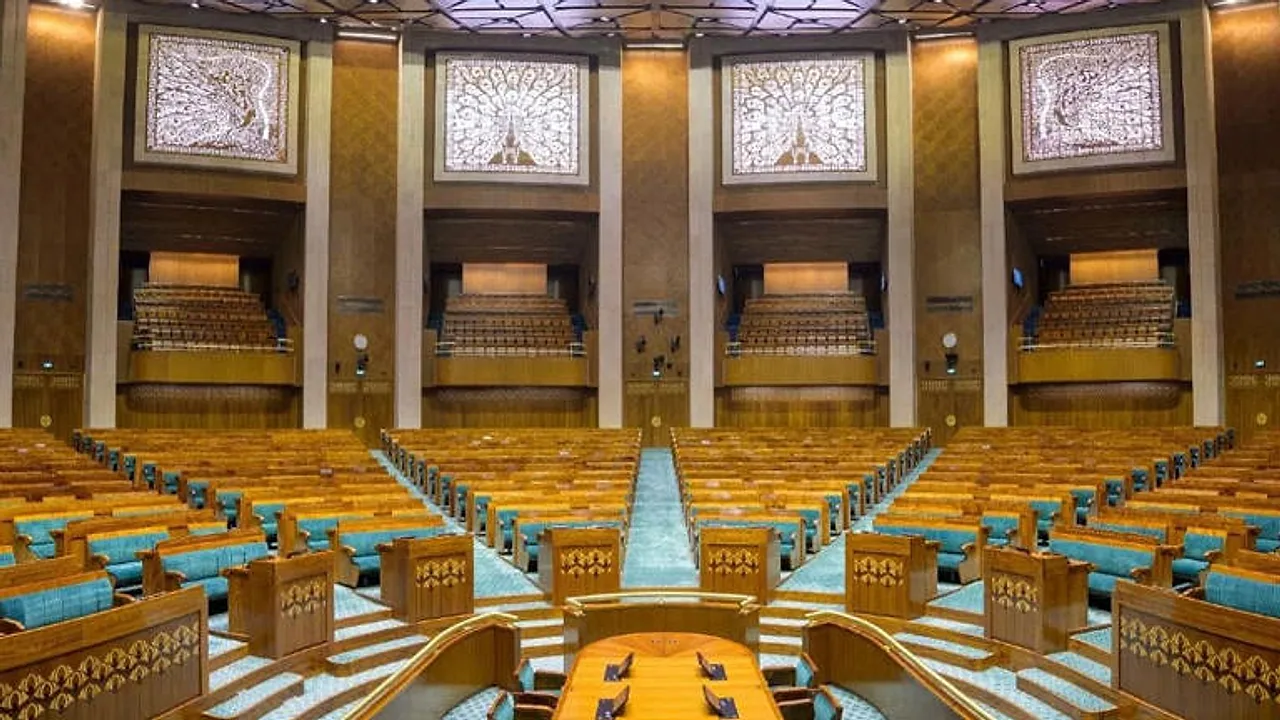

Discussions surrounding the potential expansion of the lower house of Parliament from its current 543 seats up to 850 have brought historical debates back into focus. Specifically, policy circles are revisiting the deliberations held inside the Constituent Assembly in 1949, when leaders debated whether a strict ceiling should be imposed on the total number of representatives in the legislature.
The Argument Against a Fixed Limit
During the 1949 sessions, economist and socialist figure K.T. Shah strongly opposed capping the maximum strength of the Lok Sabha. He introduced an amendment seeking to remove any fixed ceiling, arguing that the country's population would inevitably multiply over time. Shah contended that placing a hard limit would dilute the weight of each representative as constituencies expanded in population.
The Counter-Argument for a Controlled Size
Opposing the proposal, Congress member M. Ananthasayanam Iyengar argued that a house capped at 500 members was more than sufficient. He maintained that even with smaller houses, lawmakers often struggled to maintain quorum during daily proceedings, questioning the utility of a larger assembly. Iyengar asserted that a compact chamber would function more effectively than an oversized one.
Final Constitutional Outcome
Ultimately, the Constituent Assembly rejected the amendment proposed by K.T. Shah. When the Constitution was adopted on November 26, 1949, Article 81 established that directly elected members representing the states would not exceed 500. Over subsequent decades, constitutional amendments adjusted these boundaries, setting the state share at 530 and union territories at 20.