




















A ceremony scheduled at Lalpeth in Chandrapur on Tuesday, September 8, meant to mark the restoration of a centuries-old, protected Shivling in the presence of Amrita Fadnavis, wife of Maharashtra Chief Minister Devendra Fadnavis, has instead run into a legal roadblock just hours before it was to begin, after the Archaeological Survey of India flagged construction work around the shrine as illegal.
What the ASI Found
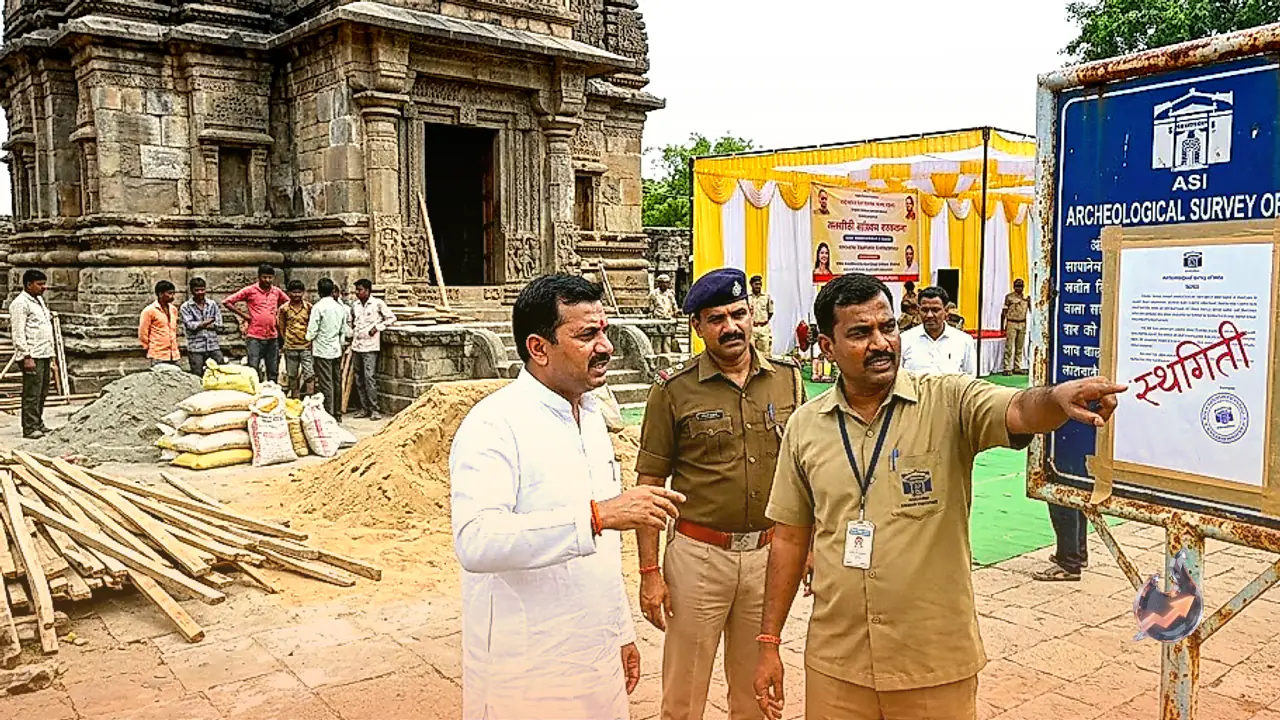
During a routine inspection of the site, officials of the Archaeological Survey of India noticed that granite flooring had been laid around the Shivling, and that a cement brick wall along with a permanent shed had come up inside the complex. The department has objected to this work, saying it falls inside the prohibited zone surrounding a monument of national importance. The ASI has now written to the president of the Lalpeth Vishal Shivling Mandir Seva Samiti, ordering an immediate halt to the work and the removal of what it calls encroachment.
Why the Zone Around the Shivling Is So Sensitive
The monolith at Lalpeth, referred to officially as the Ekashma, Chandrapur, is a nationally protected monument under the Archaeological Survey of India. Under the Ancient Monuments and Archaeological Sites and Remains Act, 1958, any land within 100 metres of a protected monument's boundary is treated as a prohibited zone where fresh construction of any kind is simply not permitted. The next 100 to 300 metres form a regulated zone, where construction can go ahead only after clearance from the competent authority. It is this framework that has put the renovation work at Lalpeth under the scanner, since the shed, the wall and the granite flooring all appear to sit inside that first, strictly banned ring around the monument.
An MLA's Funds and an Unanswered Permission Question
According to what has emerged so far, local legislator Kishor Jorgewar contributed money from his discretionary fund towards the construction at the site. What remains unclear, and is now central to the inquiry, is whether anyone sought or received the mandatory clearance before building inside a zone where construction is banned outright. That single unanswered question is what has turned a renovation ceremony into a controversy just as the event was about to unfold, and it is likely to decide whether the work survives at all.
Penalties on the Table and a Police Complaint in the Works
The ASI notice states that unauthorised construction was discovered inside the prohibited zone of the Lalpeth Ekashma, Chandrapur during a routine inspection, and it invokes Section 20(A) of the Ancient Monuments and Archaeological Sites and Remains Act to describe the new construction as a violation of the law. The notice warns that such violations carry a punishment of up to two years in prison, a fine of up to one lakh rupees, or both, and it directs the committee to tear down the construction and restore the site to its original condition. Separately, Nitin Bansod, district president of the Lok Andolan Nyas, has also lodged a complaint with the ASI over the same construction, and the department is reported to be preparing to file a police complaint against the temple committee's president. Should that complaint be registered, the matter would move well beyond an administrative notice and into criminal proceedings that could drag on for months.
The Show Goes On, For Now
None of this appears to have slowed preparations on the ground. Ahead of Tuesday's inauguration, banners announcing Amrita Fadnavis's visit have gone up across the city, and administrative arrangements for her presence have continued at full pace even as the ASI notice became public. Whether the renovation ceremony proceeds as planned, or whether authorities step in given the unresolved questions over the legality of the construction, remains to be seen, and residents of Chandrapur are watching closely to find out.