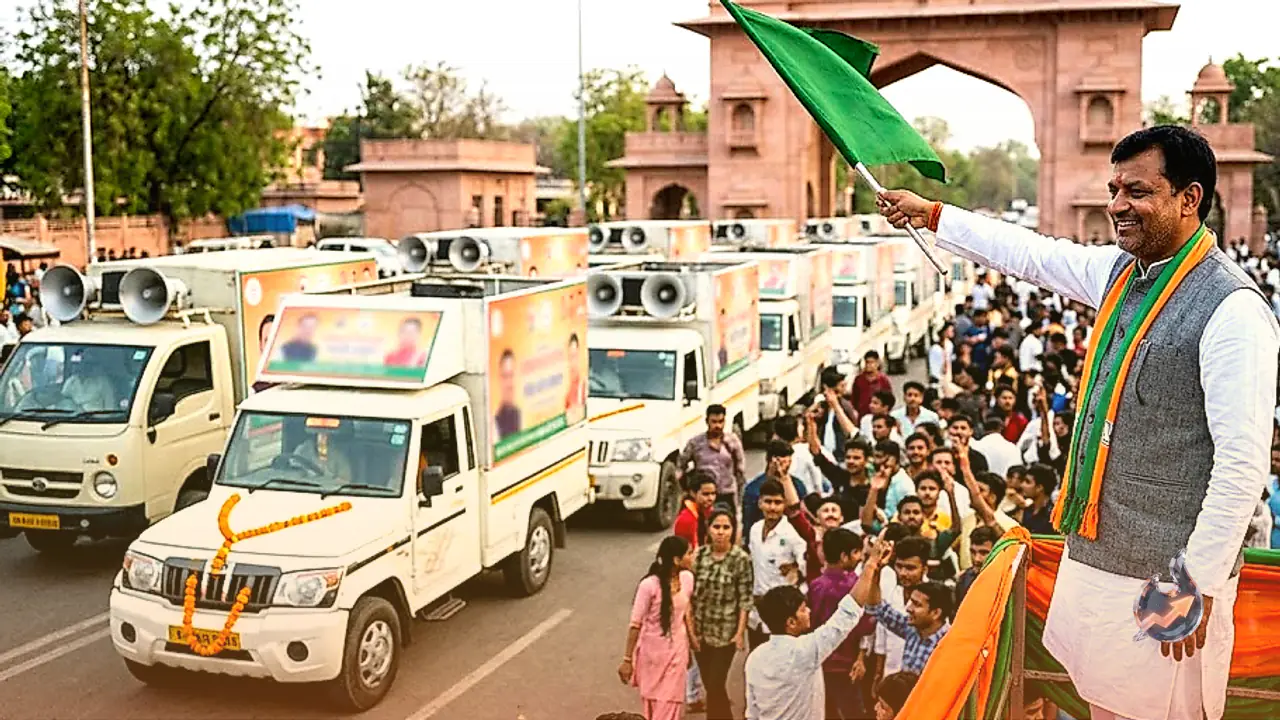



















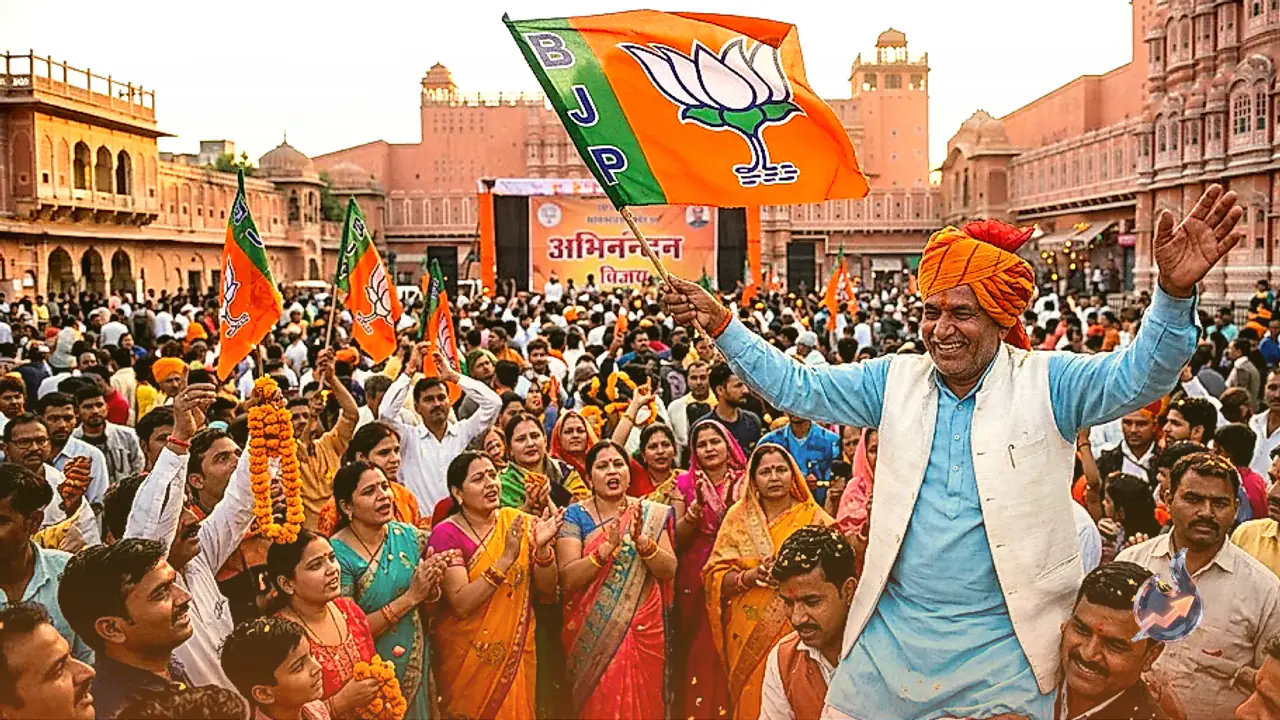

Grassroots political battles in Rajasthan ended with a resounding triumph for the Bharatiya Janata Party across urban local bodies, upsetting conventional arithmetic in several municipalities. The elections for heads and mayors witnessed internal factional shifts within major political camps, alongside independents shifting loyalties at decisive junctures. When final tallies across 303 urban local bodies were declared, the BJP captured the chairperson and mayoral positions in 198 municipalities, whereas the Congress managed to secure leadership in 95 local bodies.
A Breakdown of Corporations, Councils, and Municipalities
An examination of the institutional breakdown illustrates the scale of the governing party's footprint across key tiers of urban governance. Out of ten major municipal corporations in the state, results for seven were finalized, with the BJP taking control of six. Among the 47 municipal councils, the party emerged victorious in 31 council presidencies. Furthermore, out of 252 smaller municipal boards, the BJP succeeded in electing its candidate as chairperson in 162 towns, consolidating its control over grassroots administrative centers.
The municipal corporation of Ajmer witnessed one of the most closely watched developments of these polls. The Congress party had harbored strong expectations of securing the mayor's seat, taking independent councillors on a trip to Bengaluru and lodging them at a luxury five-star facility to keep their numbers intact. However, upon their return to cast ballots, those very independent members voted for the BJP nominee, handing the mayoral office to the ruling party. In three other municipal bodies, the contest ended in an exact tie between BJP and Congress nominees. In each instance, the deadlock was resolved by drawing lots, and the slips drawn favored the BJP nominee all three times.
Organizational Strategy Versus Rigging Accusations
Following the outcome, Rajasthan BJP president Madan Rathore attributed the entire success to Chief Minister Bhajan Lal Sharma, remarking that the strategic planning laid down by him had delivered these widespread wins. Conversely, profound dismay was evident within the Congress camp. Rajasthan Congress president Govind Dotasra voiced strong objections to the election process, alleging that while Congress won in the court of the people, the BJP had misused state machinery and financial muscle while intimidating Congress councillors to capture municipal posts.
The municipal contests carried immense personal stakes for Chief Minister Bhajan Lal Sharma. Since assuming office, administrative detractors had often labelled him a politically vulnerable figure due to his lack of prior administrative tenure, with reports emerging of internal party figures expressing apprehensions in New Delhi about future electoral performance under his watch. Despite being unaccustomed to running a state bureaucracy, his extensive decades-long background in party apparatus proved decisive during these local elections. Congress made strenuous attempts to prevent floor-crossing among its elected representatives, but those maneuvers fell short against Sharma's grassroots mobilization. While the victory provides security to his chief ministerial standing, the fact that Congress still secured 95 local bodies signals that the opposition maintains a potent ground presence that will require continued administrative performance to counter.
Uttar Pradesh Steps up Early Preparations and Coalition Jousting
Parallel to the civic churn in Rajasthan, Uttar Pradesh saw an acceleration of early political mobilizations for future electoral battles. Addressing party workers at a regional convention held in Meerut, Chief Minister Yogi Adityanath and state party figure Nitin Nabin urged the cadre to transcend caste barriers, remain united, and campaign strictly on the basis of governmental achievements. Adityanath cautioned workers that rival outfits would attempt to manufacture deceptive political narratives to mislead the public.
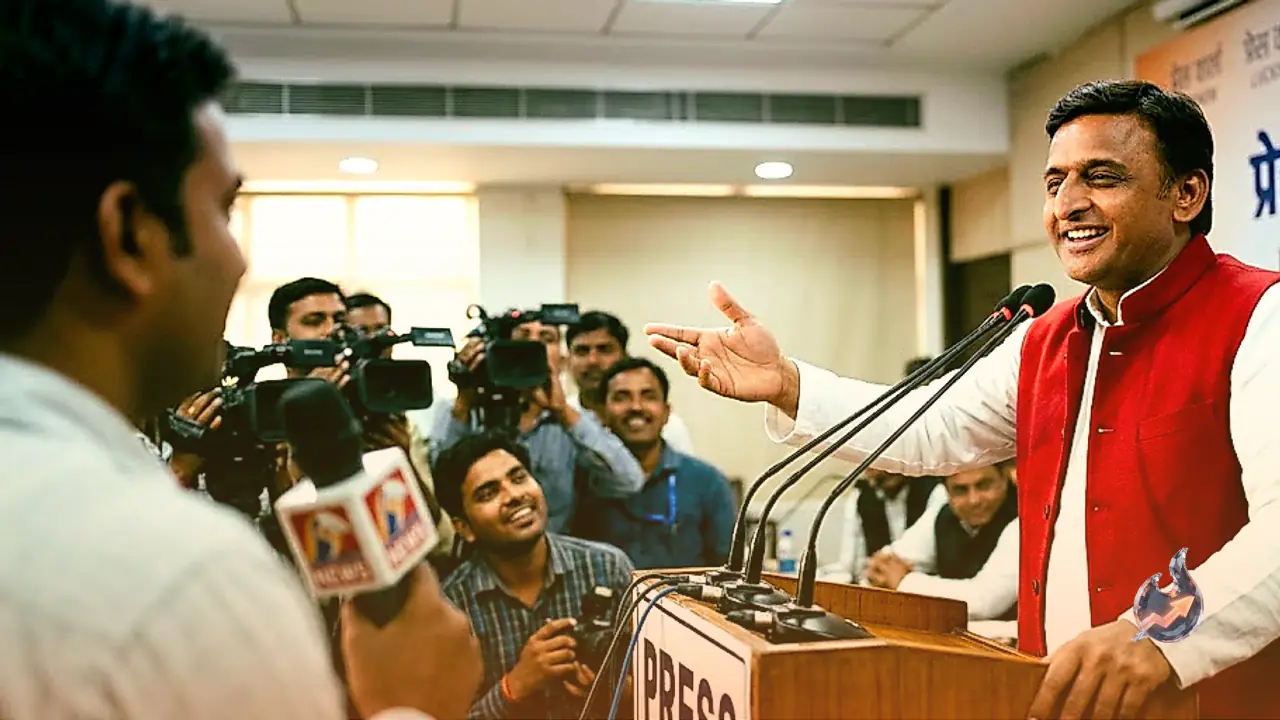
Concurrently, All India Majlis-e-Ittehadul Muslimeen president Asaduddin Owaisi arrived in Uttar Pradesh, pitching an open alliance proposal to the Samajwadi Party and Congress. Owaisi argued that a pre-poll pact was necessary to prevent the fragmentation of opposition votes, provided seats were allocated on an equitable basis. However, Samajwadi Party chief Akhilesh Yadav swiftly rejected the overture, making it clear that the existing framework of their alliance would remain intact, thereby shutting out Owaisi. Reacting to the ongoing political positioning, Congress parliamentarian Imran Masood warned that prolonged indecision over seat distribution would directly benefit the BJP.
The Battle for Caste Constituencies in the Heartland
Strategic observers point out that Asaduddin Owaisi is primarily directing his resources toward assembly segments featuring substantial minority populations capable of swaying election outcomes. Leaders from the Samajwadi Party and Congress have routinely accused Owaisi of operating to divide the opposition vote in ways that assist the BJP. By formally tendering an alliance offer, Owaisi sought to counter that persistent criticism. A similar dynamic had unfolded previously in Bihar when Tejashwi Yadav declined an alliance with him, an outcome that ended up costing the opposition dearly, presenting Akhilesh Yadav with a comparable strategic dilemma.
Meanwhile, Suheldev Bharatiya Samaj Party leader Om Prakash Rajbhar stirred fresh debate across eastern Uttar Pradesh by rallying his community around regional identity. Rajbhar declared that the division of Uttar Pradesh remains inevitable in the future, claiming that whenever it occurs, an individual from the Rajbhar community will lead Purvanchal as chief minister. In response to Rajbhar's repeated attacks on the Samajwadi Party, Akhilesh Yadav asserted that such leaders were misleading the public at the behest of their patrons and that any dream of bifurcating the state would remain unfulfilled.
Caste allegiance continues to form the backbone of electoral mobilization throughout Uttar Pradesh, prompting each political force to craft tailored social strategies. While Owaisi concentrates on minority constituencies, Rajbhar is attempting to keep his community base consolidated. At the same time, Sanjay Nishad, representing the boatmen community, staged a protest against the very administration in which he serves as a minister to push his community's demands. To broaden his traditional base beyond Yadav and Muslim voters, Akhilesh Yadav is aggressively courting the state's 21 percent Dalit population under the PDA banner, introducing blue uniforms in the student wing and wearing blue stoles to signal ideological solidarity. With Bahujan Samaj Party chief Mayawati increasingly limiting her public activity to internal family appointments and online posts, the BJP is also making concerted efforts to regain ground among marginalized social groups after witnessing slippages in the 2024 parliamentary elections.