


















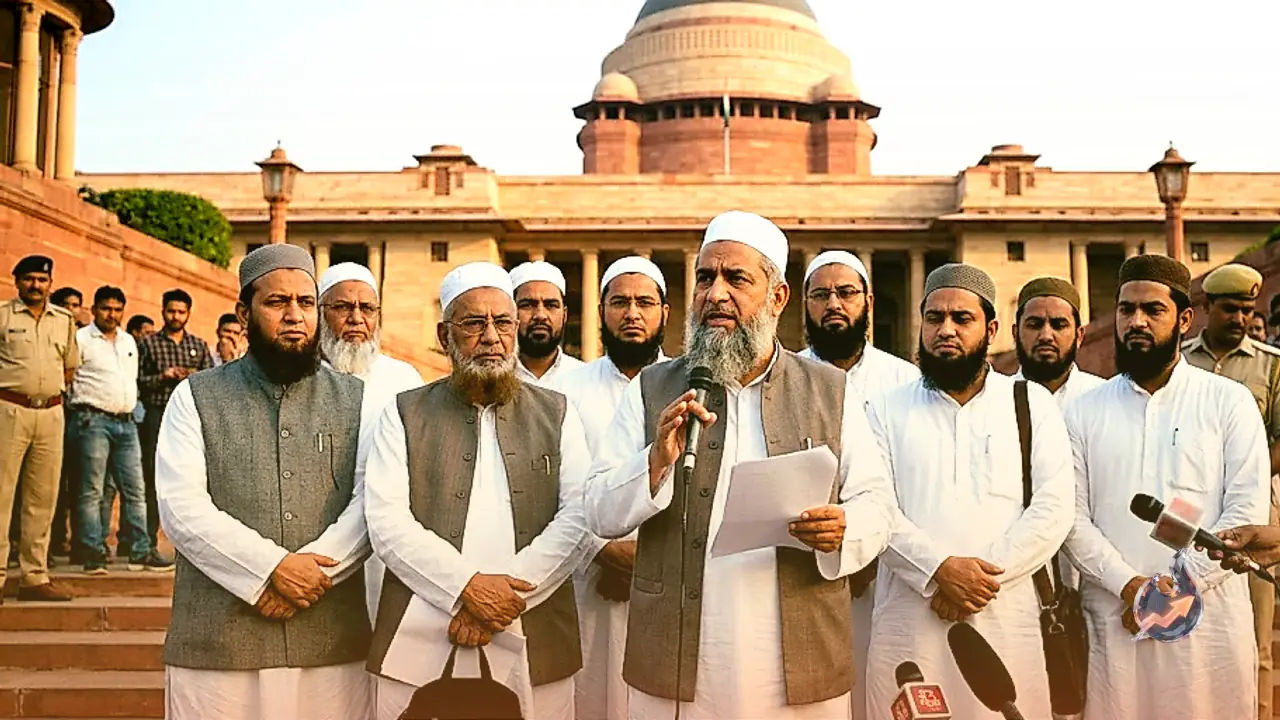

Prompted by widespread reports of bulldozer actions targeting religious properties, madrasas, and incidents of mob violence, Jamiat Ulema-e-Hind has resolved to take its concerns to the highest constitutional office in the country. Following a crucial working committee assembly in the national capital, the organisation announced that a formal request for an appointment will be submitted to the President of India to present grievances of affected citizens and document alleged breaches of constitutional liberties.
The high-level session took place on Wednesday inside the Mahmudia Library at the organisation's central headquarters in New Delhi. Representatives from various states engaged in an exhaustive evaluation of civil liberties, fundamental rights guaranteed by the constitution, religious autonomy, and state interference in Shariat-related matters. Participants emphasised that judicial and statutory forums must be tapped systematically to secure justice for affected communities and protect core constitutional foundations.
Administrative Bias and Narrowing Legal Avenues
Briefing the press following the deliberations, Jamiat Ulema-e-Hind President Maulana Mahmood Asad Madani detailed the formal resolutions endorsed by the executive body. He pointed out that unilateral administrative measures in multiple jurisdictions are actively shrinking the space for aggrieved individuals to pursue meaningful legal remedies through regular judicial mechanisms.
Madani noted that punitive administrative crackdowns are no longer confined to isolated pockets or a single state, emerging instead across several regions of the country. According to the organisation, when official bodies demonstrate biased conduct, democratic norms and fair governance suffer immediate damage. In response, Jamiat confirmed its decision to invoke all accessible legal and constitutional avenues to counter arbitrary measures.
Commitment to Peaceful Democratic Recourse
Addressing minority communities and the broader public, Maulana Mahmood Madani urged individuals to reject fear and despair in the face of ongoing challenges. He maintained that safeguarding personal and collective rights demands steady perseverance through lawful, democratic pathways.
“This country is ours, and we are equal citizens of this country.”
Madani underlined that protecting fundamental freedoms is an essential right granted by the nation's legal framework. Jamiat plans to make full use of the institutions, remedies, and procedures provided by the Constitution. He reiterated that protecting the rule of law and preserving India's constitutional and democratic character will remain the central focus of their efforts.
Review of the Saharanpur Demolition and Field Assessment
The working committee also deliberated extensively on the fallout from the recent demolition of the historic Collectorate Mosque in Saharanpur. Maulana Mahmood Madani had been monitoring developments closely following the razing of the religious structure. In the aftermath of that event, a central leadership delegation headed by General Secretary Maulana Muhammad Hakimuddin Qasmi visited Saharanpur to evaluate the ground reality from administrative, social, and legal angles.
The findings gathered during that site visit were discussed during Wednesday's meeting to help guide forthcoming courtroom and administrative strategies. Beyond external legal disputes, the executive body ratified several key internal organizational resolutions. The proceedings commenced earlier in the day when Maulana Muhammad Hakimuddin Qasmi presented the minutes from the previous meeting, which received formal approval from the chair.
Prominent Clerics and Regional Leaders in Attendance
The gathering brought together prominent theological figures, seminary administrators, and regional leaders from across India. Notable attendees included Mufti Abul Qasim Nomani, Mohtamim of Darul Uloom Deoband, Vice President Maulana Mohammad Salman Bajnori, Treasurer Maulana Qari Shaukat Ali, and Majlis-e-Qayama President Maulana Rahmatullah Mir Kashmiri.
Senior scholars associated with Darul Uloom Deoband, including Nayab Amir-e-Hind Maulana Mufti Syed Mohammad Salman Mansoorpuri, Maulana Rashid Azmi, Maulana Abdullah Maroofi, and Mufti Abdur Razzaq, also participated in the session. State units were represented by Mufti Mohammad Affan Mansoorpuri and Maulana Kalimullah Qasmi of Uttar Pradesh, Maulana Mohammad Aqil Garhi Daulat of UP's Western Zone, Maulana Siddiqullah Choudhury of West Bengal, and Mufti Javed Iqbal Qasmi alongside Maulana Mohammad Nazim Qasmi from Bihar.
Delegates from southern and central India included Maulana Abdul Qawi representing the Deeni Talimi Board of Telangana and Andhra Pradesh, Haji Mohammad Haroon of Madhya Pradesh, Mufti Iftikhar Ahmed Qasmi of Karnataka, and Maulana Mohammad Umar Bangalori of the Southern Zone. Additional participants included Maulana Ibrahim from Kerala, Maulana Abdul Qadir from Assam, Maulana Mohammad Yahya Karimi overseeing Haryana, Punjab, and Himachal Pradesh, Maulana Habibur Rahman Mau Aima of Allahabad, Maulana Saeed Ahmed Habib of Poonch, and Nazim-e-Aala Mufti Shamsuddin Qasmi Bajli.