

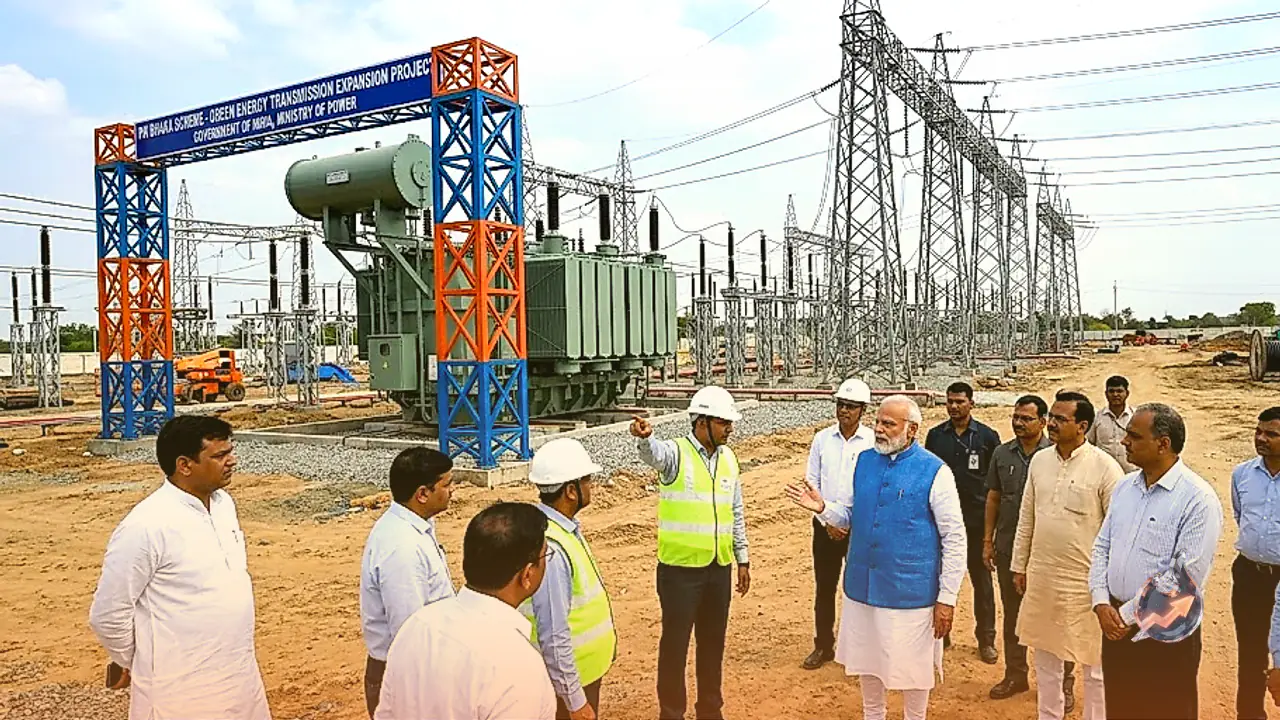
















In an expansive push to overhaul the nation's clean energy distribution architecture, the Union Cabinet chaired by Prime Minister Narendra Modi gave its formal approval on Wednesday to a major initiative designed specifically for the energy sector. Named the PM DHARA scheme, this national undertaking focuses on building a resilient and expansive green energy transmission network across Indian states. Rolled out under the banner of Green Energy Corridor Phase-3 (GEC-III), the project comes with an estimated capital outlay of around Rs 1.86 lakh crore. The overarching goal is to deploy advanced battery storage infrastructure and clean energy transmission facilities across all states within a five-year period.
Targeting 135 GW Renewable Capacity and 50 GW Battery Storage
According to the Cabinet resolution, the initiative will build the physical grid capacity required to transmit up to 135 GW of renewable energy across states and Union Territories. Running alongside this transmission backbone is the planned deployment of 50 GW of Battery Energy Storage Systems. This colossal energy storage footprint is designed to dispatch electricity seamlessly during high-demand peak intervals, mitigating the inherent intermittency of solar power generation when sunlight is unavailable. The operational timeline for delivering this nationwide infrastructure has been set for completion by financial year 2032-33.
Financial Structure and Rs 54,082 Crore Central Assistance
The total outlay of roughly Rs 1.86 lakh crore proposed under GEC-III has been allocated strategically across grid components. The bulk of the expenditure, amounting to Rs 1,36,378 crore, will go toward creating intra-state transmission corridors. The remaining Rs 50,000 crore has been dedicated entirely to funding the 50 GW battery energy storage facilities. To ensure state finances remain stable and transmission tariffs do not surge, the central government will disburse Rs 54,082 crore in financial assistance. Keeping transmission costs constrained will directly safeguard everyday retail power consumers from spikes in electricity pricing.
Direct Gains for Power Consumers and National Climate Targets
Battery storage integration offers a concrete resolution to recurring operational headaches, including peak-hour power shortfalls, transmission grid congestion, and frequent load shedding. The scheme ensures that surplus solar energy generated during maximum irradiance hours can be stored efficiently for discharge after sunset. Looking at long-term energy planning, this program serves as an essential stepping stone toward reaching the target of 900 GW of non-fossil energy capacity by 2035. The expansion is expected to anchor national energy security, cut fossil fuel dependence, and significantly shrink national carbon emissions.
Execution Framework and Operating Models
To eliminate transmission bottlenecks between regions and ensure operational efficiency, the project establishes distinct execution paths. All greenfield transmission projects will be awarded strictly through Tariff-Based Competitive Bidding (TBCB). Meanwhile, brownfield modernization work and critical grid strengthening will proceed on a Cost-Plus Basis (CPB). State Transmission Utilities (STUs) will function as the primary nodal agencies governing the rollout, whereas winning Transmission Service Providers (TSPs) under TBCB will manage, build, and maintain the infrastructure using the Build-Own-Operate-Maintain (BOOM) framework.
Industrial Growth and Large-Scale Job Creation
Beyond modernizing electricity grids, the initiative is poised to trigger major industrial activity across heavy manufacturing and construction industries. Deploying domestic Battery Energy Storage Systems (BESS) will catalyze India's local storage manufacturing ecosystem, generating numerous direct and indirect employment roles. In addition to initial construction contracts, the ongoing operation, preventive maintenance, and sophisticated management of smart state grids will support a steady stream of highly skilled technical jobs over the long term.