


















India's next round of the census is about to begin, and this time the questionnaire carries two significant additions. The second phase starts on August 17, and for the first time since independence, caste will be counted nationwide, while every citizen will also be asked for the birth date and birthplace of their parents. The Ministry of Home Affairs has issued a formal notification confirming the plan, which also lays out a separate timeline for the snow-bound regions of Ladakh, Jammu and Kashmir, Himachal Pradesh and Uttarakhand.
Snow-bound regions get a September window
According to the notification, population counting in the remote and snowy stretches of Ladakh, Jammu and Kashmir, Himachal Pradesh and Uttarakhand will run from September 1 to September 30. Just before that, a self-enumeration window will be open from August 17 to August 30, allowing people to fill in their own details. This effectively means the detailed set of questions for this second phase of the census will be notified separately in the coming days, giving both enumerators and citizens time to prepare.
How the caste column will actually be filled
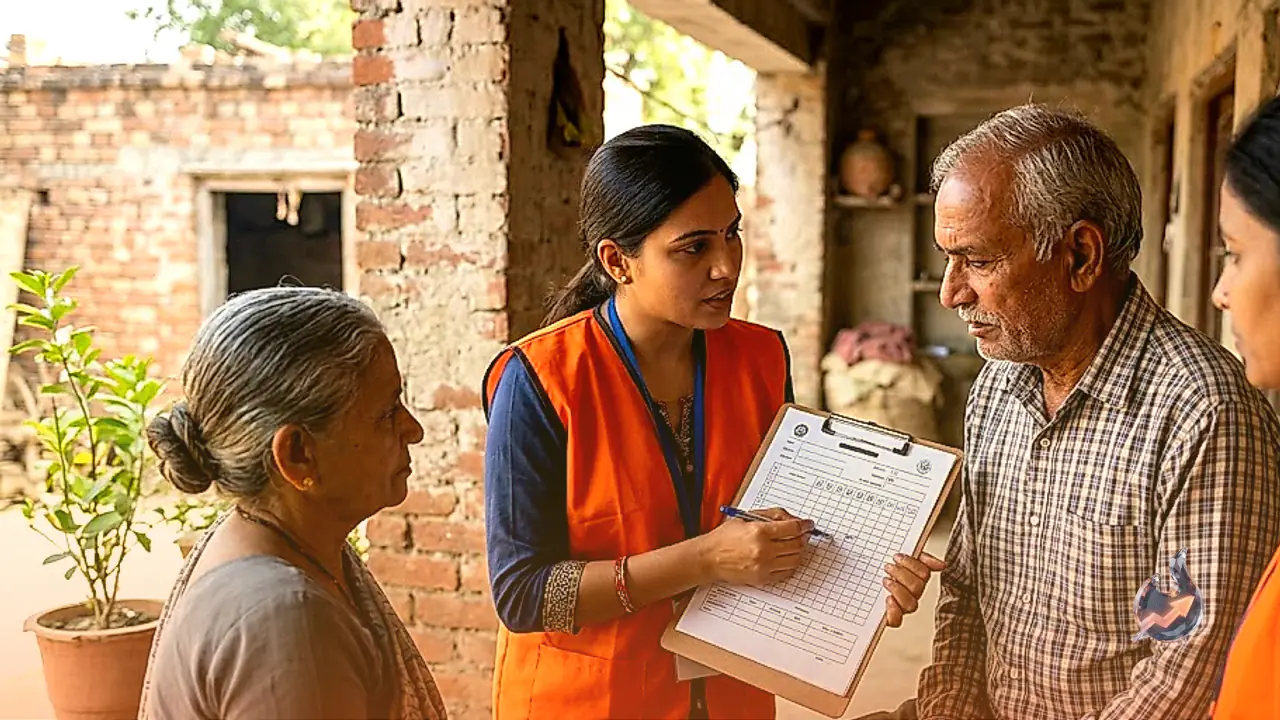
Sources indicate that caste details will be recorded purely on the basis of what the respondent declares, with no external check involved. A drop-down menu will be available for people belonging to Scheduled Castes (SC) and Scheduled Tribes (ST), while a general 'caste' option will apply only to those outside the SC and ST categories. The drop-down list itself will show the SC/ST names specific to the state where the person is being counted, and the caste will be recorded exactly the way the respondent spells it out. Importantly, no certificate or document will be required to prove an SC, ST or any other caste claim, the respondent's own word will be taken as final. Meanwhile, the birth details of parents are expected to help authorities work out how many people actually meet the criteria for citizenship.
Over 45,000 caste names surfaced in 2011, AI may help this time
An official noted that the same self-declaration format was used back in the 2011 Socio Economic Caste Census (SECC), and it threw up more than 45,000 different caste names. That sheer volume made the resulting data extremely hard to organise and use meaningfully. This time, however, digital tools and artificial intelligence (AI) are expected to make it easier to sort through such a large, scattered dataset and group it into workable categories.
Parents' birth details to be recorded for the first time
The standout feature of this second phase is that, for the first time, every respondent will be asked for the date and place of birth of their parents, information considered an important factor in determining citizenship. The National Population Register (NPR) exercise was originally carried out alongside the 2011 census and was meant to be repeated with the 2021 census, but that update never happened because the census itself was postponed. This time around, the NPR has been kept entirely separate from the Census 2027 process. Back in 2010, when the NPR exercise was last carried out, respondents' self-declared nationality details were also collected, though the government had clarified even then that this information alone does not automatically confer any right to citizenship.