























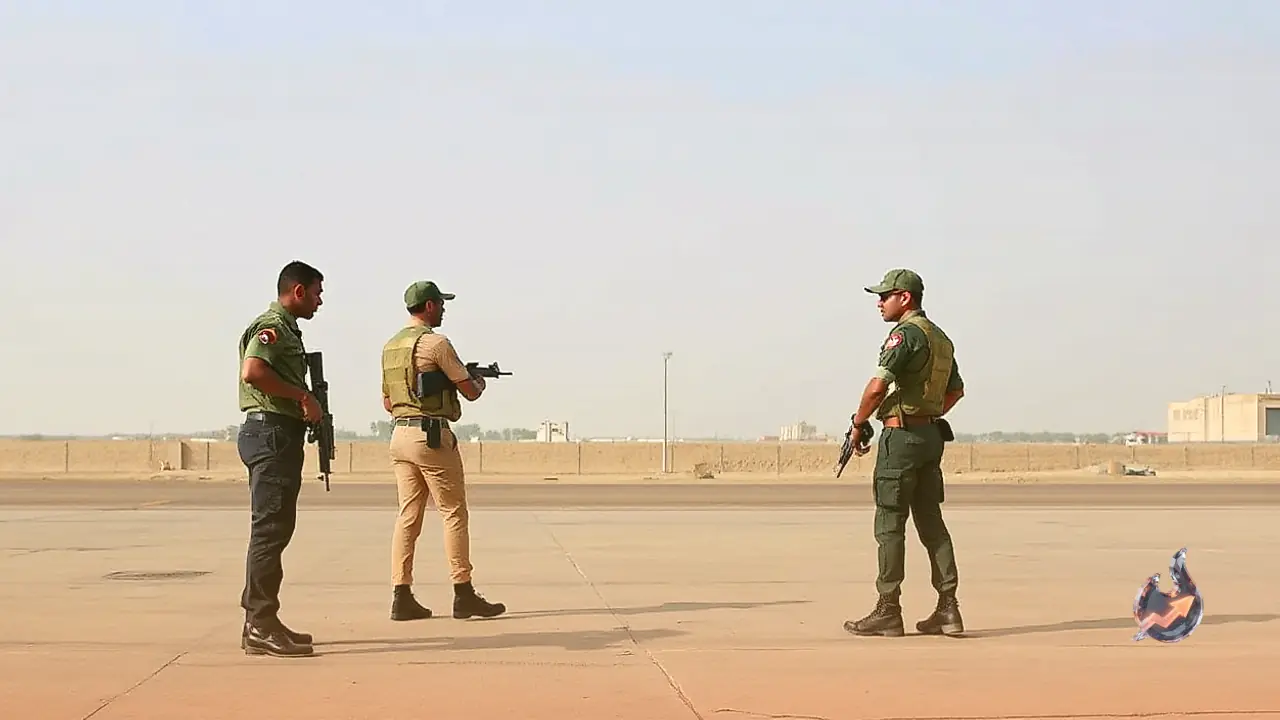

Tension and intense activity gripped the airside of Indira Gandhi International Airport as several individuals were seen kneeling on the tarmac, closely guarded by heavily armed personnel. Right behind them stood commandos from the Quick Reaction Team of the Central Industrial Security Force, pistols drawn and locked in tactical readiness. Moments later, two men exited a nearby aircraft with their hands held high in the air, shadowed closely by armed CISF commandos aiming their weapons at them. While the gripping sequence appeared to mirror an active aircraft hijacking, it was not an actual security breach. Instead, the high-stakes scene was part of an anti-hijacking mock exercise executed by the CISF to rigorously test the operational preparedness of security agencies against potential aviation threats.
Tactical Preparation Against Aviation Hostage Scenarios
The CISF unit responsible for the comprehensive security perimeter of the international airport organized and conducted this anti-hijacking simulation at the unit level. The core purpose of the operation was to measure how rapidly security contingents can reach the scene if a hijacking incident ever develops on airport grounds. In addition to testing arrival speed, the exercise focused on how security personnel assess the ground reality, contain threats, and de-escalate crisis conditions. Multiple specialized response teams were stationed at designated vantage positions across the area. To ensure centralized command and real-time operational control, authorities established a forward command post at the site, enabling seamless tactical alignment among all deployed units and facilitating flawless execution of the intervention plan.
Involvement of Dog Squads and Coordinated Intervention
According to a senior officer associated with airport security, the mock exercise saw active participation from the CISF dog squad alongside specialized tactical response units. Security forces evaluated coordinated intervention techniques, testing how different elements move together during a simulated aircraft seizure. The senior officer highlighted that managing a hijacking scenario involves far more than merely arriving on the tarmac armed with specialized weapons. Crucial operational success depends on making decisive tactical choices under immense pressure, sustaining unbroken communication across radio channels, and executing joint maneuvers in perfect harmony so that no tactical blind spots emerge.
Evaluating Tactical Response Times and Operational Readiness
The security officer further noted that the exercise placed a sharp spotlight on testing operational preparedness, actual response times, and tactical readiness under simulated emergency conditions. The evaluation analyzed how swiftly security forces transition from standby status into active engagement, the effectiveness of perimeter containment, and the precision with which tactical operations are conducted in unpredictable environments. Ultimately, the comprehensive exercise was designed to strengthen coordination among disparate response teams and reinforce the layered security framework guarding the country's busiest aviation hub against potential unlawful interference.