























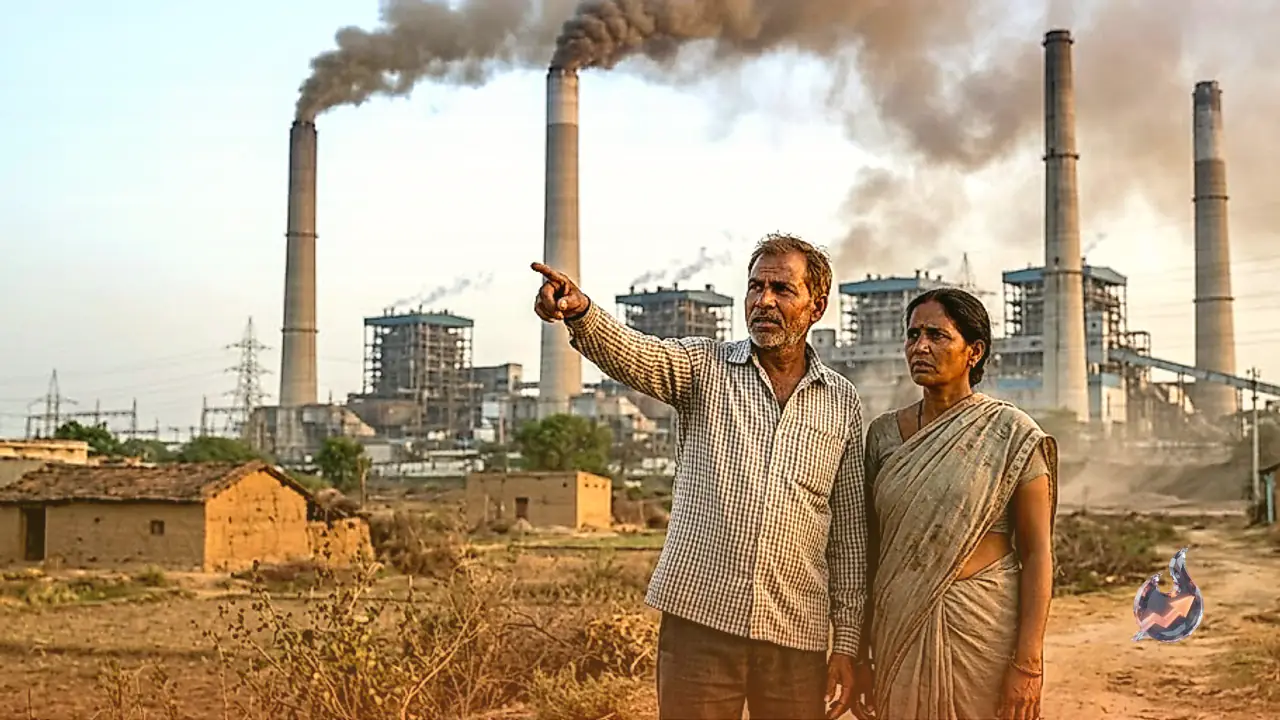

A new report has pointed to a much bigger culprit behind Delhi's annual pollution crisis than the dust storms and vehicle exhaust that usually dominate the conversation. While authorities crack down on vehicular smoke and experts point to dust blowing in from Pakistan and Afghanistan, the report shows that coal power plants ringing the capital are pumping out a toxic gas that is doing far more damage to the lungs of Delhi's residents.
Coal plants within 300 km emerge as the real threat
A new study by the Finland based non profit Centre for Research on Energy and Clean Air, or CREA, has found that coal fired power plants located within roughly 300 kilometres of Delhi are the single biggest source of air pollution choking the city. Of the 37 coal power plants operating in this radius, 20 units are releasing sulphur dioxide, or SO2, well above the safe limits set by the Ministry of Environment. This gas has turned into a direct threat to the health of people living in and around Delhi.
What is FGD, and why are so many plants exempt
According to the report, the plants doing the most damage to Delhi's air are the ones that have been fully exempted by the central government from installing Flue Gas Desulphurisation, or FGD, systems. FGD is a technology that significantly cuts down the sulphur dioxide released when coal is burned. A plant that skips this technology ends up releasing emissions that can cause serious harm to the surrounding environment. What makes the situation worse is that nearly 78 percent of all coal plants in India fall under Category C, and it is this very category that the central government has exempted from the FGD requirement. As a result, these plants are releasing massive quantities of sulphur dioxide into the air without any check.
An estimated 1.54 lakh tonnes of SO2 every year
Plants located around Delhi-NCR are estimated to be releasing around 1.54 lakh tonnes of sulphur dioxide every single year. Of this, 90 percent comes from plants that have no FGD system installed at all, while 81 percent is being emitted specifically by Category C plants that have been granted a full exemption. In other words, the very plants that were let off the hook by the rules are the ones generating the most pollution.
From Rajpura to Ropar, these plants top the list
Among the plants identified as the biggest polluters around Delhi are Rajpura, Talwandi Sabo, Rajiv Gandhi TPS, Guru Hargobind TPS, Harduaganj and Ropar. The survey found that none of these six plants has an FGD system installed, which explains why their emission levels are the highest recorded.
A 2015 order, followed by repeated exemptions
Back in 2015, the central government had ordered all coal power plants across the country to install FGD systems in order to control sulphur dioxide emissions. However, the deadline for compliance was pushed back multiple times over the years. Eventually, plants falling under Category C were given a complete exemption from the requirement, and that decision is now directly showing up in the quality of the air around Delhi-NCR.
Dadri and Mahatma Gandhi Thermal Power Plant show what is possible
Not every plant in the report performed badly. Two plants, Dadri and Mahatma Gandhi Thermal Power Plant, recorded significantly lower sulphur dioxide emissions than the rest. Both of these plants were found to already have FGD systems installed, and that is precisely why their contribution to pollution is far smaller compared to the other plants surveyed.
Why sulphur dioxide is so dangerous for health
Sulphur dioxide is considered a highly harmful gas. Once released into the air, it combines with other elements to form fine particulate matter, or PM, which is small enough to be inhaled deep into the lungs, triggering a range of illnesses. The scale of the problem is significant since India is recognised as the world's largest emitter of sulphur dioxide from coal power plants, which makes controlling these emissions an enormous challenge for the country.