


















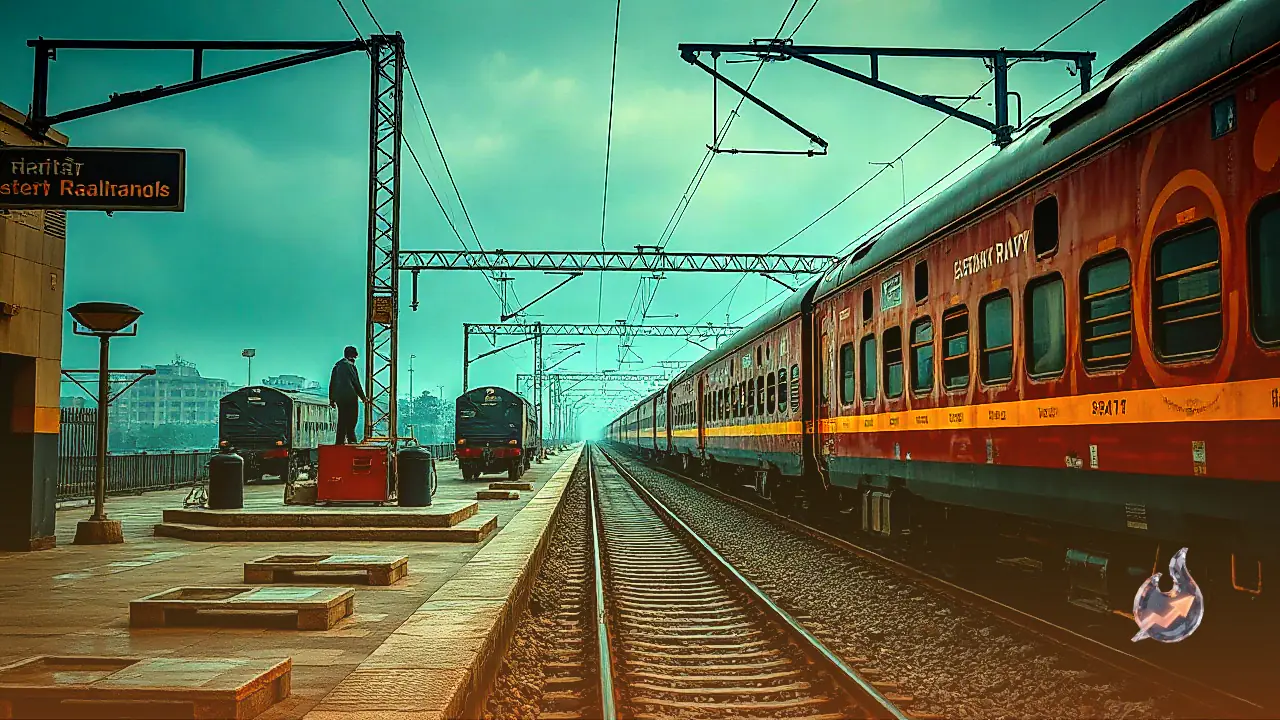

In a significant move aimed at providing clean, safe, and hygienic drinking water to train passengers, Eastern Railway has launched a major infrastructure and sanitation initiative. Under this comprehensive campaign, the railway zone has initiated the installation of 131 new chlorination plants at various stations. Alongside this, a massive cleaning and water treatment drive is being executed across all divisions to elevate water quality standards and secure hygienic catering services, directly benefitting lakhs of daily commuters.
Installation of 131 Chlorination Plants and a Mass Sanitation Drive
Prioritizing the health and well-being of passengers, Eastern Railway is placing immense focus on water purification systems across its network. The addition of 131 new chlorination plants is a core part of this strategy, designed to eliminate harmful pathogens and chemical impurities from the water supply. In tandem with deploying new purification systems, an extensive cleaning protocol has been initiated for existing water storage assets. This campaign spans all administrative divisions and workshops of Eastern Railway. According to railway officials, between August 20 and September 23, 2026, a massive cleaning campaign was successfully conducted, resulting in the complete sanitation of 6,955 water tanks. This extensive figure includes overhead reservoirs, underground storage tanks, and PVC tanks across various stations, ensuring that water storage remains free from contamination at the very first level of distribution.
Division-Wise Breakdown of Tank Cleaning Operations
The cleaning drive was carried out in a highly structured manner across the different divisions of Eastern Railway. Official data reveals that the Asansol division led the campaign with the successful cleaning of 2,449 water tanks. This was followed closely by the Howrah division, where 2,123 tanks were thoroughly washed and disinfected. In the Sealdah division, operations resulted in the cleaning of 1,464 tanks, while the Malda division saw the sanitization of 919 water tanks. The process was not limited to mere physical scrubbing; chemical treatment of water was also performed. This rigorous sanitization aims to shield primary water sources from any external pollution or biological growth, ensuring that the water remains safe for human consumption by the time it reaches passenger-facing outlets.
Implementing Source-to-Tap Water Quality Monitoring
To maintain consistent quality control, Eastern Railway has introduced a clinical testing mechanism for water samples collected directly from station taps. Regular clinical monitoring is being established to detect any drop in quality and allow immediate remedial actions. This aligns with the latest directives from the Railway Board, which emphasize that water testing should not be confined merely to the final consumption point. Instead, the quality must be monitored along the entire supply chain. Under this comprehensive quality management plan, regular inspections and maintenance will cover water sources, filtration and treatment plants, underground and overhead reservoirs, PVC tanks, water booths, taps, and overall distribution centers. This end-to-end monitoring ensures the safety of water from its origin point down to the passenger's cup.
Silt Removal, Leak Repairs, and Preventing Cross-Contamination
During this intensive drive, all water storage tanks are being completely drained to remove accumulated silt and sludge from the bottom. After thorough scrubbing, the tanks are disinfected using specialized sanitizing agents. Furthermore, guidelines have been issued to secure all tank lids and covers to prevent foreign debris from entering. Vent pipes and overflow outlets are being fitted with mesh screens to protect the water from birds, small animals, and algae formation. Eastern Railway has also instructed divisions to repair or replace damaged tanks, pipelines, and filters immediately. Strict measures are being taken to prevent any cross-connections between potable drinking water lines and non-potable lines, completely eliminating the risk of dirty water mixing with clean water. Active leak detection and repairs are underway to prevent the wastage of precious water resources. Stations relying on hand pumps and borewells are also receiving targeted attention to verify that their groundwater sources are entirely free of contaminants.
Station-Wise Reporting and Timely Resolution of Deficiencies
To ensure accountability and long-term sustainability, the railway administration is maintaining systematic records of the entire campaign. A detailed, station-wise report is being prepared to document any deficiencies or structural issues identified during the inspections. This database will not only register the problems but will also record the specific corrective actions taken to resolve them. This systematic tracking system will help the railways identify recurring issues and execute time-bound solutions. Through these coordinated efforts, Eastern Railway is establishing a robust, sustainable, and highly efficient system to guarantee the supply of safe, cool, and clean drinking water to all its passengers.