




















During the 1980s, India faced an increasingly complex national security environment along its borders. Regional developments saw China continuously expanding its nuclear arsenal and missile delivery capabilities, while Pakistan was actively strengthening its conventional military equipment. In this strategic backdrop, Indian defense planners confronted a critical vulnerability: how long could the nation continue importing foreign weaponry and missile technologies to guarantee its sovereign defense? Recognizing that strategic autonomy required self-reliance, India embarked on an ambitious journey to develop indigenous missile technologies. The journey commenced with the Prithvi surface-to-surface missile and progressed through the Agni, Akash, Trishul, and Nag systems. While Dr. Raja Ramanna laid the initial analytical groundwork, the overarching strategic execution was driven by the visionary leadership of Dr. APJ Abdul Kalam.
From Assessment to Strategy: The Special Missile Study Group
The foundation of a consolidated missile development architecture was laid in 1979 when defense experts recommended a comprehensive review of India's existing technological assets. Dr. Raja Ramanna was entrusted with analyzing the country's missile capabilities. In his evaluation, Dr. Raja Ramanna stressed that pursuing isolated, ad-hoc missile projects across separate laboratories was inefficient, advocating instead for a unified, coordinated national program. Building on this recommendation, the Government of India established a Special Missile Study Group in 1982, headed by Dr. APJ Abdul Kalam. This panel conducted an exhaustive assessment of India's geopolitical posture, operational threat vectors, geographical terrain, and baseline technical infrastructure, ultimately drafting the strategic roadmap for India's indigenous missile effort.
Government Sanction of the IGMDP in 1983
The study group's findings highlighted that India required a comprehensive missile inventory rather than a single battlefield weapon. The tactical requirement demanded surface-to-surface strike capabilities, mobile air defense shields against high-speed enemy aircraft, specialized armor-piercing anti-tank weapons, and long-range strategic deterrence platforms. Acting on these recommendations, the Central Government formally sanctioned the Integrated Guided Missile Development Program on July 26, 1983. The primary objective of the program was to master cutting-edge missile technologies domestically and elevate India's defense posture to global standards.
The Core Missile Suite: Five Specialized Platforms
The Integrated Guided Missile Development Program framed the simultaneous development and production of five distinct missile architectures. These comprised the short-range surface-to-surface ballistic missile Prithvi, the long-range strategic ballistic platform Agni, the medium-range surface-to-air defense system Akash, the short-range low-altitude air defense missile Trishul, and the anti-tank guided missile Nag. Induction began in 1988 with the initial flight tests of Prithvi, followed by trials for Agni and Trishul in 1989, and Akash and Nag in 1990. Over subsequent decades, each of these platforms underwent extensive modernization to keep pace with evolving battlefield dynamics.
Prithvi and Agni: Tactical Ballistics and Atmospheric Re-entry Engineering
Having fought four major military conflicts, the Indian Armed Forces required a dependable surface-to-surface tactical ballistic missile capable of neutralizing enemy installations. The Prithvi missile fulfilled this role, with its initial variant capable of delivering a 1000 kg payload over a distance of 150 km. Tailored variants were subsequently engineered for the Indian Army, Air Force, and Navy, with the maritime version designated as Dhanush. Concurrently, the Agni platform was conceived as a technology demonstrator to master long-range strategic flight dynamics. The Agni engineering team faced two key hurdles: achieving extended operational range and designing heat shields capable of enduring the extreme thermal stresses of atmospheric re-entry. Upon overcoming these engineering challenges, Indian scientists developed a family of strategic missiles, including Agni-I, Agni-II, and Agni-III platforms integrated with advanced navigation systems.
Akash, Trishul, and Nag: Air Defense and Anti-Armor Warfare
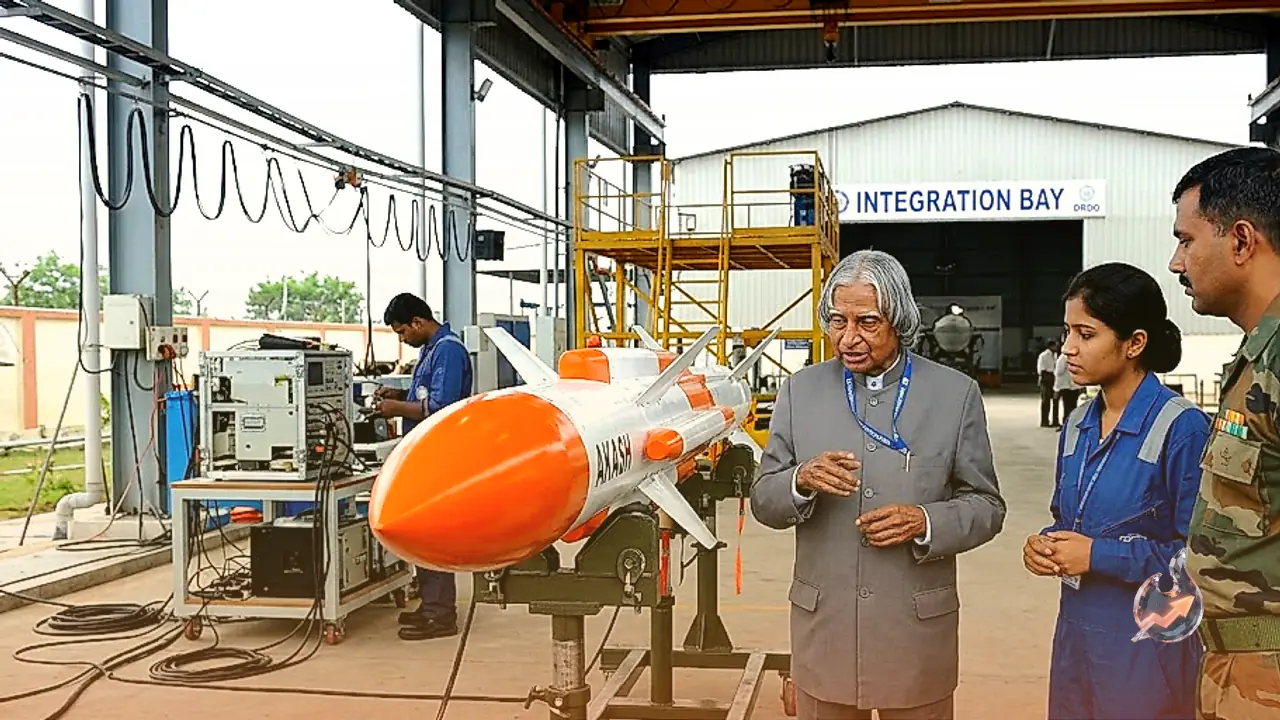
The third major component of the program was the Akash missile, engineered to protect military assets from incoming enemy jets, helicopters, and aerial threats. As a mobile surface-to-air missile system, Akash could be rapidly deployed across varying operational terrains. Crucially, the system was integrated with the Rajendra radar, a phased-array system capable of tracking and managing multiple aerial targets simultaneously. In contrast, the Trishul missile was developed as a short-range surface-to-air platform aimed at intercepting low-altitude sea-skimming or ground-hugging threats. However, due to complex technical challenges and shifting operational parameters, the Trishul project was eventually closed. The fifth platform, Nag, was built specifically as a fire-and-forget anti-tank guided missile to neutralize heavily fortified enemy armor on the battlefield.