



















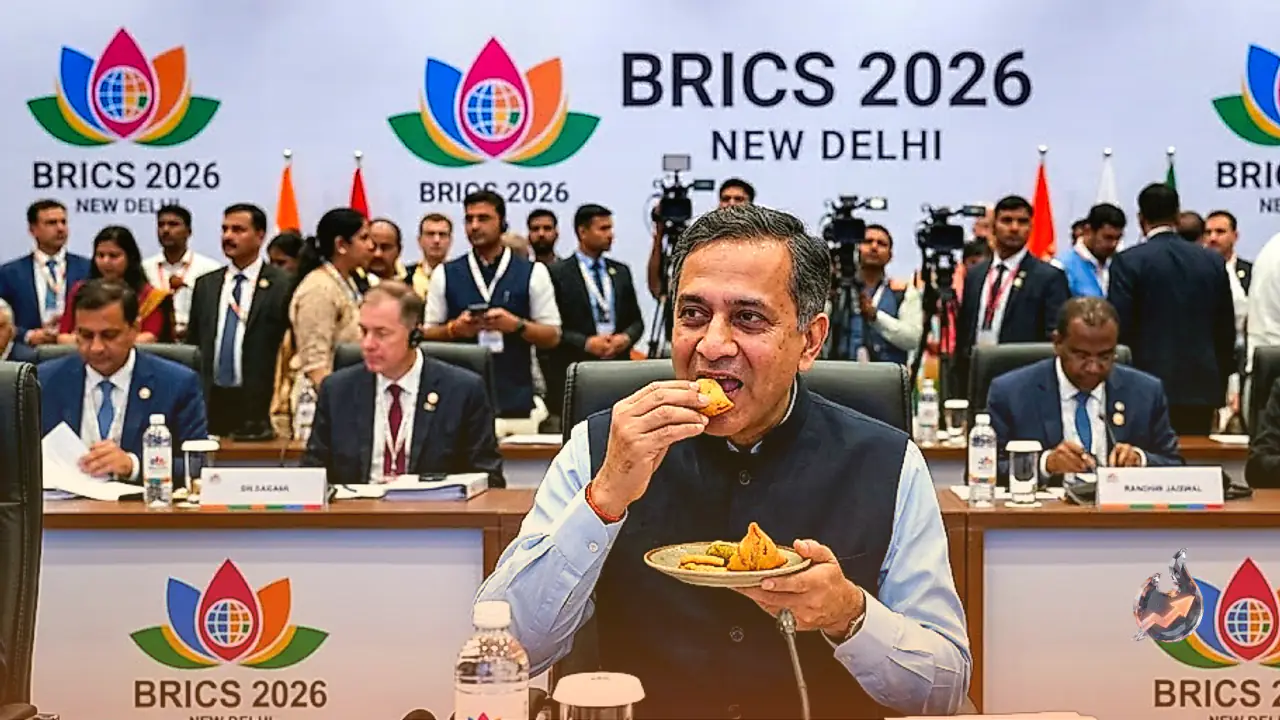

Amid the resounding diplomatic success of the BRICS Summit 2026 hosted under India's presidency in New Delhi, a bizarre and highly unnecessary controversy has erupted on social media. Instead of focusing on the critical geopolitical discussions and strategic agreements being forged at the high-level meeting, internet trolls chose to target senior officials over trivial matters. During a formal session of the summit, as top global leaders were delivering their speeches, video clips of Ministry of External Affairs (MEA) spokesperson Randhir Jaiswal eating snacks at his desk were circulated and quickly went viral.
Manipulated Media and Online Malice
What made this trolling campaign particularly objectionable was the deliberate manipulation of the footage. Trolls took a perfectly normal and natural human action of eating a quick bite during a grueling session and edited the video to run at three times its original speed (3X speed). This manipulation made the spokesperson's movements look unnatural, hurried, and comical on screen. Despite this attempt to mock and humiliate a senior diplomat, sensible and empathetic internet users quickly rushed to Jaiswal's defense. Many users called out the toxic behavior, pointing out that the refreshments placed on the tables during international summits are explicitly meant for the attending delegates and officials, not just for display.
The Clash of Opinions: Mockery vs. Defence
The viral video triggered a wave of contrasting reactions across social media. Military veteran Anil Talwar took a sarcastic swipe at the MEA spokesperson, posting on X that the ministry should probably start feeding its bureaucrats before sending them to represent the nation at high-profile international events. He joked that Randhir Jaiswal had effectively turned a formal BRICS session into his personal snack break, adding mockingly that the most active bilateral engagement in the room seemed to be occurring between the diplomat and his bowl of snacks. This tweet opened the floodgates for a section of internet trolls to join in the ridicule.
However, this unfair criticism did not go unchallenged. Major General Raju Chauhan (veteran) stepped up to defend the diplomat and gave a stern reply to the online trolls. Posting on the social media platform X, Major General Raju Chauhan expressed his strong disapproval of the criticism, stating, "I am sure that he would have missed many meals to ensure that the event went smoothly and may have not even gone home for days." He emphasized that criticizing a hardworking public servant over eating a few snacks during an exhausting schedule was deeply shameful and showed a complete lack of empathy.
The Staggering Workload of Diplomats
Randhir Jaiswal is one of India's most senior diplomats, responsible for articulating India's foreign policy positions to the world and managing its complex diplomatic and security apparatus. Organizing and executing a massive international event like the BRICS Summit requires months of round-the-clock preparation. During the actual event, officials often work sleepless nights, coordinating logistics, bilateral meetings, and press briefings under intense pressure. Expecting these officials to remain completely motionless and starve themselves for the sake of camera angles is not only absurd but highly inhumane. Supporters argued that eating during a break is essential for maintaining energy levels during such marathon sessions.
A History of Harassment Against Indian Diplomats
Unfortunately, this is not the first time a senior Indian official has been subjected to relentless online scrutiny and harassment. Foreign Secretary Vikram Misri, who has spent decades serving the nation's interests in various critical diplomatic missions, has faced similar hostile behavior. In May 2025, following the announcement of a ceasefire between India and Pakistan under 'Operation Sindoor', Vikram Misri and his daughter became targets of severe online trolling. As Misri was the prominent face of the government's briefings during the tense conflict, he faced intense personal abuse, coordinate harassment, and doxxing from aggressive online factions.
Are Public Servants Expected to Be Robots?
This incident raises a larger, more fundamental question about public expectations of government officials in the digital age. Do we expect our diplomats and administrative leaders to act like emotionless, robotic figures who must remain camera-ready every single second? Should natural human actions like eating, laughing, looking tired, or taking a quick break be misconstrued as incompetence or lack of decorum? It is crucial for the public to realize that behind the polished diplomatic suits are real humans working under extreme stress to protect and project the nation's interests. It is time to replace toxic online trolling with a basic sense of respect and empathy.