



















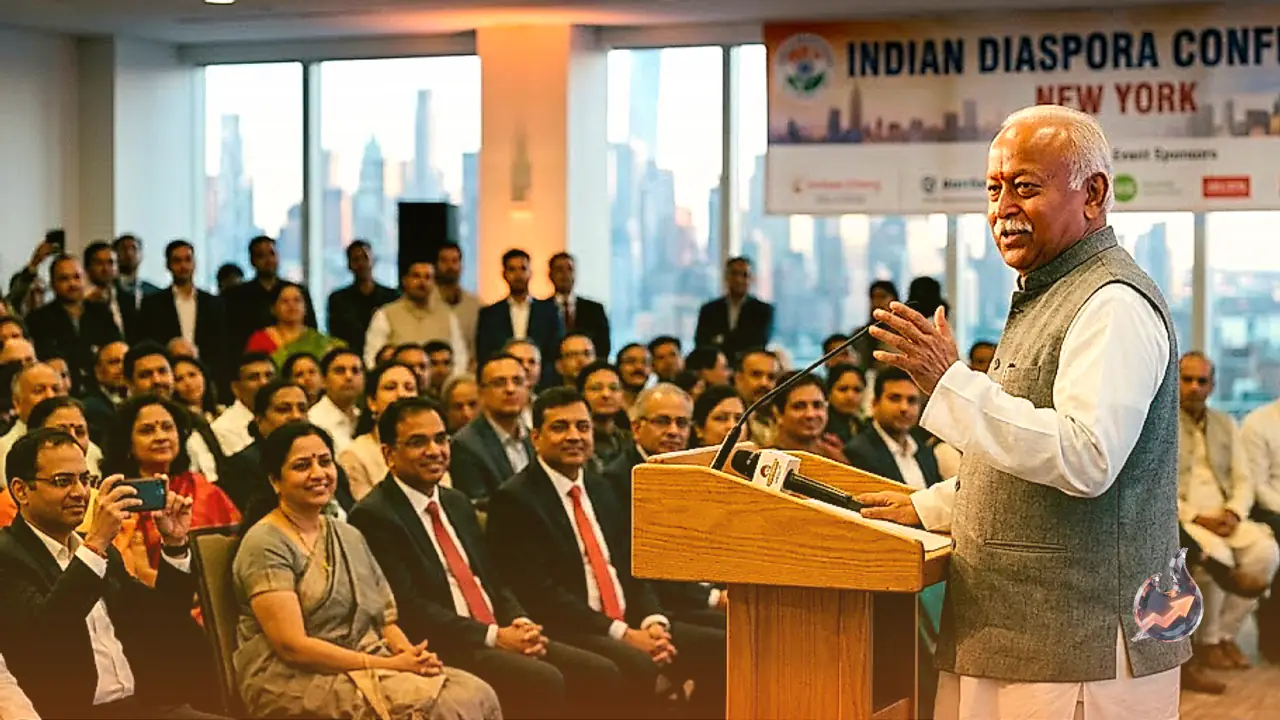

Rashtriya Swayamsevak Sangh Chief Dr. Mohan Bhagwat addressed gatherings in New York, articulating profound messages regarding India's concept of unity in diversity and core Hindu philosophy. He emphasized that India's fundamental role is not merely to experience unity within its own borders, but to make the entire world realize this inherent truth. According to him, harmony and diversity are deeply woven into India's DNA, where diverse paths can ultimately lead to a single destination. Ahead of the Universal Oneness celebration in New York, Bhagwat addressed a large gathering, sharing his insights on the interconnectedness of human values and societal responsibilities.
The Universal Oneness Celebration at Madison Square Garden
The Universal Oneness Celebration held at Madison Square Garden conveyed the powerful message of One World, One Humanity. The grand event witnessed participation from roughly 6,000 delegates representing 39 states and 853 cities across America. More than 250 institutions from across the United States, alongside over 250 university students, actively took part in the proceedings. Drawing references from Swami Vivekananda, Mohan Bhagwat noted that every nation on earth possesses a unique message, a distinct mission, and a specific destiny to fulfill for humanity. India's eternal message is to realize unity in diversity internally and to help the world experience the same harmony. He reiterated that India has historically welcomed people from various faiths and traditions, serving as a safe haven for those who found no secure place elsewhere in the world.
Expanding the True Essence of Dharma
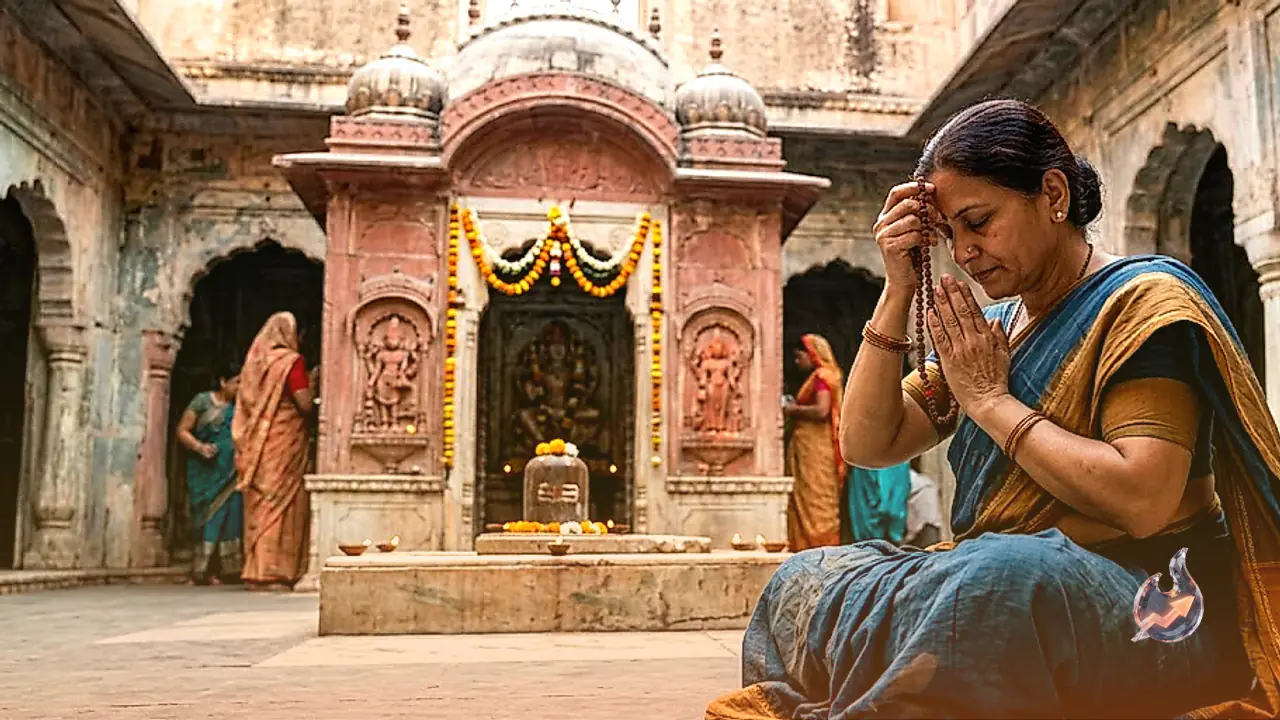
The RSS leader clarified that dharma cannot and should not be restricted merely to narrow religious rituals, outer worship, or formal dogmas. While daily traditions and ritualistic practices hold their respective importance, the ultimate objective of dharma is far more expansive and profound. Dharma guides human beings toward absolute truth and the divine. Different traditions may invoke the Supreme Entity by various names, yet the final destination remains one and the same. Citing the Shiva Stotram, he explained that just as rivers originating from disparate locations ultimately merge into the ocean, diverse spiritual paths converge upon a single truth. Bhagwat pointed out that society continually faces two distinct tendencies: one that encourages living and letting others live, and another that seeks to impose personal ideologies onto others. India's civilizational philosophy champions the former approach. Since human beings are endowed with exceptional intellectual capacity to discern right from wrong, human life can never be without a higher purpose, making it imperative for individuals to shoulder their responsibilities toward society and the world.
Fulfilling Responsibilities Toward the Adopted Homeland
Addressing the Indian diaspora residing in the United States and other foreign shores, Mohan Bhagwat urged them to remain fiercely loyal to their adopted homelands and contribute meaningfully to the progress and welfare of the societies where they live. He advised that while they should certainly keep India in their thoughts if time permits, India harbors no special expectations from them. The sole desire of the nation is simply that people of Indian origin live by the elevated worldview instilled in them by their roots. Emphasizing the intrinsic value of giving back, he stressed that true worth is measured not by how much an individual earns, but by how much they share with society and fellow human beings. Acknowledging that we are all debtors to the world for what we have become, he reminded the audience of the collective duty to return something of value to society and humanity.
Balancing Economic Development with Environmental Preservation
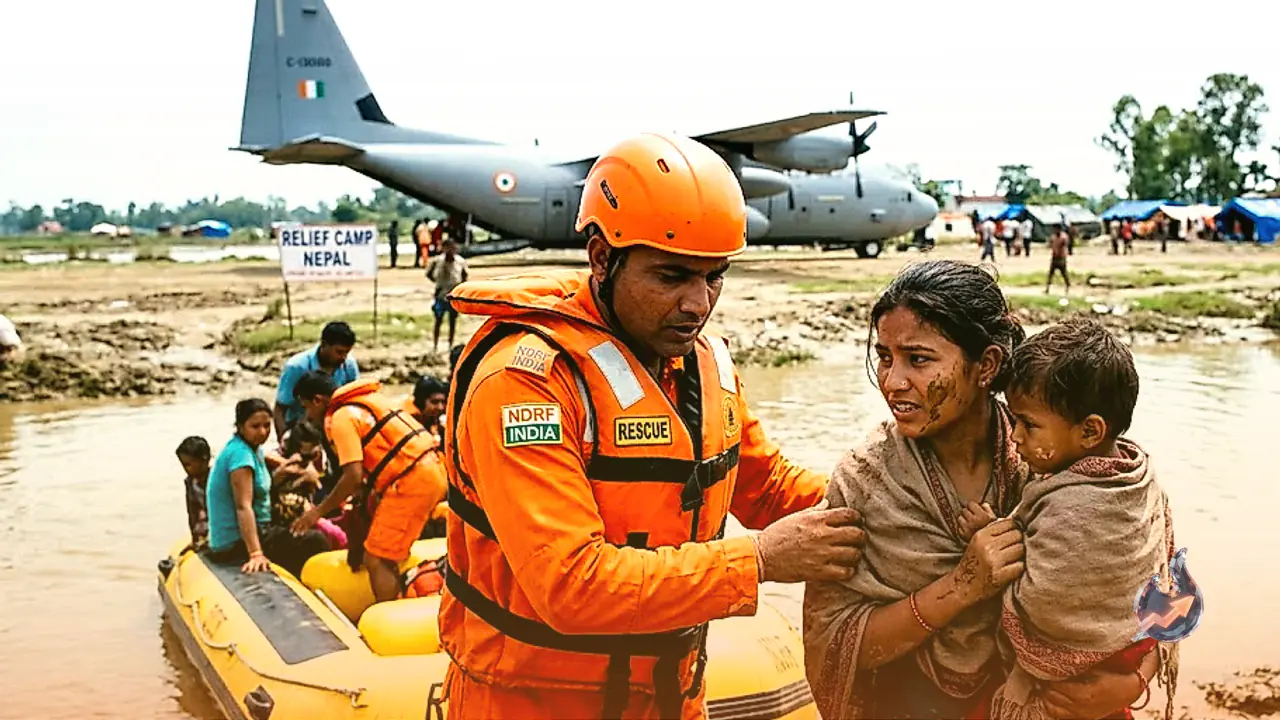
Against the backdrop of the tragedy in Nepal, Bhagwat highlighted the contemporary global challenge of balancing development with ecological preservation. He noted that accelerated development frequently inflicts severe damage upon the environment. Consequently, the correct remedy does not lie in halting progress, but rather in discovering sustainable pathways where economic development and environmental conservation exist in perfect equilibrium. He recalled that India's ancient ancestors paved the way through a mindset deeply rooted in sacrifice, self-restraint, and responsibility. The modern world urgently requires a lifestyle where deep-seated accountability toward nature and human society remains preserved.
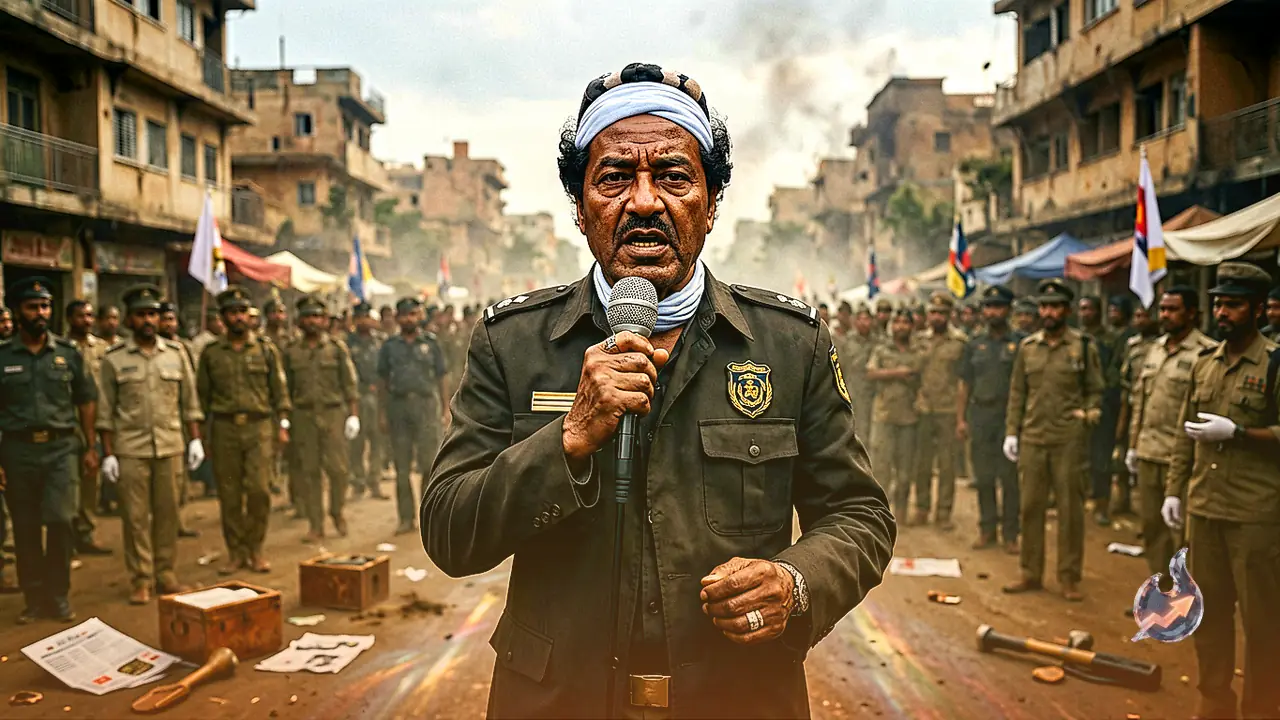
Concluding his address, Bhagwat shed light on the extensive social service initiatives undertaken by RSS volunteers. He noted that volunteers operate approximately 1.30,000 service projects aimed at assisting various vulnerable segments of society, strictly devoid of any discrimination based on religion, caste, or background. Recalling the tragic 1996 Charkhi Dadri mid-air collision in Haryana, where a large number of Muslim passengers lost their lives, he pointed out that volunteers rushed immediately to the disaster site to assist in rescue operations and help identify the victims.