






















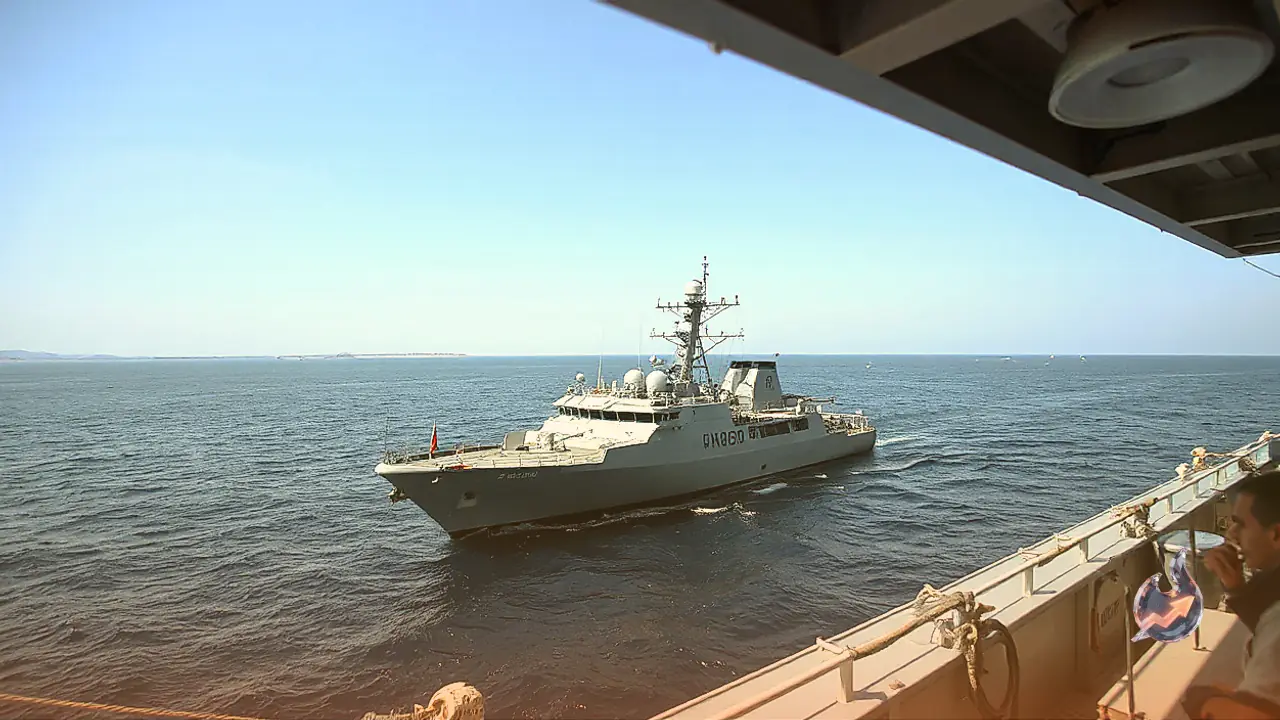

In an extensive maritime rescue operation deep in the Arabian Sea, Indian defense forces have successfully liberated the hijacked fishing vessel Azini along with all 20 crew members held captive by armed pirates. The mission was executed more than 3,000 kilometers away from the coastline of Mumbai, navigating severe operational risks. Concluded on November 2, 2026, the 48-hour concerted push brought together naval units and tactical support from the Indian Air Force to locate, track, and intercept the captured boat without harm to the trapped crew. Following the flawless extraction, Defense Minister Rajnath Singh commended the armed forces for their decisive valor and operational mastery.
A Methodical 48-Hour Rescue Under Perilous Conditions
The anti-piracy intervention unfolded under extraordinarily delicate conditions. The fishing vessel had been commandeered by heavily armed pirates, placing the safety of the 20 crew members under grave and immediate peril. A reckless confrontation could have triggered lethal retaliation against the captives, necessitating calculated discipline and step-by-step tactical execution.
Naval planners first identified the vessel's precise coordinates across the vast ocean expanse before positioning interceptor assets to close in and encircle the ship. Throughout the multi-day mission, the Indian Air Force delivered prompt, coordinated aerial support that gave naval teams critical situational dominance. The tight operational synergy between both service branches completely broke the hijackers' leverage, allowing boarding and security teams to safely isolate the threat and retrieve every sailor unharmed.
Demonstration of High-Tier Readiness and Indian Ocean Security
Reflecting on the mission's clean outcome, Defense Minister Rajnath Singh praised the Navy personnel for exceptional operational readiness and unwavering courage. He noted that locating, intercepting, and rescuing 20 individuals within 48 hours over thousands of kilometers in the open ocean underscores the military's rapid-deployment credentials and its capacity to neutralize asymmetric maritime hazards.
The defense minister remarked that the disciplined action reiterates India's status as a reliable maritime security guarantor in the Indian Ocean region, devoted to preserving human life, defending vulnerable commercial assets, and upholding regional stability against lawlessness.
Sustained Commitment to Safe Seas Across Vital Trade Lanes
Rajnath Singh reiterated India's persistent focus on hardening maritime security throughout critical regional transit channels. In the face of persistent piracy threats, vessel boardings, and maritime violence, swift naval responses serve as an active deterrent while reinforcing India's leadership along vital sea lines of communication.
The minister underscored that the nation remains resolute in safeguarding safe seas alongside a free, open, and secure Indian Ocean domain. The Azini rescue, he stressed, provides another tangible demonstration of the country's logistical stamina, political resolve, and technical capability to act decisively whenever seafarers come under attack.
Backing Naval Strength with Major Fleet Acquisitions
This high-seas rescue aligns with ongoing domestic efforts to expand the strategic reach and strike profile of naval forces. The Cabinet Committee on Security, chaired by Prime Minister Narendra Modi, recently cleared a substantial capital expenditure exceeding 40,000 crore rupees to build eight next-generation stealth corvettes for the Indian Navy.
These upcoming warships will be constructed indigenously by two public-sector shipyards, namely Kolkata-based Garden Reach Shipbuilders and Engineers and Goa Shipyard Limited. The induction of these stealth vessels will dramatically bolster patrolling endurance and fast-response capabilities across the Arabian Sea, the wider Indian Ocean, and adjacent trade passages.