
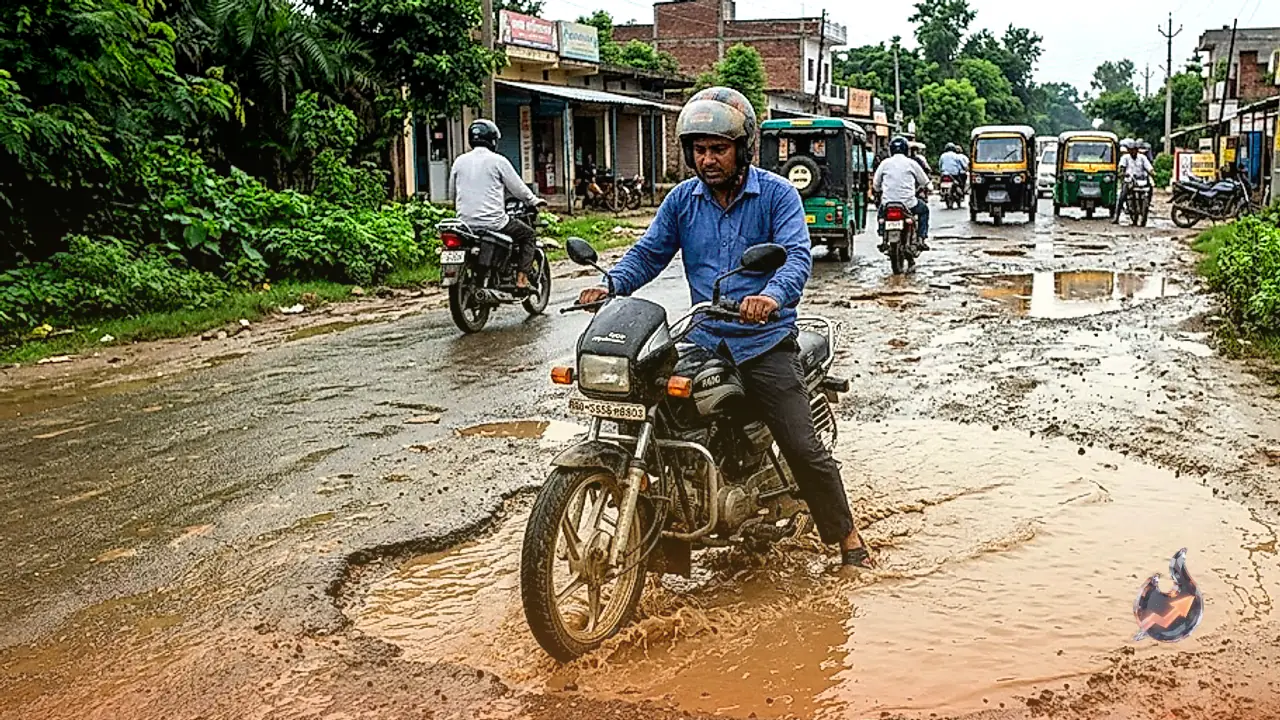

















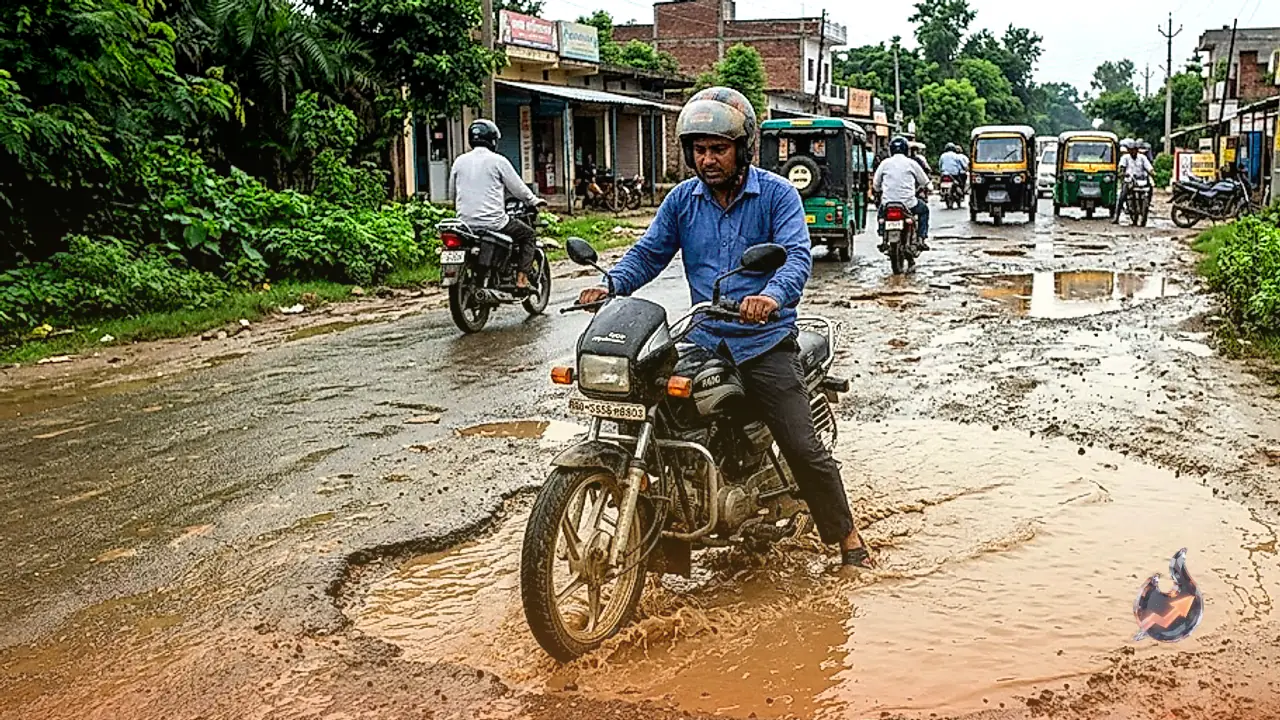

The Amhat-Gabhariya link road, which serves as a crucial corridor connecting Sultanpur city with National Highway 731, has deteriorated into an acutely hazardous condition. Deep craters and fractured tarmac span across the route, forcing daily commuters and motor vehicle drivers to navigate a treacherous commute. Because this artery links the district headquarters directly to the national highway system, it experiences relentless traffic around the clock. Despite repeated appeals by local residents regarding the growing damage, the route continues to suffer from severe neglect without comprehensive restoration work being undertaken.
Monsoon Waterlogging Hides Deep Craters and Creates Severe Traffic Snarls
During the rainy season, transit difficulties along this corridor intensify drastically. Rainwater pools inside the oversized craters, completely concealing their true depth from approaching drivers. Local commuter Mohammad Yaseen explained that the extensively broken surface has made daily transit extremely tough. He emphasized that this vital route connects the Sultanpur city headquarters to the national highway, carrying a daily movement of more than 20,000 people. Drivers are forced to slow down to a crawl and guess where the road ends and the ditches begin. Navigating through the submerged craters often triggers gridlock, and two-wheeler riders face constant risks of skidding or tipping over into the dirty water.
Daily Commuters and Students Face Long Travel Delays and Collision Hazards
The Amhat-Gabhariya route represents one of the most critical access roads for the urban center of Sultanpur. It is relied upon every day by residents, office-goers, students, local traders, and transport operators. Because of the ruined carriageway, people are forced to spend substantial extra travel time merely to cover routine distances to work, schools, and business centers. Motorists point out that maneuvering around large potholes forces them to swerve erratically across lanes. This zig-zag movement dramatically raises the risk of head-on collisions with oncoming traffic on the narrow, crowded stretches. Local citizens have urgently demanded an end to makeshift measures and called for prompt, comprehensive repairs.
Repeated Complaints Yield Little Relief as Department Promises Post-Rain Patchwork
Residents express deep frustration that multiple representations made to civic and administrative authorities have failed to deliver a lasting fix. People stress that superficial patching or dumping loose stone grit into holes will only wash away with the next spell of rain; what this arterial stretch needs is systematic and durable resurfacing. Thousands of daily users continue to question why such an important connecting corridor has been allowed to languish in shambles for so long. Addressing the public concern, the executive engineer of the Public Works Department stated that patching operations on the damaged stretches will be initiated after the rainy season concludes.