























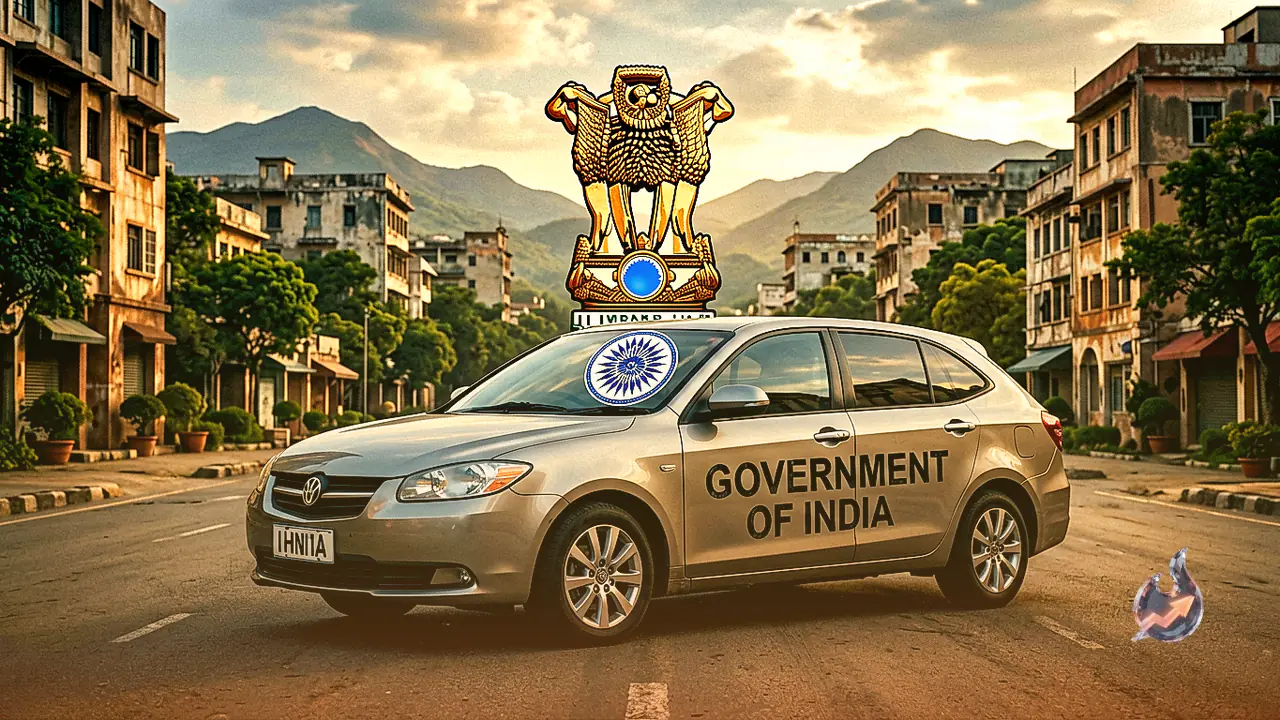

National celebrations and Independence Day in India bring widespread patriotic spirit, but using national symbols inappropriately or illegally remains a severe criminal offense. Many citizens, in an attempt to project authority, bypass police checks, or avoid paying toll charges, place 'Government of India' plates or print the State Emblem (Ashok Stambha) on their private vehicles. However, Indian law maintains strict regulations governing the use of the emblem and the national motto 'Satyamev Jayate' inscribed beneath it. Violating these provisions can lead to imprisonment and hefty financial penalties.
The Legal Framework and Dignity of the National Emblem
The State Emblem of India is far more than a decorative visual mark; it serves as the official seal of the Central Government and stands as the primary symbol of the nation's constitutional sovereignty. To protect its sanctity and stop unauthorized usage, the government enacted 'The State Emblem of India (Prohibition of Improper Use) Act, 2005'. Under this statute, only specific dignitaries, constitutional authorities, and government bodies explicitly authorized by the Central Government are permitted to display the emblem.
To preserve administrative boundaries and official dignity, the general public is completely barred from applying the emblem to personal property. While citizens may reference the emblem for educational purposes, historical research, or respectful academic discourse, they are legally prohibited from displaying it on private motor vehicles, business letterheads, personal visiting cards, or commercial branding.
Who Is Legally Authorized to Display the State Emblem?
The right to use the State Emblem of India and the Ashok Chakra is restricted exclusively to high-ranking constitutional offices, judicial authorities, and official government media. The authorized list includes
- Constitutional Officeholders: The President of India, Vice President, Prime Minister, Union Cabinet Ministers, State Governors, Chief Ministers, State Cabinet Ministers, Members of Parliament (MPs), and Members of Legislative Assemblies (MLAs).
- Judiciary: The Chief Justice of India (CJI), Judges of the Supreme Court of India, and Judges of various State High Courts.
- Official Documents and Assets: Indian passports, official currency notes and coins, the Official Gazette of India, government ministry letterheads, and overseas diplomatic missions including Indian Embassies and High Commissions.
Why Private Vehicles Are Restricted From Displaying the Emblem
Affixing the State Emblem or 'Government of India' signage onto a motor vehicle signals constitutional authority, state power, and administrative office. When a private citizen displays this emblem on a personal vehicle, it creates immediate confusion among law enforcement personnel, traffic authorities, and the general public, giving the false impression that a senior government officer is traveling inside.
Miscreants and unauthorized users often exploit this display to evade toll plaza charges, secure unauthorized VIP parking privileges, or bypass mandatory police security checkpoints. To curb this deception and maintain administrative discipline, the law completely prohibits private vehicle owners from displaying the emblem or placing government plates on personal cars and motorcycles.
Penalties and Imprisonment Under the 2005 Act
The State Emblem of India (Prohibition of Improper Use) Act, 2005 outlines clear and stringent punitive measures for unauthorized usage and impersonation
- First-Time Offenses and False Impersonation: Anyone who unlawfully displays the emblem on a vehicle or document to impersonate a public servant or exert unlawful influence faces up to 2 years in prison, a fine of up to ₹5,000, or both.
- Commercial and Business Exploitation: If a business owner, company, or individual uses the emblem without authorization on commercial storefronts, trade logos, company letterheads, business cards, or advertisements, the law imposes a mandatory minimum prison sentence of 6 months, extending up to 2 years, alongside financial fines.
Honoring national symbols requires strict adherence to constitutional laws and statutory rules. Using national emblems illegally on private vehicles does not reflect patriotism; rather, it constitutes a punishable breach of the law that carries severe legal consequences.