





















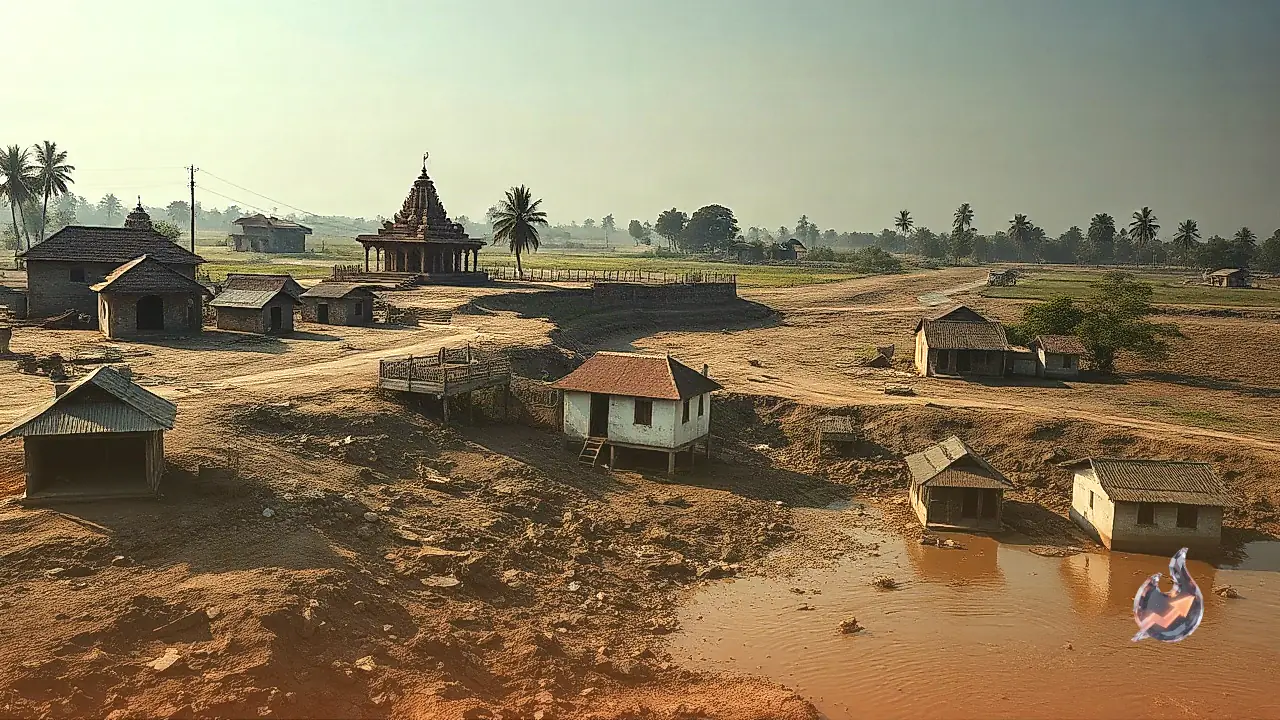

The Sharda River is causing widespread devastation across riverside settlements in the Lakhimpur Kheri district of Uttar Pradesh. Rather than providing relief, the recent decline in the river's water level has triggered a fierce surge in bank erosion. As the retreating currents carve into the soft soil of the riverbanks, vast tracts of cultivable agricultural land are collapsing into the stream. The relentless soil erosion has created an atmosphere of deep panic among rural residents, who are struggling to protect their standing crops, livelihoods, and homesteads.
Ancient Durga Temple Swept Away in Rura Sultanpur
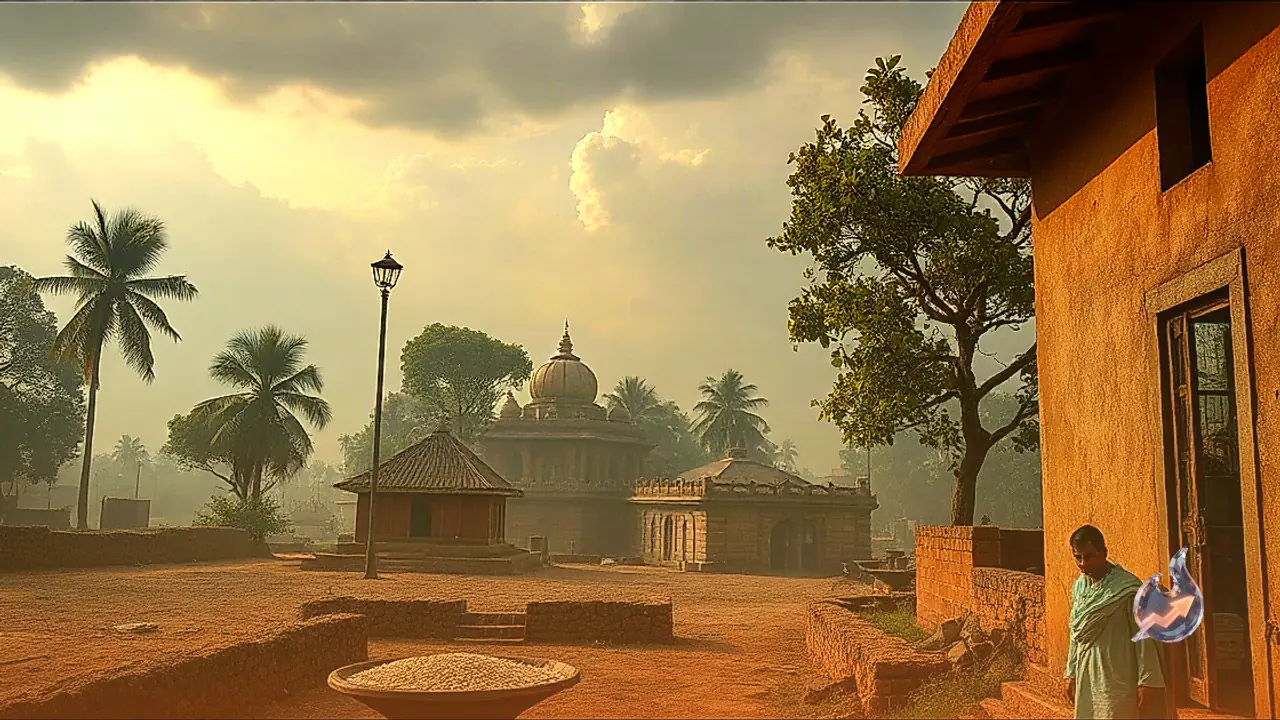
The devastation is especially pronounced in the village of Rura Sultanpur, located within the Gola tehsil. The advancing river has breached boundary lines and carved directly through community landmarks. Within moments, a revered and ancient Durga temple collapsed entirely into the turbulent waters of the Sharda River. The historic shrine was an essential spiritual hub for the locality, drawing devotees regularly from nearby areas for prayers and vows. The complete disappearance of this cherished structure into the river has left the entire village in profound grief and distress.
Falling Water Levels Accelerate Bank Collapse
Local residents report that the Sharda River has been systematically eroding the riverbanks for nearly two months. An unusual hydrological pattern marks the phenomenon: bank erosion slows when water levels rise, but the moment the floodwaters recede, the sharp undercurrents accelerate the collapse of shorelines. Dinesh Kumar, a local resident, explained that the surrounding areas have faced unbroken erosion over the past sixty days, with the rate of land loss spiking dramatically whenever the water recedes.
According to Dinesh Kumar, the river has not only devoured the ancient shrine but has also swallowed more than six residential homes. In addition to housing, expansive agricultural fields with standing seasonal crops are continually tumbling into the waters. He cautioned that if effective anti-erosion measures are not deployed immediately, the very existence of Rura Sultanpur village could be wiped out. Villagers have voiced frustration over the absence of concrete administrative safeguards along the embankments, urgently pleading for immediate protective barriers and safety interventions for displaced families.
Livelihoods Lost as Farmers Turn to Daily Wage Labour
The aggressive erosion has broken the financial backbone of local farming households. Ramsagar, an affected farmer, recounted that the river has completely swallowed around three acres of his agricultural land. That acreage served as the sole source of sustenance and household income for his entire family. He had cultivated paddy and sugarcane, tending to the crops with care, but the river swept away both the fertile topsoil and the unharvested produce right before maturity.
With his land now buried beneath the riverbed, Ramsagar faces acute financial hardship in managing daily family expenses, compelling him to work as a manual daily wage labourer just to survive. He noted that a full year of rigorous agricultural investment and hope was erased within days. The villagers of Rura Sultanpur now face a dual ordeal: the urgent race to defend their remaining dwellings from the advancing waterline, alongside the sudden loss of agrarian livelihoods and ancestral properties.