





















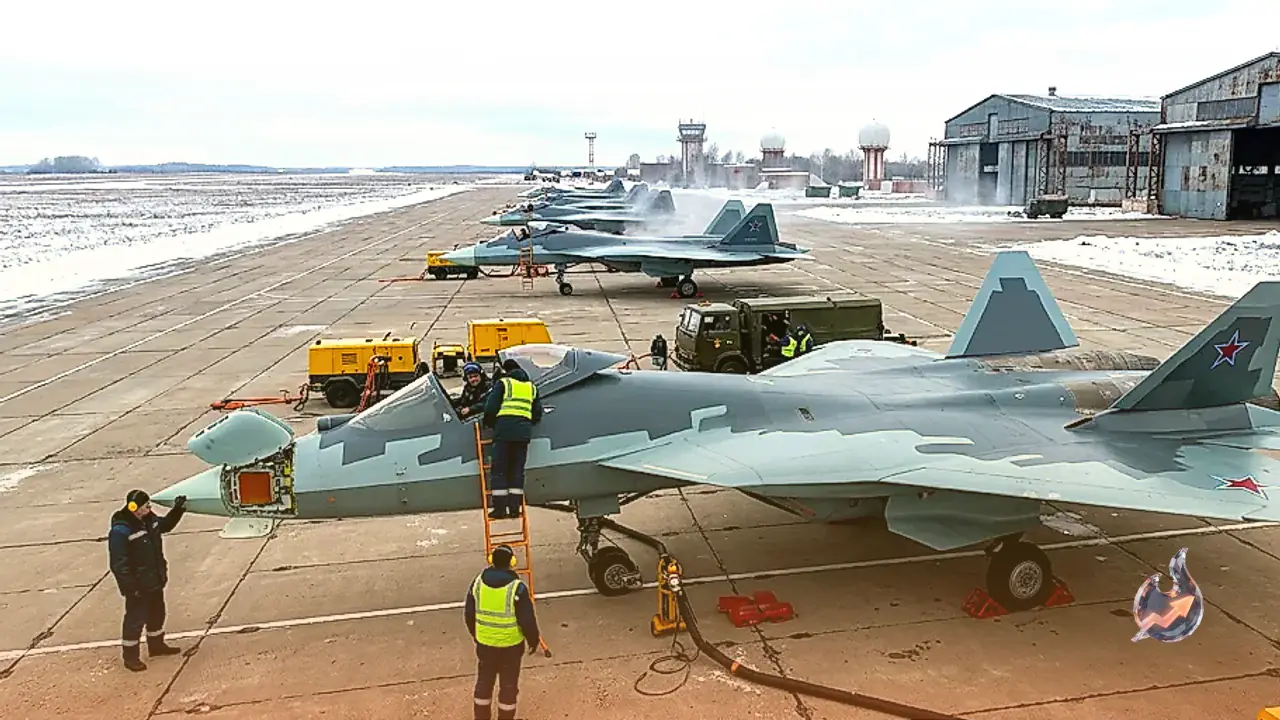

India faces a massive strategic air defense challenge in the coming years as China and Pakistan rapidly expand their fleets of fifth-generation stealth fighters. Neighboring nations are aggressively boosting their aerial capabilities, with defense analysts estimating that both countries could possess a combined total of nearly 600 advanced stealth combat aircraft by the year 2030. To address this looming security gap, the Russian defense think tank Centre for Analysis of World Arms Trade has put forward a comprehensive proposal for India. The organization suggests that India should first directly purchase 50 Su-57E aircraft from Russia and subsequently manufacture the remaining 450 jets domestically under a formal licensing agreement. Furthermore, the proposal highlights the two-seat Su-57D variant, which could be specifically tailored to meet the operational requirements of the Indian Air Force.
This major defense proposal comes at a critical juncture when India is actively strengthening its aerial power through platforms like Rafale and Tejas, alongside the ongoing development of its indigenous fifth-generation AMCA program. However, the domestic AMCA project will require several more years before it can formally join the active operational fleet. The Russian think tank argues that by the time the indigenous fighter is ready, the stealth capabilities and air power of China and Pakistan will have advanced significantly. Consequently, the research body contends that rather than waiting indefinitely for home-grown jets, India must proactively and immediately develop fifth-generation fighter capabilities to maintain strategic parity in the region.
The Combined 600 Stealth Fighter Challenge
According to assessments by the Russian think tank, the Chinese Air Force could deploy around 500 stealth platforms, including J-20 and J-35 fighters, by the year 2030. In addition, reports indicate the likely deployment of over 50 J-35 fighter jets aboard China's aircraft carriers. Regarding Pakistan, estimates suggest that the country could acquire at least 40 J-35AE stealth fighters by 2030, with certain defense evaluations even pointing toward initial deliveries commencing as early as 2026. However, these claims regarding the exact delivery timelines and total numbers for Pakistan remain unverified by independent sources. If these projections materialize, the joint fifth-generation combat strength of China and Pakistan could approach 600 aircraft, creating an unprecedented aerial challenge for India. For Indian military planners, the primary concern extends beyond sheer numbers to encompass advanced stealth technology, superior radar systems, and long-range missile capabilities that could fundamentally alter modern air warfare.
The Indian Air Force currently operates proven combat aircraft such as Rafale, Su-30MKI, and the indigenous LCA Tejas to handle various tactical missions. Despite these capable additions, India currently lacks an operational fifth-generation stealth fighter jet of its own. This critical gap is precisely what the Russian research organization has highlighted in its assessment. The institute warns that if neighboring adversaries deploy massive numbers of stealth aircraft, the technological disadvantage for India's existing fleet will grow substantially. The report suggests that simply procuring more Rafale and Tejas jets may not fully bridge this widening capability gap. Comparing Rafale and Tejas to the heavier Su-30MKI, the Russian analysis claims that the heavier Russian airframe holds advantages in combat operational radius, payload capacity, and raw speed. Moreover, the report questions the economic viability of costly foreign purchases, citing an estimated price tag of approximately 160 million euros per Rafale jet, and argues that utilizing existing HAL manufacturing infrastructure could produce Russian jets at a comparatively lower cost. Nonetheless, military experts emphasize that the roles, technologies, and operational doctrines of Rafale, Tejas, and Su-30MKI differ significantly, and the Russian think tank's remarks should be viewed strictly as its own specialized defense perspective.
The Two-Phase Production Strategy
The proposed strategy outlines a distinct two-phase roadmap for India to bridge its emerging capability deficit. The initial phase involves the direct procurement of 50 Su-57E fighter jets from Russia, while the second phase entails the licensed production of 450 aircraft within India. To facilitate this massive domestic undertaking, the report recommends setting up a dedicated manufacturing line utilizing the existing facilities of Hindustan Aeronautics Limited. The proposal also takes into account the two-seat Su-57D variant, suggesting it could be further developed to suit the specific tactical doctrines of the Indian Air Force. Implementing this blueprint would provide India with immediate fifth-generation assets while simultaneously transferring high-end manufacturing technology and technical expertise. According to the Russian institution, the Su-57 is already in active service with the Russian Aerospace Forces, and formal export procedures have commenced, meaning Moscow could readily advance the project upon receiving an official request from New Delhi. However, executing such a massive defense acquisition and technology transfer would necessitate detailed bilateral negotiations regarding pricing, financial terms, and strict implementation conditions.
Timeline of the Indigenous AMCA Project
The indigenous fifth-generation fighter program, known as the Advanced Medium Combat Aircraft, remains a vital component of this ongoing national security debate. In March 2024, the Cabinet Committee on Security formally cleared a project worth approximately 15,000 crore rupees dedicated to the design and prototype development of the AMCA. Despite this administrative approval, flight testing procedures for the technology demonstrator prototypes have not yet commenced. Defense evaluations indicate that full-scale serial production of the AMCA is unlikely to begin prior to 2034 or 2035. This extended development timeline means the Indian Air Force may face a prolonged wait before acquiring a home-grown stealth fighter, keeping the urgency for alternative solutions alive.