




















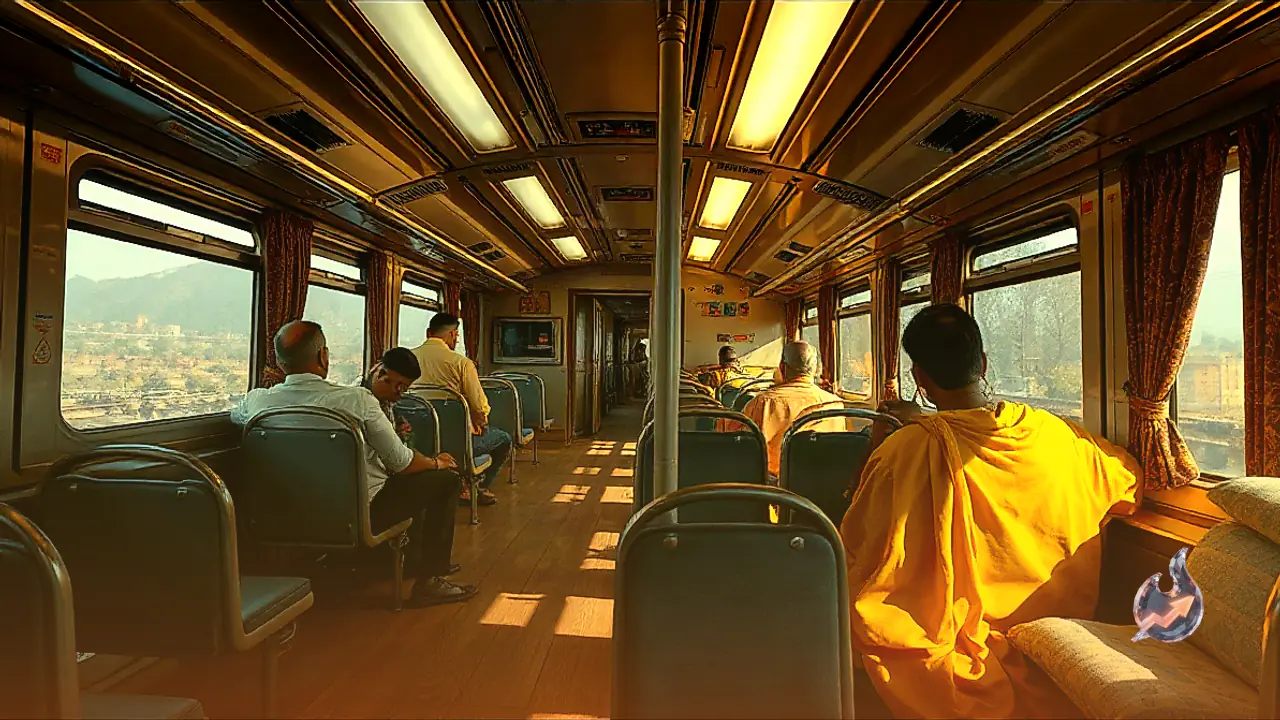

Respecting the quiet and personal boundaries of fellow commuters in public transit remains a cornerstone of shared civic life. Bringing attention to this pressing everyday issue, noted musician Shivashree Skandaprasad, wife of BJP MP Tejasvi Surya, recounted a distressing ordeal during a five-hour train trip. Her travel experience was severely disrupted by prolonged shouting and disruptive behavior from a large group of co-passengers. Reflecting on the episode, she remarked that as citizens, collective adherence to basic civic etiquette appears to have broken down completely.
Raucous Commuters Overwhelm the Coach for Hours
Detaining the sequence of events, Shivashree Skandaprasad explained that the train carriage had a capacity of 56 seats. Among the occupants was a large group comprising around 40 middle-aged individuals traveling together. While an initial burst of excitement is understandable when an extensive party boards a train, the situation deteriorated as they continued shouting, screaming, and speaking at excessive volume nonstop for five straight hours, creating immense distress for everyone else in the compartment.
She observed that as a creative artist, one's mind is constantly processing intricate thoughts, creating an inherent need for a peaceful, composed atmosphere. Regrettably, people frequently disregard the sanctity of public spaces, speaking so loudly that the private zone of surrounding travelers is completely erased. In India, she noted, an unspoken rule often forces the remaining 16 passengers outside such dominant groups to silently suffer disruption without any realistic recourse or collective intervention.
Failed Seat Transfer and Superficial Staff Intervention
Unable to endure the relentless commotion, she approached the train ticket examiner, or TTE, seeking an alternate berth in another carriage. The ticket examiner attempted to find an alternative, but because the entire train was running at full capacity, no vacant berths were available. Consequently, she was compelled to remain inside the same loud compartment, merely shifting to a different seat within the coach.
Matters escalated further when an eight-member sub-group from that cluster began playing the card game UNO with loud banter. Upon being alerted again, the TTE instructed them to stop playing, which they briefly did. However, what transpired shortly thereafter rendered the formal intervention entirely meaningless.
Rules Trivially Dismissed Instead of Enforced
Moments later, the TTE returned to the group and casually asked them in Kannada why they were making so much noise. Rather than realizing the disturbance they had caused, the passengers began laughing along with the official and jovially invited him to join their game. Instead of upholding discipline and passenger comfort, the staff member normalized the nuisance through informal camaraderie.
Conveying her disappointment, Shivashree Skandaprasad pointed out that the crux of the issue was not who won or lost a card game. Instead, she stressed that every citizen lost in the broader realm of civic etiquette, leaving behind a fundamental question about when people will collectively learn to conduct themselves responsibly in public spaces.