




















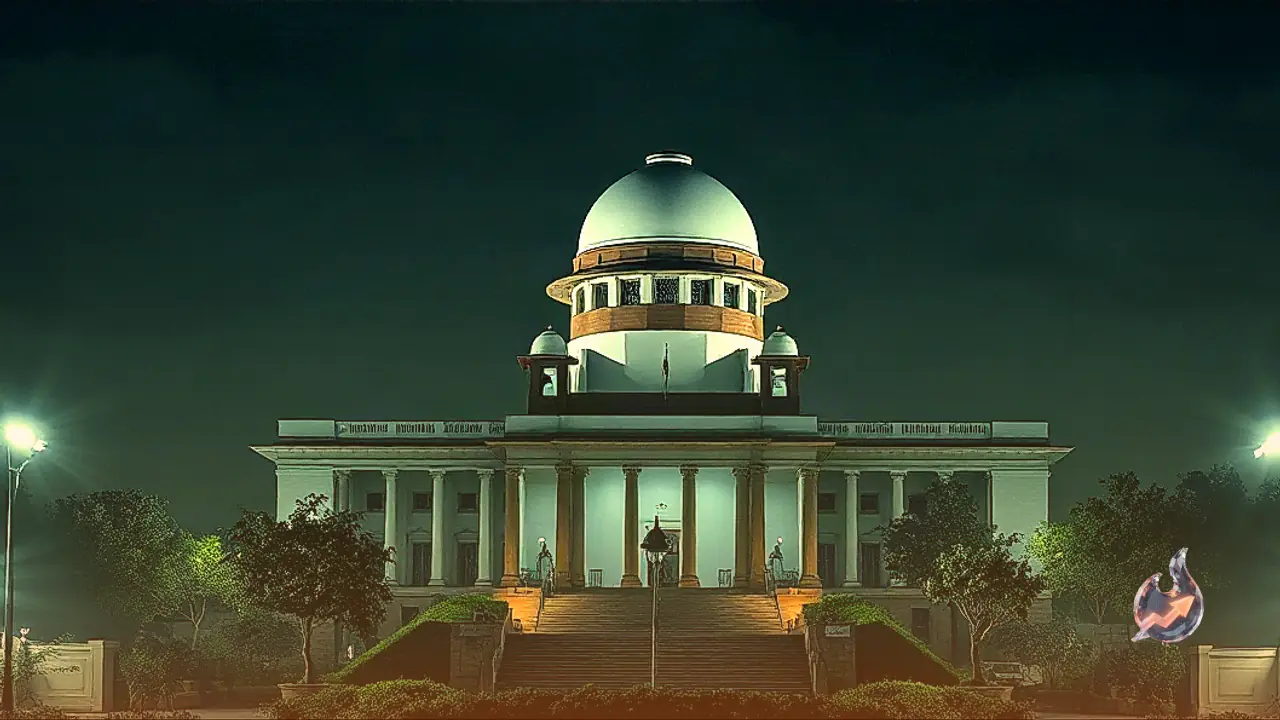

The Supreme Court of India has taken a strong stance on the practice of constitutional authorities resigning from their positions to evade formal removal proceedings. Hearing a Public Interest Litigation (PIL), a bench comprising Chief Justice of India Surya Kant, Justice Joymalya Bagchi, and Justice V. Mohana has issued notices to the Union Government and all State Governments seeking their comprehensive responses. The petition urgently demands that any official holding a constitutional post who tenders a resignation after removal proceedings have commenced, or in order to circumvent the initiation of such proceedings, must be completely barred from claiming post-resignation perks, pensions, or government benefits.
Supreme Court Scrutinises Post-Resignation Perks for Constitutional Officials
The PIL brought before the top court highlights how high-ranking constitutional functionaries often step down prematurely when confronted with inquiries or removal motions. By doing so, they avoid public scrutiny and formal accountability while continuing to draw post-retirement benefits. The petitioner urged the bench to lay down explicit guidelines preventing such officials from receiving state facilities. Recognising the far-reaching constitutional implications of the matter, the Supreme Court bench led by CJI Surya Kant sought detailed stands from the Centre and all states before deciding the future legal framework.
PIL Challenges Privileges as Violation of Article 14 and Rule of Law
The petition directly challenges existing statutes and service regulations that permit resigning constitutional officers to retain lifelong perks. According to the petitioner, extending identical privileges to an officer who resigns under a cloud of allegations as those granted to an officer who completes their full term honorably violates Article 14 of the Constitution, which guarantees equality before the law. Furthermore, the petition underscores that such unearned privileges undermine the 'Rule of Law', a core element of the basic structure of the Indian Constitution. Allowing officials to flee removal processes yet enjoy public exchequer benefits damages institutional integrity.
11 Constitutional Posts Covered Under the Petition
The scope of the PIL encompasses eleven of the highest constitutional offices in the country, emphasizing that holders of these trusted positions must adhere to strict standards of transparency. The petition specifically lists the following offices
- President of India: The supreme constitutional head of the nation.
- Vice-President of India: The second-highest constitutional office and ex-officio Chairman of Rajya Sabha.
- Governors of States: Constitutional heads of state governments.
- Prime Minister and Council of Ministers (Union): Executive leadership of the Central Government.
- Chief Ministers and Council of Ministers (States): Executive leadership of State Governments.
- Judges of the Supreme Court: Jurists of the apex judicial body.
- Judges of High Courts: Jurists of state high courts.
- Comptroller and Auditor General of India (CAG): The guardian of the public purse.
- Chief Election Commissioner (CEC): Head of the election management body.
- Attorney General for India: Chief legal advisor to the Union Government.
- Advocate General of States: Top legal advisors to State Governments.
Constitutional Accountability and Duty to Complete Tenure
The petitioner argued that individuals appointed or elected to constitutional positions assume a solemn duty to fulfill their term or submit to a fair, transparent removal process if accused of misconduct. Resigning mid-tenure as an easy exit strategy undermines the public trust reposed in these high offices. The petition points out that the primary motivation behind such unprincipled resignations is the assurance that lifetime perks, including housing, security, and pensions, remain intact regardless of how or why the tenure ended. The petition maintains that depriving such resigning officials of benefits is essential to restoring constitutional morality. The court will consider the responses from the Centre and States in upcoming hearings.