






















In the annals of India's freedom struggle, numerous brave souls surrendered their lives for the cause of national independence, yet the story of Khudiram Bose remains uniquely inspiring. Born on December 3, 1889, in Habibpur village of Midnapore district, West Bengal, Bose lost both of his parents at an early age. He was raised by his elder sister, whose nurturing care shaped his early years. Tormented by the suffering of his countrymen under foreign rule, Bose decided to abandon his formal schooling in the ninth grade to immerse himself entirely in the freedom movement. He actively allied with revolutionary organizations such as Anushilan Samiti and Jugantar to challenge British colonial authority.
The Muzaffarpur Bomb Incident and Supreme Sacrifice
During this era, British magistrate D. H. Kingsford earned notoriety among freedom fighters for imposing exceptionally harsh penalties on Indian revolutionaries. Determined to curtail his oppression, the Jugantar organization entrusted Khudiram Bose and his dedicated associate Prafulla Chaki with the mission to eliminate the magistrate. On the night of April 30, 1908, in Muzaffarpur, Bihar, the duo targeted a horse-drawn carriage believed to be transporting Kingsford and hurled a bomb at it. However, the carriage unexpectedly carried two Englishwomen instead of the magistrate, both of whom lost their lives in the explosion. Following the incident, Prafulla Chaki chose to shoot himself to avoid capture by colonial police, whereas Khudiram Bose was apprehended near a railway station. At the tender age of 18, Bose faced the gallows with extraordinary composure, inscribing his name permanently in history.
Timeless Principles of Patriotism and Courage
The core beliefs articulated by Khudiram Bose continue to serve as a beacon of guidance for younger generations regarding civic responsibility and devotion to the nation. Key perspectives associated with his revolutionary philosophy include
- Solidarity Against Injustice: Individuals must contribute to ethical battles according to their capacity. If direct participation is impossible, one should speak out, write, or actively encourage those working on the frontlines rather than undermining the morale of those fighting shared battles.
- Inherent Patriotism: Genuine love for one's motherland cannot be acquired from commercial marketplaces. It must flow naturally within the blood vessels of every conscious citizen.
- Sacrifice Over Servitude: Submitting to the humiliation of colonial bondage is far worse than laying down one's life cheerfully while fighting for the liberty of the country.
- Unconditional Devotion to Freedom: If the liberation of the nation demands a personal sacrifice, one should be willing to face the executioner's noose repeatedly without hesitation.
- Service as the Highest Duty: Serving the motherland constitutes the ultimate moral duty of an individual, and supreme sacrifice in pursuit of national freedom provides life with its highest meaning.
- Confronting Oppression Fearlessly: Bowing before tyranny reflects weakness, whereas standing tall and confronting injustice head-on represents the true essence of youthful strength.
- Immortalizing Life Through Purpose: Physical death is an inevitable biological reality for every human being, yet a life sacrificed for the welfare of the country achieves eternal glory.
- Renunciation of Selfishness: No major social revolution or movement for national liberation can succeed until the youth relinquish personal comfort, apathy, and selfish pursuits.
- Laying the Foundation of the Nation: Every constructive thought and action dedicated to the motherland contributes directly to establishing a resilient and prosperous future for the nation.
- The Inner Fire of Revolution: The spark of genuine revolution is not kindled merely by weaponry, but by the unyielding flame of patriotic passion burning within human hearts.
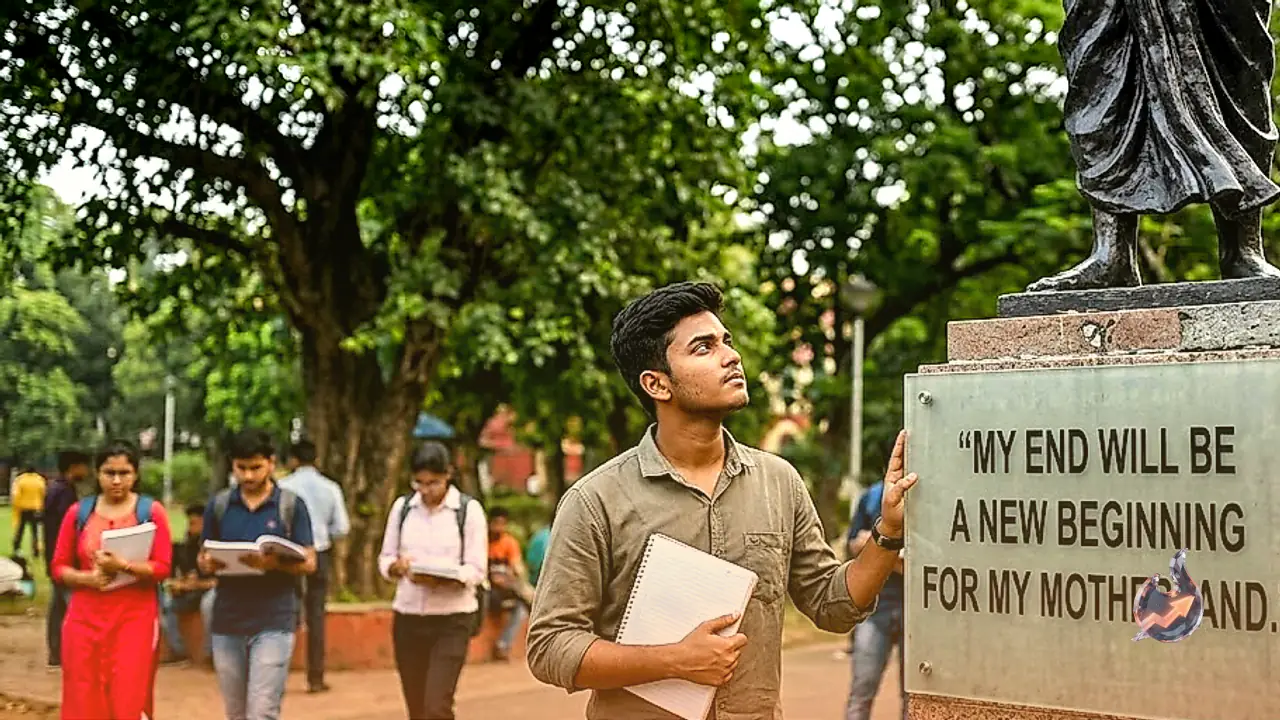
- Martyrdom as a Beginning: Facing the gallows does not signify the end of a freedom struggle, but rather marks the launch of a broader movement capable of dismantling oppressive rule.
Relevance for Modern Youth
The legacy of Khudiram Bose offers profound lessons in resilience, selflessness, and moral fortitude. In contemporary times, when young individuals encounter career challenges or personal dilemmas, reflecting on his life serves as a powerful reminder of determination, responsibility toward society, and unwavering integrity.