





















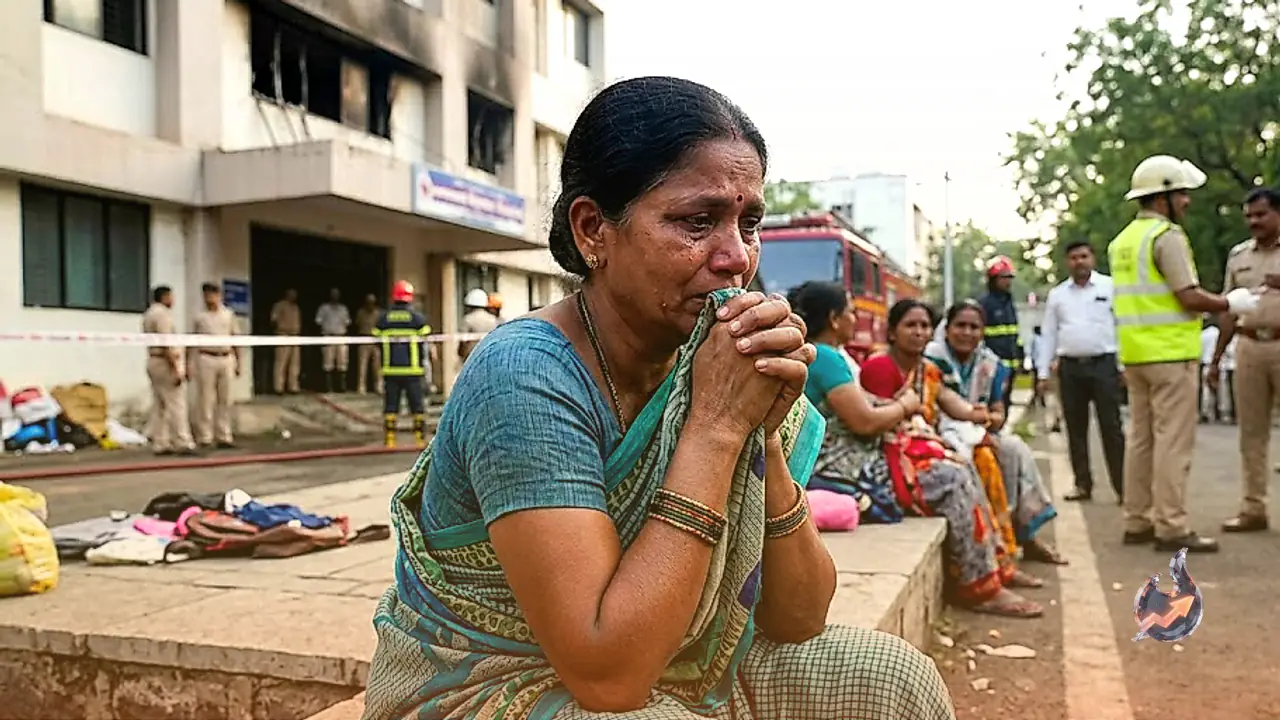

A devastating fire that swept through the neonatal intensive care unit of a women's hospital in Amravati, Maharashtra, early Monday morning has exposed glaring deficiencies in local medical infrastructure. The tragic incident resulted in the heartbreaking deaths of three newborn infants, while 36 other babies were rescued from the engulfed ward. The disaster has ignited widespread outrage and forced authorities to confront a painful question: could these three precious lives have been saved if the hospital's safety protocols had functioned as intended?
Blaze Erupts in Ventilator at 3:15 AM
The calamity unfolded at approximately 3:15 AM within the sensitive confines of the NICU, a specialized ward dedicated to premature babies, infants with dangerously low birth weights, and critically ill newborns. Preliminary findings indicate that the fire originated from a sudden explosion in a ventilator located within the outborne section of the unit. Thick smoke and raging flames rapidly engulfed the entire ward, triggering intense panic among the medical staff. At the time of the outbreak, a total of 39 vulnerable infants were receiving medical care inside the facility. The situation was most critical in a specific section housing nine newborns. Hospital employees, dedicated nurses, and security guards rushed into the hazard zone, risking their own lives to evacuate as many infants as possible. While six babies were successfully pulled to safety, three infants unfortunately succumbed to the flames and smoke.
Nurses and Guards Act As Human Shields
When automated safety systems completely failed to respond, the hospital staff displayed extraordinary bravery by throwing themselves into the rescue effort. Duty nurses recounted navigating through suffocating smoke and intense heat to physically lift infants out of their incubators. Security personnel similarly rushed into the smoke-filled rooms to aid the evacuation process. These individuals, whose primary mandate was patient care, expended every ounce of their energy during the crisis. However, this heroism prompts a critical inquiry: why should frontline workers have been forced to risk their lives in such perilous conditions due to infrastructural shortcomings?
Alarms Fail and Sprinklers Remain Inactive
Intense public scrutiny is currently focused on the hospital's fire safety architecture. Grieving family members and eyewitnesses on the scene vehemently asserted that the fire alarm system failed to sound when the flames broke out, and the automatic water sprinkler system completely neglected to activate. In a high-risk environment like an NICU housing exceptionally fragile newborns, the initial minutes of a fire emergency are critical. Had the alarm sounded promptly and sprinklers operated correctly, the evacuation would have commenced much earlier, potentially averting the fatalities.
Brand New Facility Faces Scrutiny
State Health Minister Prakash Abitker visited the hospital site following the tragedy and publicly acknowledged severe irregularities in the establishment's safety framework. He raised valid concerns regarding how such a catastrophic fire could occur in a medical facility that was constructed a mere two years ago. In response to the disaster, the state government has constituted a seven-member high-level investigative committee. Headed by the health commissioner, the panel includes representatives from the Maharashtra State Electricity Distribution Company Limited, AIIMS experts, and medical education department officials. The committee has been instructed to submit its comprehensive report within eight days.
Comprehensive Probe Underway
The appointed investigative panel has been tasked with examining every facet of the disaster. This includes determining the precise origin of the fire, investigating potential technical malfunctions within the ventilator units, auditing electrical wiring connections, evaluating the operational readiness of the fire safety systems, and fixing accountability on the hospital administration. The state government noted that formal confirmation of safety lapses will be officially established only upon the conclusion of this rigorous inquiry.
The tragedy shattered the worlds of three families in a matter of moments. One grieving father shared that his child had been born merely a day prior, and he had just finished sharing the joyful news with his relatives before the early morning fire left him searching for hours only to receive news of his baby's passing. Another family member vehemently blamed the hospital administration for the inactive fire alarms, arguing that timely warnings could have saved their children.
Chief Minister Devendra Fadnavis expressed profound grief over the incident and announced financial assistance of five lakh rupees for the families of each deceased child, while promising strict legal action against all responsible parties. Meanwhile, political opposition figures have also seized upon the tragedy. Former home minister Anil देशमुख pointed back to the 2008 or subsequent major hospital fires such as the 2021 Bhandara tragedy, questioning whether safety recommendations issued after past disasters were ever properly implemented. Congress leader Yashomati Thakur similarly highlighted prior minor fire incidents at the facility to question its electrical setup and equipment safety. (With PTI inputs)